Griebsch I, Brown J, Boggis C, Dixon A, Dixon M, Easton D, Eeles R, Evans D G, Gilbert F J, Hawnaur J, Kessar P, Lakhani S R, Moss S M, Nerurkar A, Padhani A R, Pointon L J, Potterton J, Thompson D, Turnbull L W, Walker L G, Warren R, Leach M O
MRC Health Services Research Collaboration, Department of Social Medicine, University of Bristol, Bristol, and Nightingale Centre, Withington Hospital, Manchester, UK.
Br J Cancer. 2006 Oct 9;95(7):801-10. doi: 10.1038/sj.bjc.6603356.
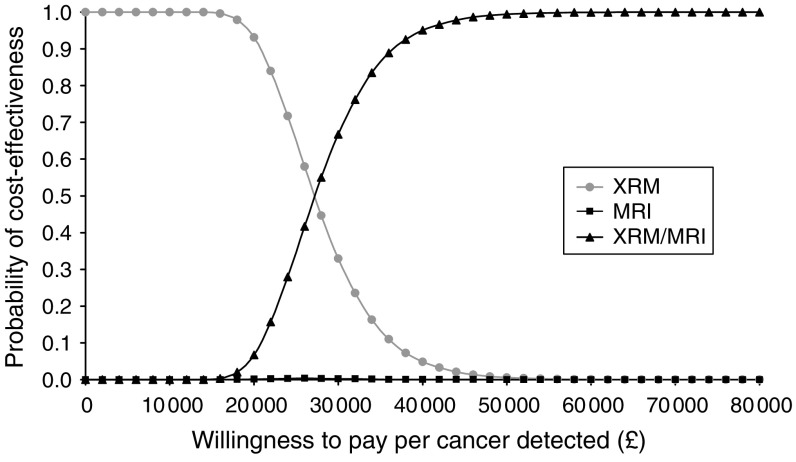
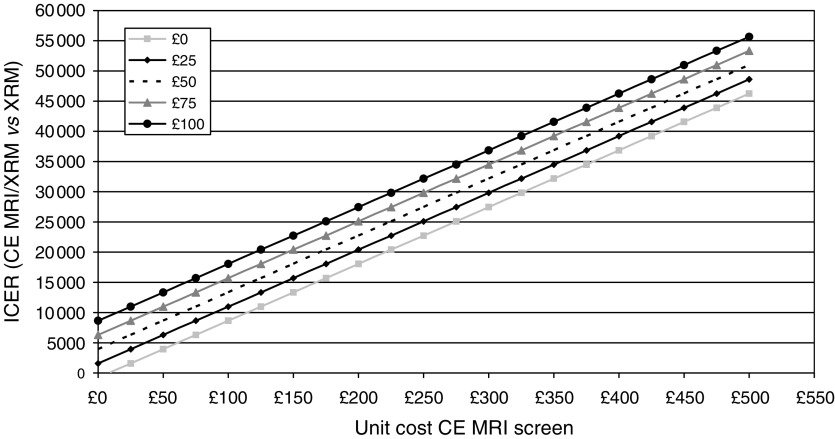
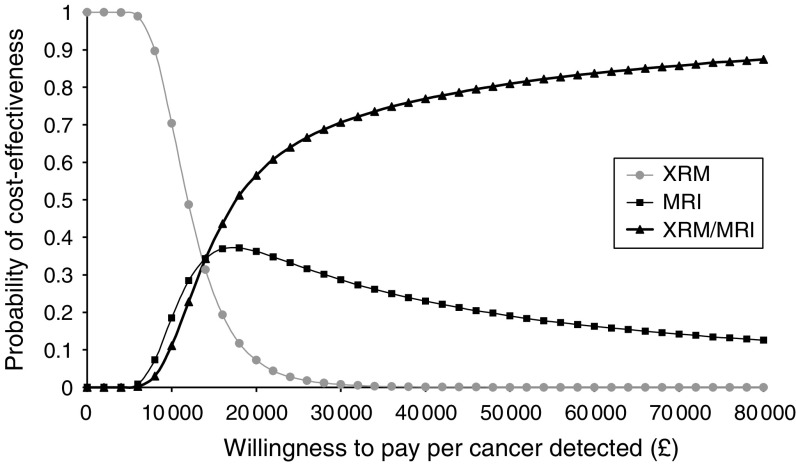
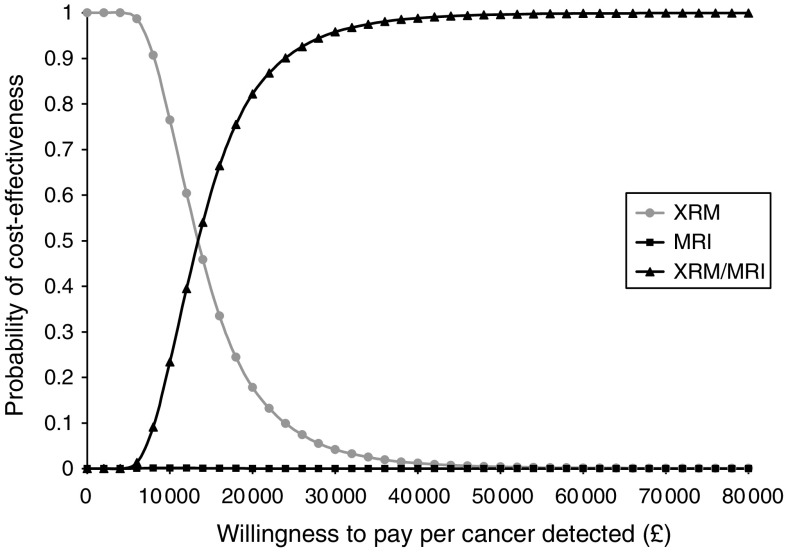
Contrast enhanced magnetic resonance imaging (CE MRI) is the most sensitive tool for screening women who are at high familial risk of breast cancer. Our aim in this study was to assess the cost-effectiveness of X-ray mammography (XRM), CE MRI or both strategies combined. In total, 649 women were enrolled in the MARIBS study and screened with both CE MRI and mammography resulting in 1881 screens and 1-7 individual annual screening events. Women aged 35-49 years at high risk of breast cancer, either because they have a strong family history of breast cancer or are tested carriers of a BRCA1, BRCA2 or TP53 mutation or are at a 50% risk of having inherited such a mutation, were recruited from 22 centres and offered annual MRI and XRM for between 2 and 7 years. Information on the number and type of further investigations was collected and specifically calculated unit costs were used to calculate the incremental cost per cancer detected. The numbers of cancer detected was 13 for mammography, 27 for CE MRI and 33 for mammography and CE MRI combined. In the subgroup of BRCA1 (BRCA2) mutation carriers or of women having a first degree relative with a mutation in BRCA1 (BRCA2) corresponding numbers were 3 (6), 12 (7) and 12 (11), respectively. For all women, the incremental cost per cancer detected with CE MRI and mammography combined was pound28 284 compared to mammography. When only BRCA1 or the BRCA2 groups were considered, this cost would be reduced to pound11 731 (CE MRI vs mammography) and pound15 302 (CE MRI and mammography vs mammography). Results were most sensitive to the unit cost estimate for a CE MRI screening test. Contrast-enhanced MRI might be a cost-effective screening modality for women at high risk, particularly for the BRCA1 and BRCA2 subgroups. Further work is needed to assess the impact of screening on mortality and health-related quality of life.
对比增强磁共振成像(CE MRI)是筛查乳腺癌家族风险高的女性的最敏感工具。本研究的目的是评估X线乳房造影(XRM)、CE MRI或两种策略联合使用的成本效益。共有649名女性参与了MARIBS研究,并接受了CE MRI和乳房造影筛查,共进行了1881次筛查以及1至7次个体年度筛查。从22个中心招募了年龄在35至49岁之间、乳腺癌风险高的女性,她们要么有乳腺癌家族病史,要么经检测为BRCA1、BRCA2或TP53突变携带者,要么有50%的几率遗传此类突变,并为她们提供为期2至7年的年度MRI和XRM检查。收集了进一步检查的数量和类型信息,并使用特定计算的单位成本来计算每检测到一例癌症的增量成本。乳房造影检测到13例癌症,CE MRI检测到27例癌症,乳房造影和CE MRI联合检测到33例癌症。在BRCA1(BRCA2)突变携带者亚组或有BRCA1(BRCA2)突变的一级亲属的女性亚组中,相应数字分别为3(6)、12(7)和12(11)。对于所有女性,与乳房造影相比,CE MRI和乳房造影联合检测到每例癌症的增量成本为28284英镑。仅考虑BRCA1或BRCA2组时,该成本将降至11731英镑(CE MRI与乳房造影相比)和15302英镑(CE MRI和乳房造影与乳房造影相比)。结果对CE MRI筛查测试的单位成本估计最为敏感。对比增强MRI可能是高风险女性具有成本效益的筛查方式,特别是对于BRCA1和BRCA2亚组。需要进一步开展工作来评估筛查对死亡率和健康相关生活质量的影响。