Zerjal Tatiana, Pandya Arpita, Thangaraj Kumarasamy, Ling Edmund Y S, Kearley Jennifer, Bertoneri Stefania, Paracchini Silvia, Singh Lalji, Tyler-Smith Chris
The Wellcome Trust Sanger Institute, Wellcome Trust Genome Campus, Hinxton, Cambs, CB10 1SA, UK.
Hum Genet. 2007 Mar;121(1):137-44. doi: 10.1007/s00439-006-0282-2. Epub 2006 Oct 31.
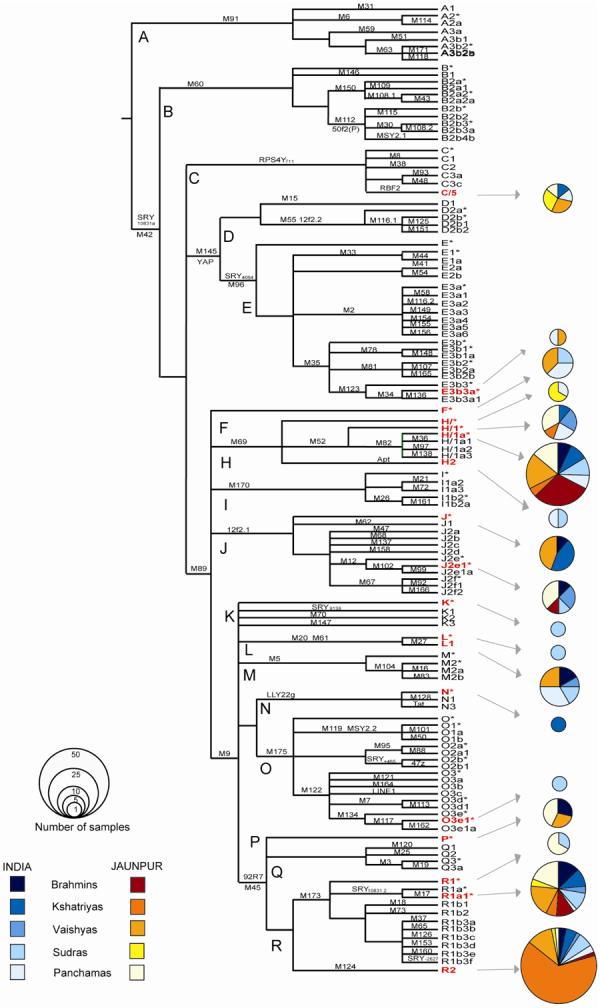
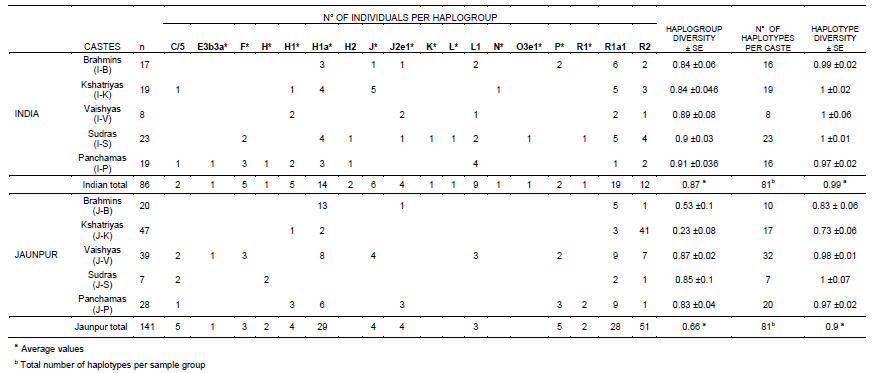
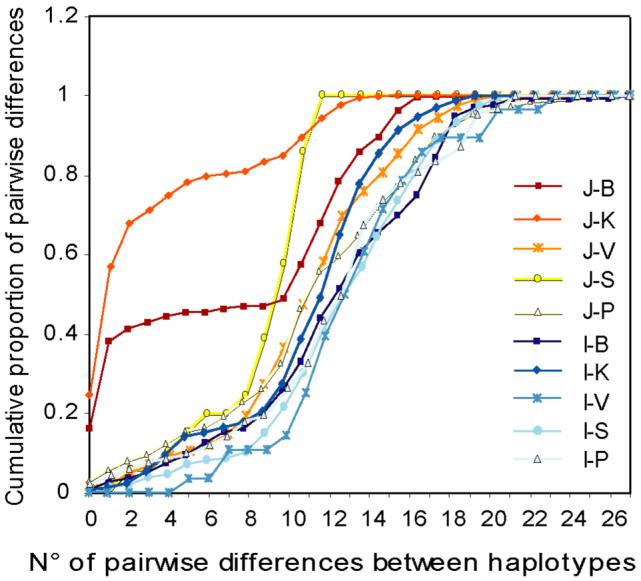
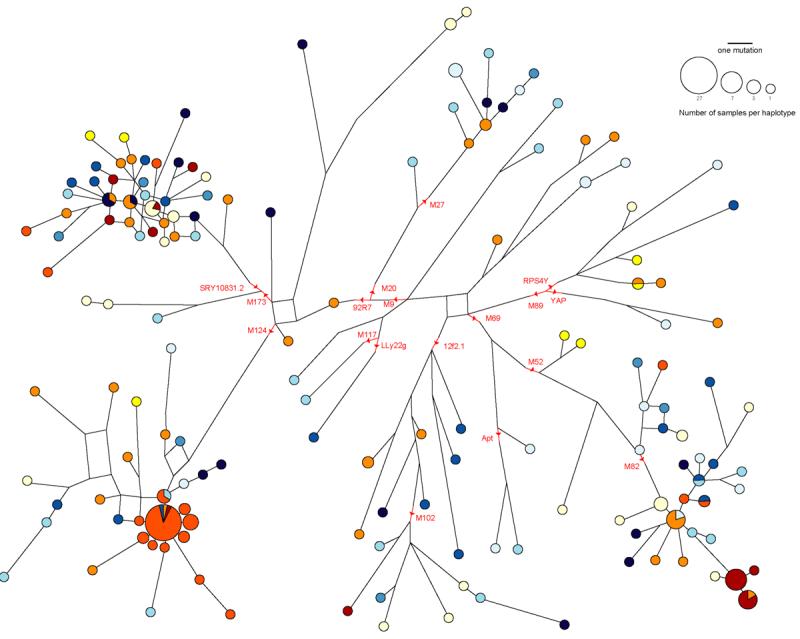
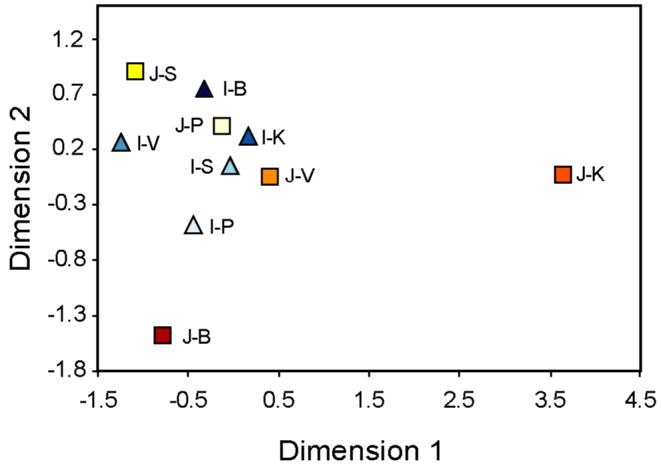
The caste system has persisted in Indian Hindu society for around 3,500 years. Like the Y chromosome, caste is defined at birth, and males cannot change their caste. In order to investigate the genetic consequences of this system, we have analysed male-lineage variation in a sample of 227 Indian men of known caste, 141 from the Jaunpur district of Uttar Pradesh and 86 from the rest of India. We typed 131 Y-chromosomal binary markers and 16 microsatellites. We find striking evidence for male substructure: in particular, Brahmins and Kshatriyas (but not other castes) from Jaunpur each show low diversity and the predominance of a single distinct cluster of haplotypes. These findings confirm the genetic isolation and drift within the Jaunpur upper castes, which are likely to result from founder effects and social factors. In the other castes, there may be either larger effective population sizes, or less strict isolation, or both.
种姓制度在印度印度教社会已延续了约3500年。如同Y染色体一样,种姓在出生时就已确定,男性无法改变其种姓。为了研究该制度的遗传后果,我们分析了227名已知种姓的印度男性样本中的父系谱系变异,其中141人来自北方邦的焦特布尔地区,86人来自印度其他地区。我们对131个Y染色体二元标记和16个微卫星进行了分型。我们发现了男性亚结构的显著证据:特别是,来自焦特布尔的婆罗门和刹帝利(但不包括其他种姓)各自表现出低多样性以及单一独特单倍型簇的优势。这些发现证实了焦特布尔上层种姓内部的遗传隔离和漂变,这可能是由奠基者效应和社会因素导致的。在其他种姓中,可能有效种群规模更大,或者隔离不那么严格,或者两者皆有。