Ronca April E, Abel Regina A, Ronan Patrick J, Renner Kenneth J, Alberts Jeffrey R
Department of Obstetrics and Gynecology, Wake Forest University School of Medicine, Winston Salem, NC 27157, USA.
Behav Neurosci. 2006 Dec;120(6):1308-14. doi: 10.1037/0735-7044.120.6.1308.
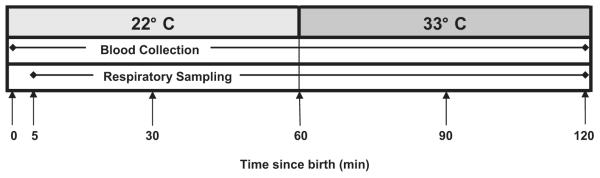
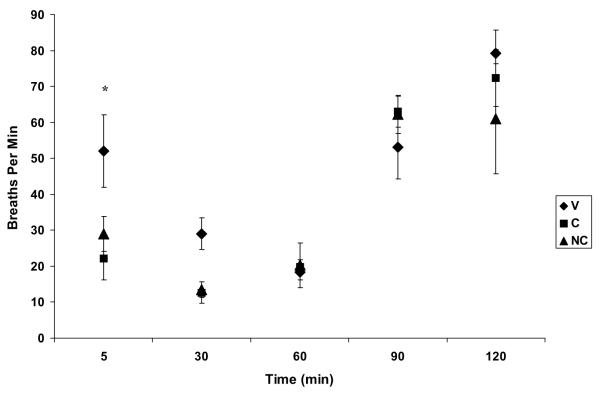
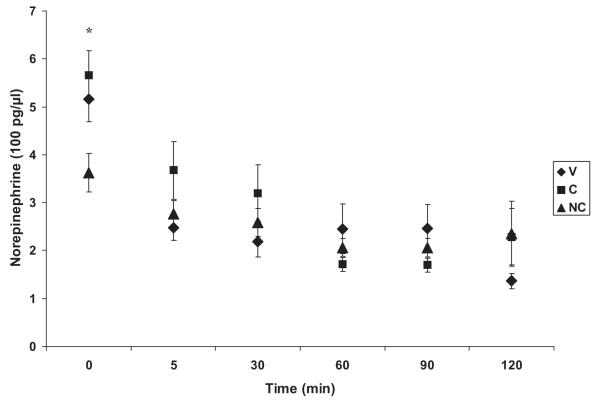
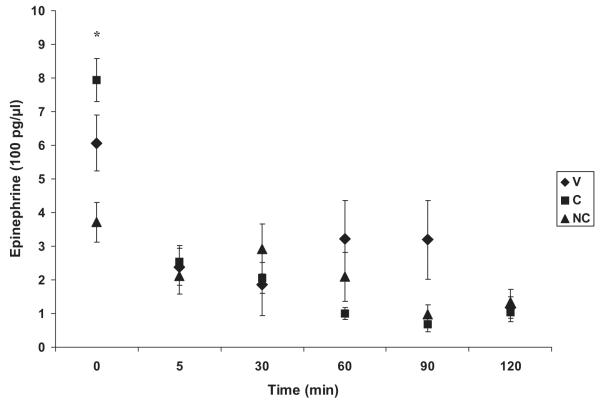
Plasma catecholamines in newborn rats (0-2 hr old) were analyzed following vaginal birth, cesarean section with simulated labor contractions, or cesarean section without labor contractions. Upon delivery, pups were exposed to key elements of the rat's natural birth process, that is, umbilical cord occlusion, tactile stimulation, and cooling. Only pups exposed to actual or simulated labor showed an immediate rise in norepinephrine and epinephrine. Initial postpartum respiratory frequencies were higher in vaginal than in cesarean delivered pups and, in all groups, inversely correlated with catecholamine titers, suggesting respiratory distress or transient tachypnea at lower catecholamine levels. These findings establish a rat model for analyzing effects of labor on neonatal adaptive response during the transition from prenatal to postnatal life.
对经阴道分娩、模拟宫缩剖宫产或无宫缩剖宫产出生的新生大鼠(出生0 - 2小时)的血浆儿茶酚胺进行了分析。分娩时,幼崽经历了大鼠自然分娩过程的关键环节,即脐带闭塞、触觉刺激和降温。只有经历实际或模拟分娩的幼崽去甲肾上腺素和肾上腺素立即升高。经阴道分娩的幼崽产后初始呼吸频率高于剖宫产出生的幼崽,并且在所有组中,呼吸频率与儿茶酚胺水平呈负相关,这表明在儿茶酚胺水平较低时存在呼吸窘迫或短暂呼吸急促。这些发现建立了一个大鼠模型,用于分析分娩对从产前到产后生活过渡期间新生儿适应性反应的影响。