Sands Zara A, Sansom Mark S P
Department of Biochemistry, University of Oxford, South Parks Road, Oxford OX1 3QU, United Kingdom.
Structure. 2007 Feb;15(2):235-44. doi: 10.1016/j.str.2007.01.004.
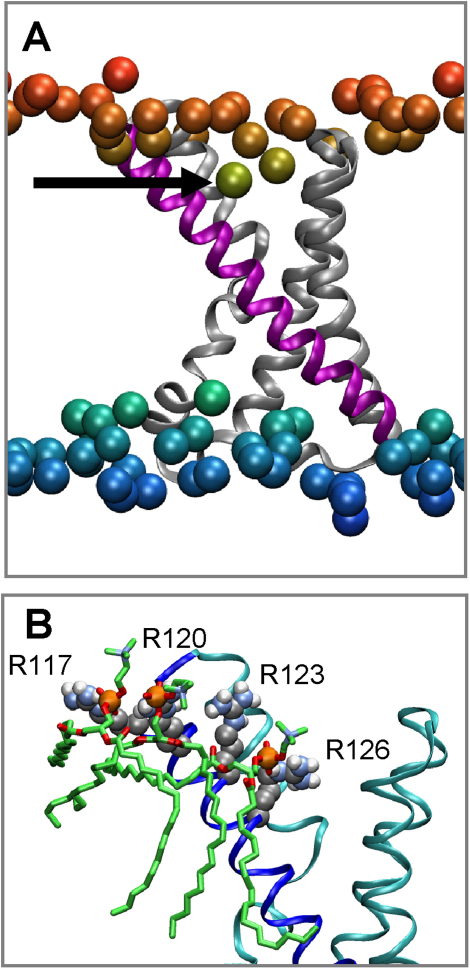
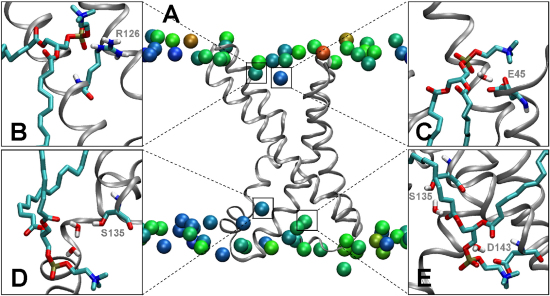
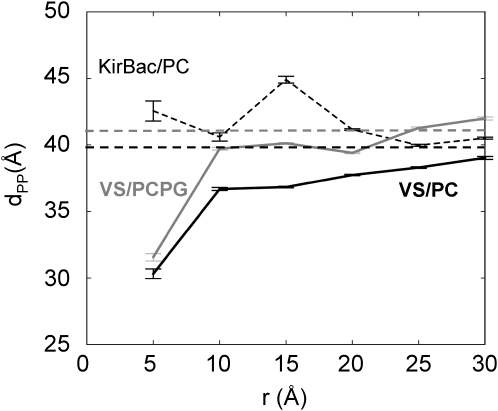
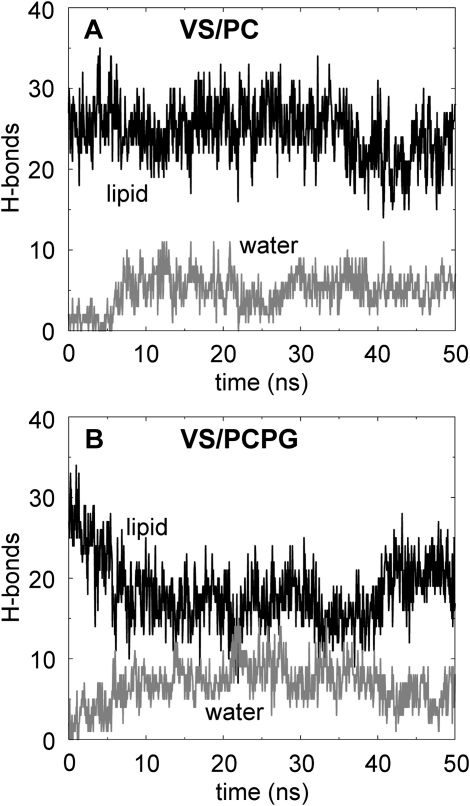
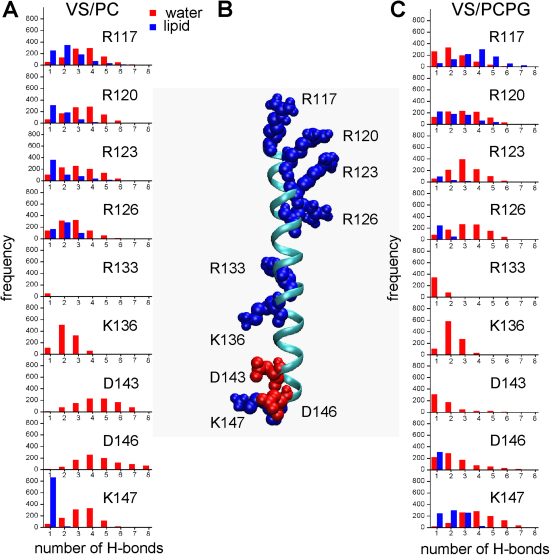
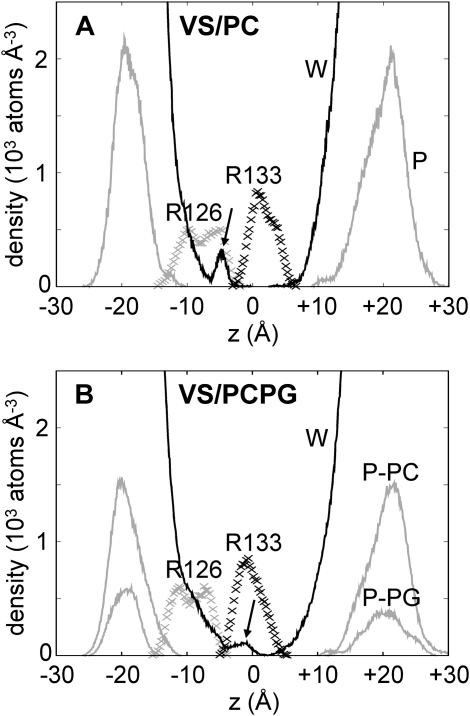
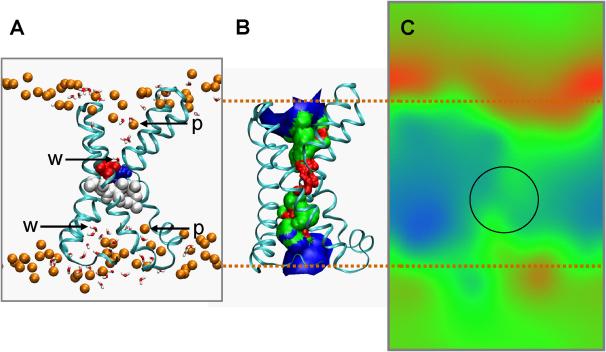
The nature of voltage sensing by voltage-activated ion channels is a key problem in membrane protein structural biology. The way in which the voltage-sensor (VS) domain interacts with its membrane environment remains unclear. In particular, the known structures of Kv channels do not readily explain how a positively charged S4 helix is able to stably span a lipid bilayer. Extended (2 x 50 ns) molecular dynamics simulations of the high-resolution structure of the isolated VS domain from the archaebacterial potassium channel KvAP, embedded in zwitterionic and in anionic lipid bilayers, have been used to explore VS/lipid interactions at atomic resolution. The simulations reveal penetration of water into the center of the VS and bilayer. Furthermore, there is significant local deformation of the lipid bilayer by interactions between lipid phosphate groups and arginine side chains of S4. As a consequence of this, the electrostatic field is "focused" across the center of the bilayer.
电压激活离子通道的电压传感本质是膜蛋白结构生物学中的一个关键问题。电压传感器(VS)结构域与其膜环境相互作用的方式仍不清楚。特别是,已知的Kv通道结构并不能轻易解释带正电的S4螺旋如何能够稳定地跨越脂质双层。对来自古细菌钾通道KvAP的分离VS结构域的高分辨率结构进行了扩展(2×50纳秒)分子动力学模拟,该结构域嵌入两性离子和阴离子脂质双层中,以原子分辨率探索VS/脂质相互作用。模拟结果揭示了水渗透到VS和双层的中心。此外,脂质磷酸基团与S4的精氨酸侧链之间的相互作用导致脂质双层发生显著的局部变形。因此,静电场在双层中心“聚焦”。