Eikermann Matthias, Jordan Amy S, Chamberlin Nancy L, Gautam Shiva, Wellman Andrew, Lo Yu-Lun, White David P, Malhotra Atul
Department of Sleep Medicine, Brigham and Women's Hospital, Harvard Medical School, 75 Francis St, Boston, MA 02115, USA.
Chest. 2007 Jun;131(6):1702-9. doi: 10.1378/chest.06-2653. Epub 2007 Apr 5.
Aging increases vulnerability to obstructive sleep apnea (OSA), but the underlying mechanisms remain unclear. Recent data in awake healthy volunteers show a decrease in the genioglossus negative pressure reflex and anatomic compromise with increasing age, suggesting an age-related predisposition to pharyngeal collapse. However, aging effects on pharyngeal collapsibility have not been studied extensively during sleep. We tested the hypotheses that upper airway closing pressure (PCLOSE) and the increase in pharyngeal resistance during sleep (primary outcomes) as well as measures of arousal threshold (secondary outcomes) increase with age.
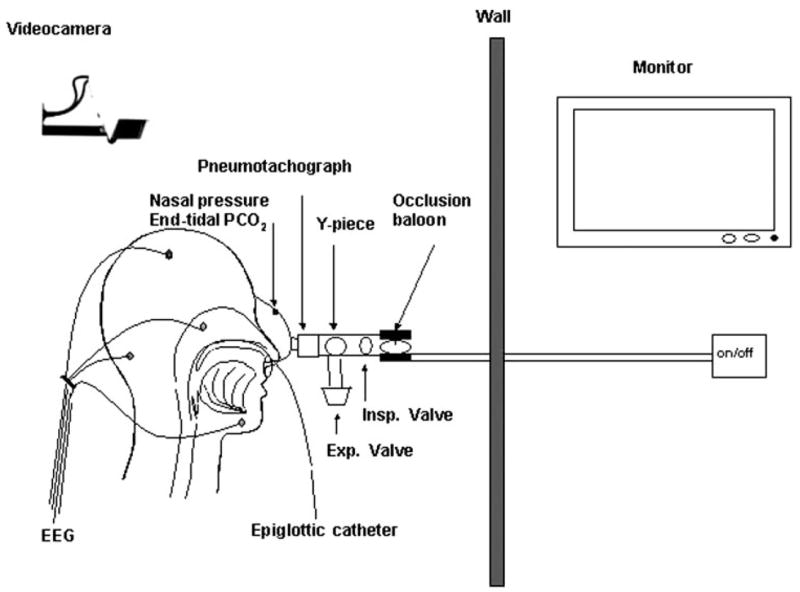
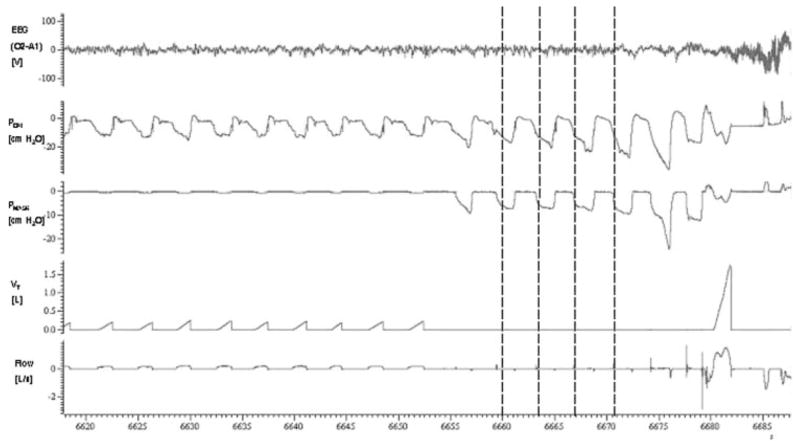
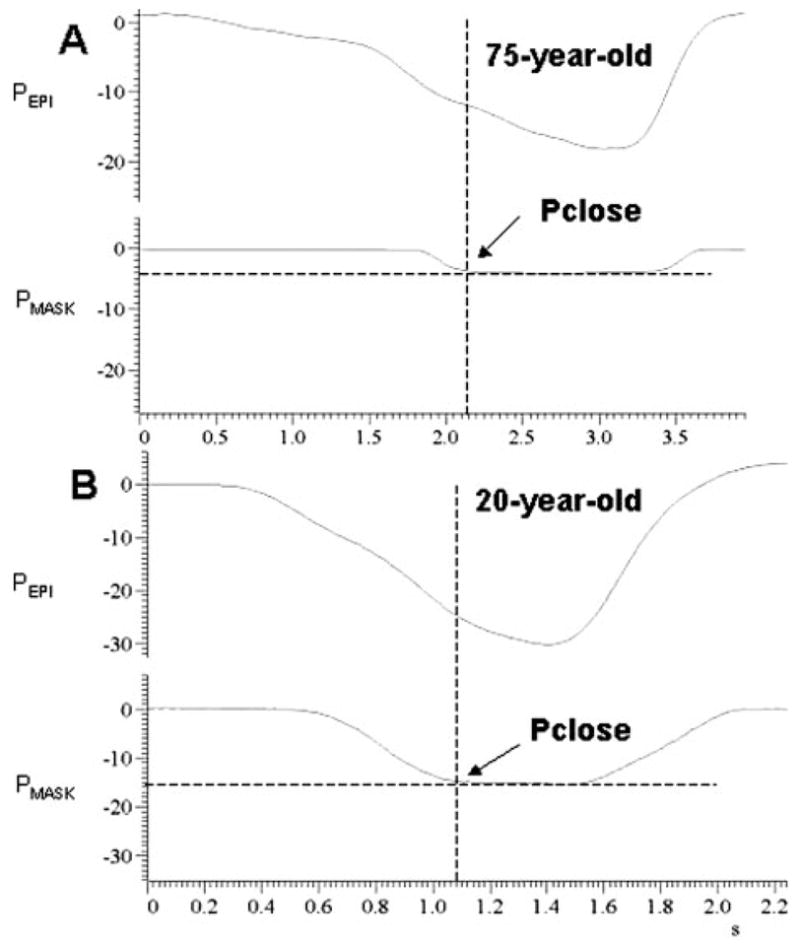
We studied 21 healthy individuals (8 women [mean (+/- SD) age, 36 +/- 18 years] and 13 men [mean age, 41 +/- 23 years]) who were between 18 and 75 years of age. During overnight polysomnography, we measured nasal pressure (PMASK) and epiglottic pressure (Pepi) during stage 2 sleep before and after airway occlusion (external valve) until arousal. PCLOSE was defined as the pressure at which PMASK plateaued despite further decreases in PEPI.
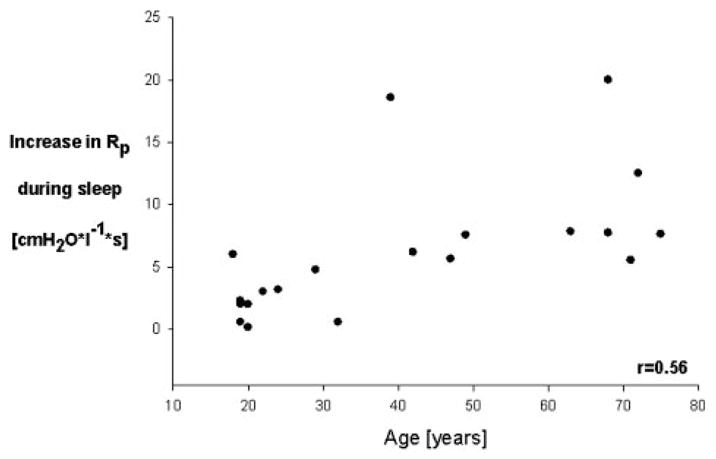
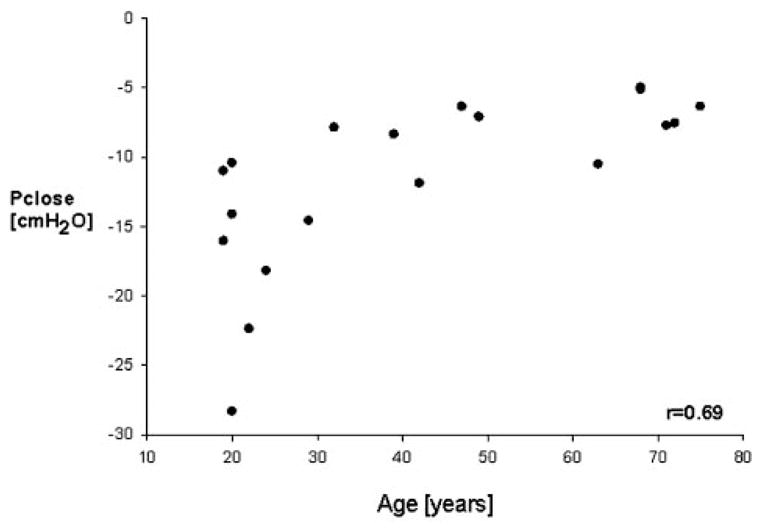
Increasing age was correlated with both pharyngeal collapsibility ([PCLOSE] r = 0.69; p < 0.01) and an increase in pharyngeal resistance during sleep (r = 0.56; p < 0.01) independent of body mass index (BMI) and gender. There was no evidence for an effect of age on arousal threshold after airway occlusion during stage 2 sleep.
Older age is associated with increased pharyngeal airway collapsibility during sleep independent of gender and BMI. These data may at least partially explain the mechanisms underlying the predisposition for pharyngeal collapse in the elderly.
衰老会增加患阻塞性睡眠呼吸暂停(OSA)的易感性,但其潜在机制仍不清楚。最近在清醒健康志愿者中的数据显示,随着年龄的增长,颏舌肌负压反射减弱,解剖结构受损,提示存在与年龄相关的咽部塌陷倾向。然而,衰老对睡眠期间咽部可塌陷性的影响尚未得到广泛研究。我们检验了以下假设:上气道闭合压(PCLOSE)以及睡眠期间咽部阻力的增加(主要结果),以及觉醒阈值的测量值(次要结果)会随着年龄的增长而增加。
我们研究了21名年龄在18至75岁之间的健康个体(8名女性[平均(±标准差)年龄,36±18岁]和13名男性[平均年龄,41±23岁])。在整夜多导睡眠监测期间,我们在气道阻塞(外部瓣膜)前后的2期睡眠中测量鼻压力(PMASK)和声门上压力(Pepi),直至觉醒。PCLOSE定义为尽管PEPI进一步下降但PMASK达到平稳时的压力。
年龄增长与咽部可塌陷性([PCLOSE]r = 0.69;p < 0.01)以及睡眠期间咽部阻力的增加(r = 0.56;p < 0.01)相关,且独立于体重指数(BMI)和性别。没有证据表明年龄对2期睡眠期间气道阻塞后的觉醒阈值有影响。
年龄较大与睡眠期间咽部气道可塌陷性增加相关,且独立于性别和BMI。这些数据可能至少部分解释了老年人咽部塌陷易感性的潜在机制。