Guarrera Paolo Maria, Lucia Leporatti Maria
Dipartimento di Biologia Vegetale Università La Sapienza Roma, Italy.
J Ethnobiol Ethnomed. 2007 May 30;3:23. doi: 10.1186/1746-4269-3-23.
The present paper is a brief survey on the ethnobotanical works published by the Authors since 1981, concerning the research carried out in some southern and central Italian regions. Before Roman domination these territories were first inhabited by local people, while the southern areas were colonized by the Greeks. These different cultural contributions left certain traces, both in the toponyms and in the vernacular names of the plants and, more generally, in the culture as a whole.
Field data were collected through open interviews, mainly of farmers, shepherds and elderly people, born or living in these areas for a long time. Voucher specimens of collected plants are preserved in the respective herbaria of the Authors and in the herbarium of "Roma Tre" University. Important contributions have been made by several students native to the areas under consideration. A comparative analysis with local specific ethnobotanical literature was carried out.
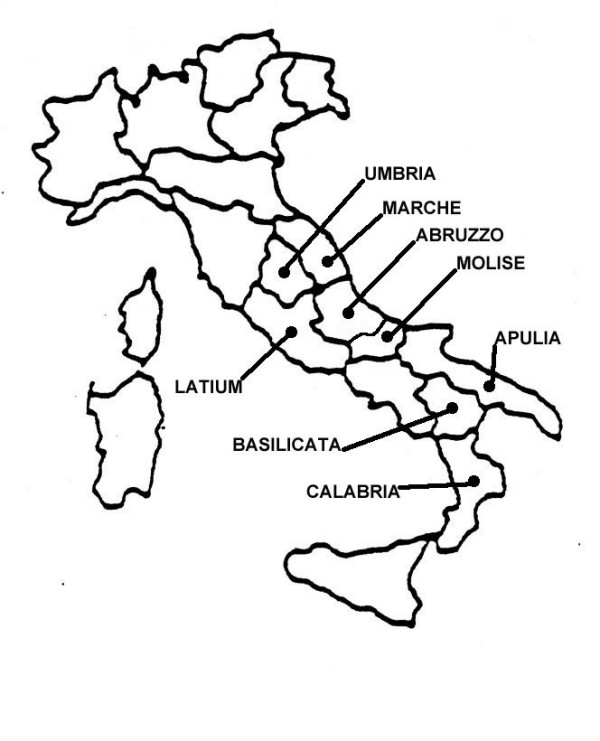
The paper reports several examples concerning human and veterinary popular medicine and in addition some anti-parasitic, nutraceutic, dye and miscellaneous uses are also described. Moreover vernacular names and toponyms are cited. Eight regions of central and southern Italy (particularly Latium, Abruzzo, Marche and Basilicata) were investigated and the data obtained are presented in 32 papers. Most of the species of ethnobotanical interest have been listed in Latium (368 species), Marche (274) and Abruzzo (203). The paper also highlights particularly interesting aspects or uses not previously described in the specific ethnobotanical literature.
Phyto-therapy in central and southern Italy is nowadays practised by a few elderly people who resort to medicinal plants only for mild complaints (on the contrary food uses are still commonly practised). Nowadays therapeutic uses, unlike in the past, are less closely or not at all linked to ritual aspects. Several plants deserve to be taken into consideration not only from the anthropological or cultural point of view, but also for further phyto-chemical investigation. Our studies, as well as those of other authors, try to provide an original picture of the local ethno-biodiversity.
本文是对作者自1981年以来发表的民族植物学著作的简要综述,内容涉及在意大利中南部一些地区开展的研究。在罗马统治之前,这些地区最初居住着当地人,而南部地区则被希腊人殖民。这些不同的文化贡献在地名、植物的俗名以及更广泛的整个文化中都留下了一定的痕迹。
通过公开访谈收集实地数据,访谈对象主要是长期出生或生活在这些地区的农民、牧民和老年人。采集植物的凭证标本保存在作者各自的植物标本馆以及“罗马第三大学”的植物标本馆中。来自所研究地区的几名学生也做出了重要贡献。还与当地特定的民族植物学文献进行了比较分析。
本文报告了几个人用和兽用民间医学的例子,此外还描述了一些抗寄生虫、营养保健、染料及其他用途。此外,还列举了俗名和地名。对意大利中南部的八个地区(特别是拉齐奥、阿布鲁佐、马尔凯和巴西利卡塔)进行了调查,所获数据发表在32篇论文中。大多数具有民族植物学研究价值的物种已在拉齐奥(368种)、马尔凯(274种)和阿布鲁佐(203种)列出。本文还强调了在特定民族植物学文献中未曾描述过的特别有趣的方面或用途。
如今,意大利中南部的植物疗法仅由少数老年人实施,他们仅在有轻微不适时才使用药用植物(相反,食品用途仍然普遍)。如今,与过去不同,治疗用途与仪式方面的联系不再紧密或完全没有联系。一些植物不仅从人类学或文化角度值得考虑,也值得进一步进行植物化学研究。我们的研究以及其他作者的研究试图呈现当地民族生物多样性的原始图景。