Buratti Emanuele, Dhir Ashish, Lewandowska Marzena A, Baralle Francisco E
International Centre for Genetic Engineering and Biotechnology (ICGEB), 34012 Trieste, Italy.
Nucleic Acids Res. 2007;35(13):4369-83. doi: 10.1093/nar/gkm447. Epub 2007 Jun 18.
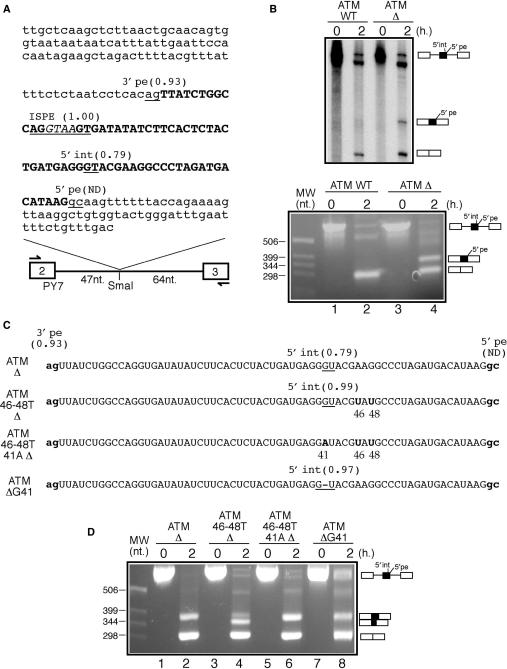
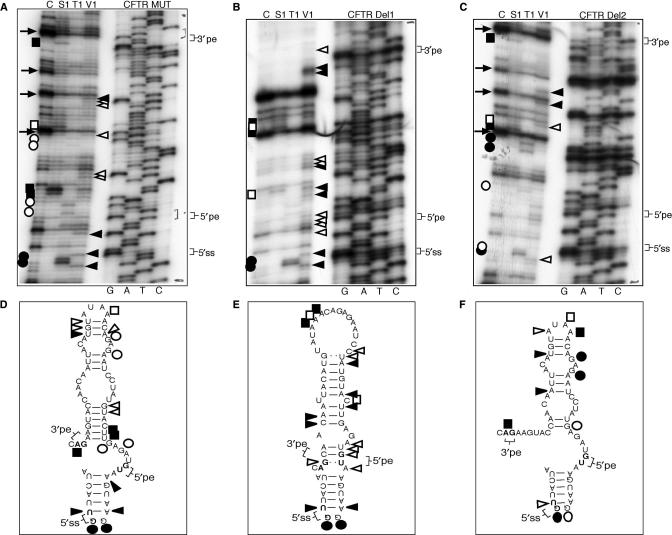
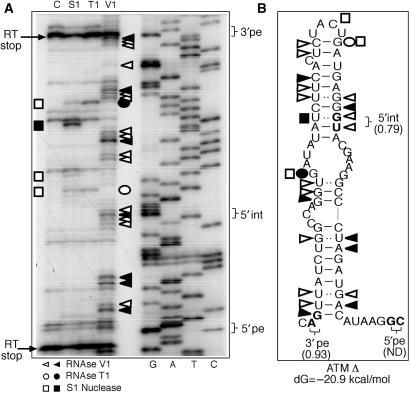
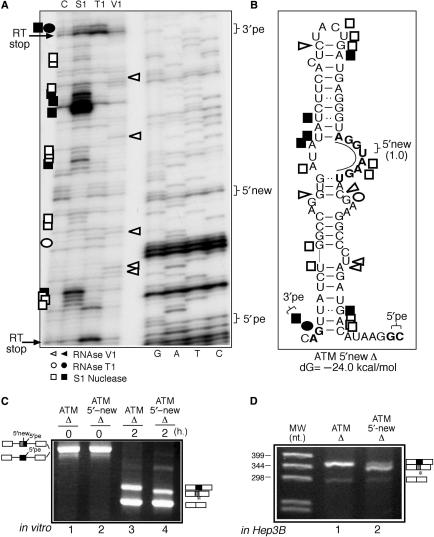
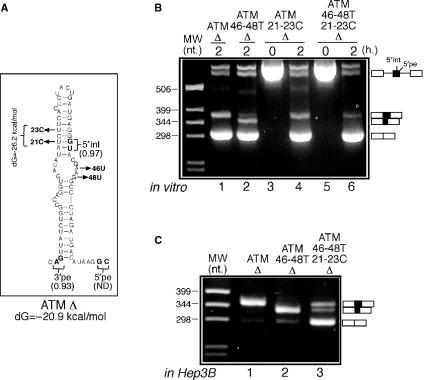
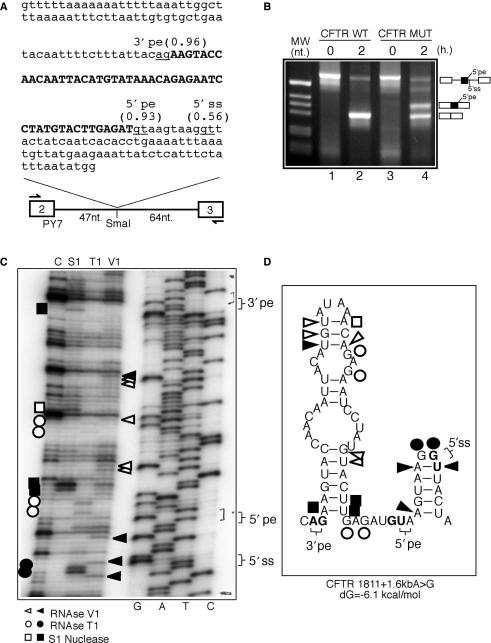
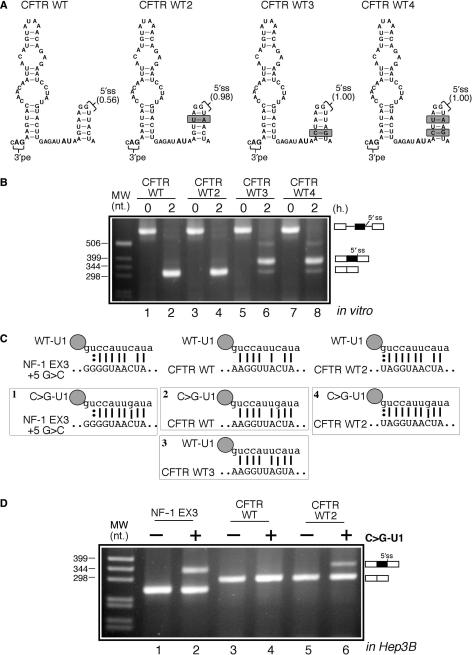
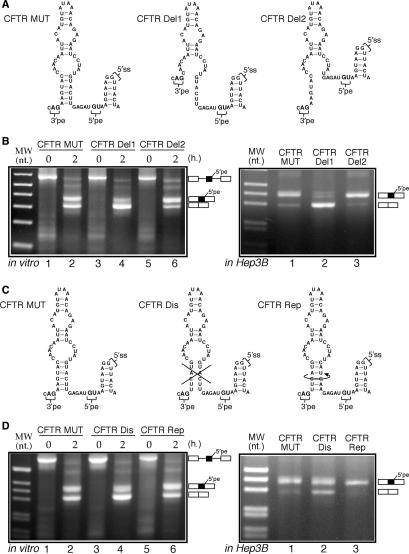
Genomic variations deep in the intronic regions of pre-mRNA molecules are increasingly reported to affect splicing events. However, there is no general explanation why apparently similar variations may have either no effect on splicing or cause significant splicing alterations. In this work we have examined the structural architecture of pseudoexons previously described in ATM and CFTR patients. The ATM case derives from the deletion of a repressor element and is characterized by an aberrant 5'ss selection despite the presence of better alternatives. The CFTR pseudoexon instead derives from the creation of a new 5'ss that is used while a nearby pre-existing donor-like sequence is never selected. Our results indicate that RNA structure is a major splicing regulatory factor in both cases. Furthermore, manipulation of the original RNA structures can lead to pseudoexon inclusion following the exposure of unused 5'ss already present in their wild-type intronic sequences and prevented to be recognized because of their location in RNA stem structures. Our data show that intrinsic structural features of introns must be taken into account to understand the mechanism of pseudoexon activation in genetic diseases. Our observations may help to improve diagnostics prediction programmes and eventual therapeutic targeting.
越来越多的报道称,前体mRNA分子内含子区域深处的基因组变异会影响剪接事件。然而,对于为什么明显相似的变异可能对剪接没有影响或导致显著的剪接改变,目前尚无普遍的解释。在这项研究中,我们检查了先前在ATM和CFTR患者中描述的假外显子的结构架构。ATM病例源自一个阻遏元件的缺失,其特征是尽管存在更好的选择,但仍出现异常的5'剪接位点选择。相反,CFTR假外显子源自一个新的5'剪接位点的产生,该位点被使用,而附近预先存在的类似供体的序列从未被选择。我们的结果表明,在这两种情况下,RNA结构都是主要的剪接调节因子。此外,对原始RNA结构的操作可导致假外显子的包含,这是由于其野生型内含子序列中已经存在的未使用的5'剪接位点暴露出来,并且由于它们位于RNA茎结构中而无法被识别。我们的数据表明,为了理解遗传疾病中假外显子激活的机制,必须考虑内含子的内在结构特征。我们的观察结果可能有助于改进诊断预测程序和最终的治疗靶点。