Poeggeler B, Rassoulpour A, Wu H-Q, Guidetti P, Roberts R C, Schwarcz R
Maryland Psychiatric Research Center, University of Maryland School of Medicine, P.O. Box 21247, Baltimore, MD 21228, USA.
Neuroscience. 2007 Aug 10;148(1):188-97. doi: 10.1016/j.neuroscience.2007.05.033. Epub 2007 Jul 16.
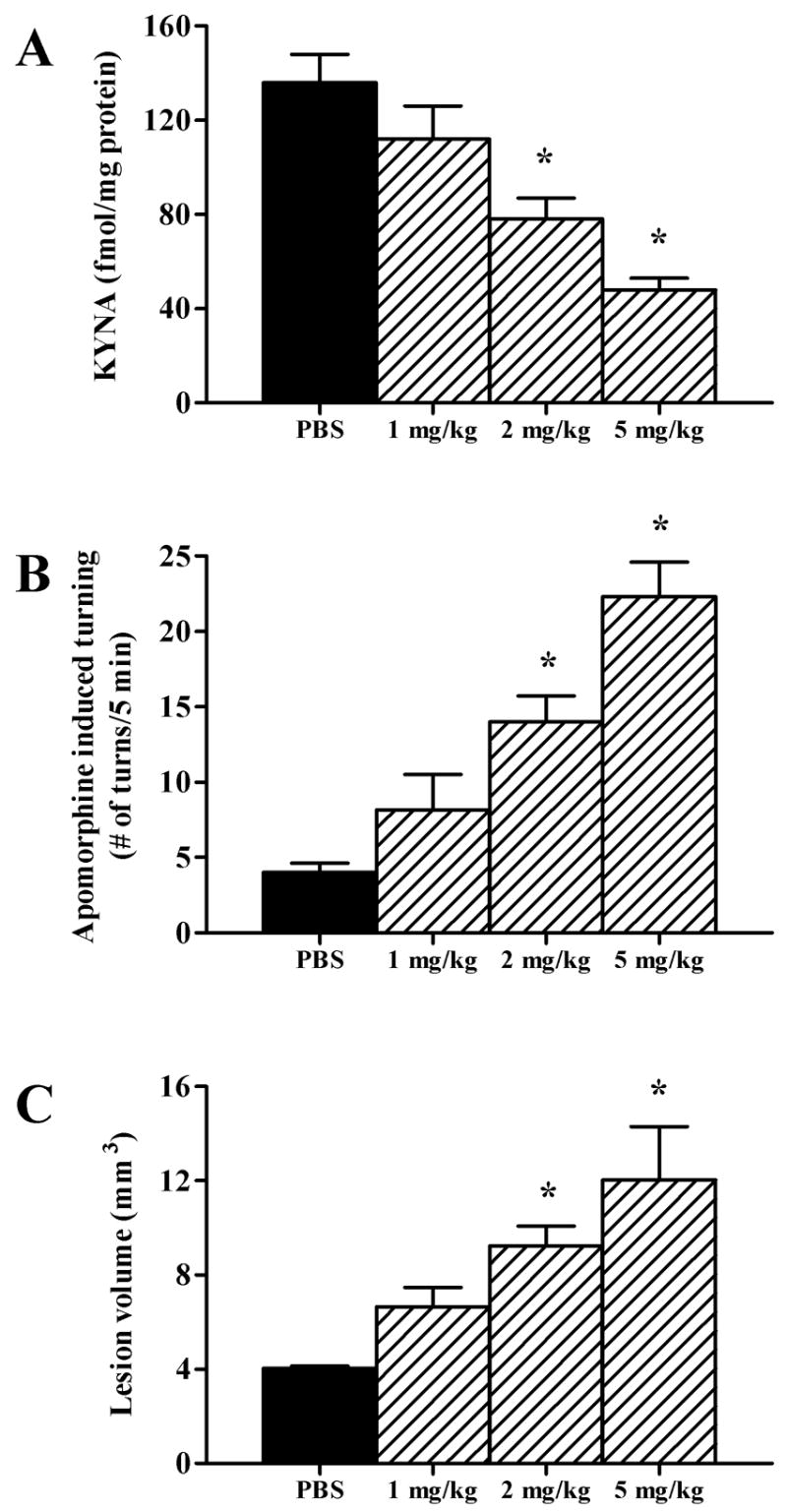
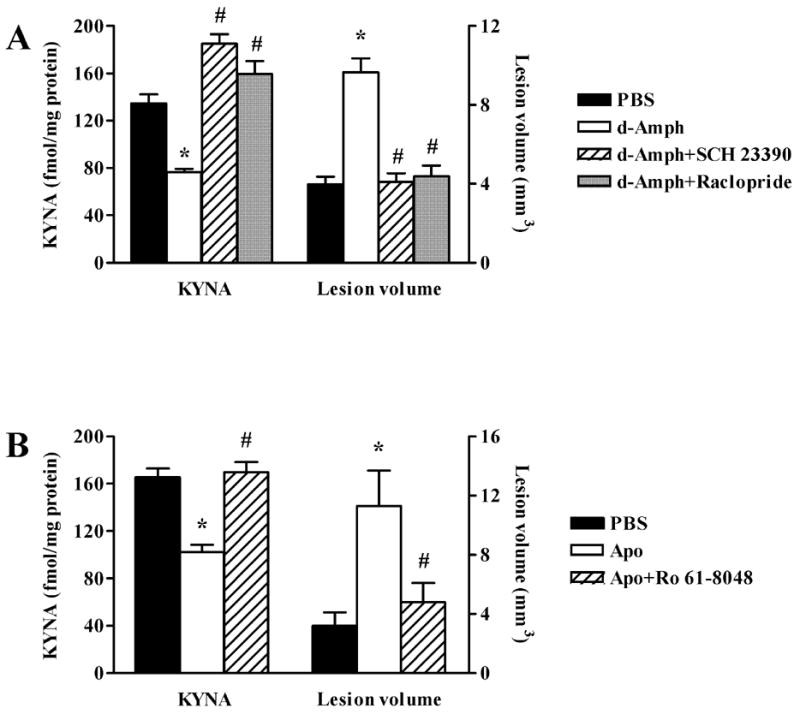
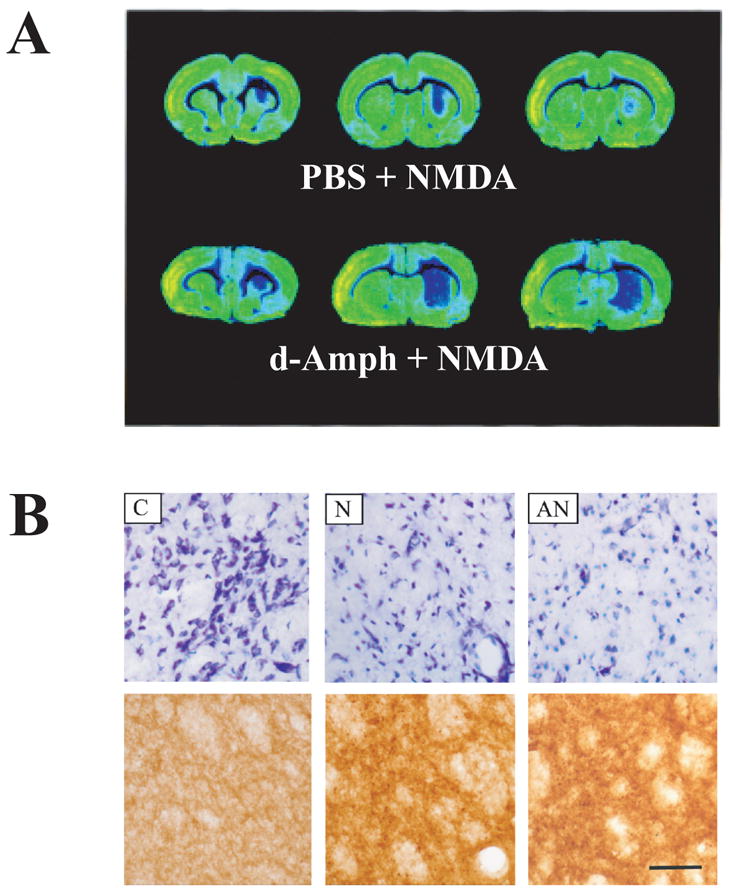
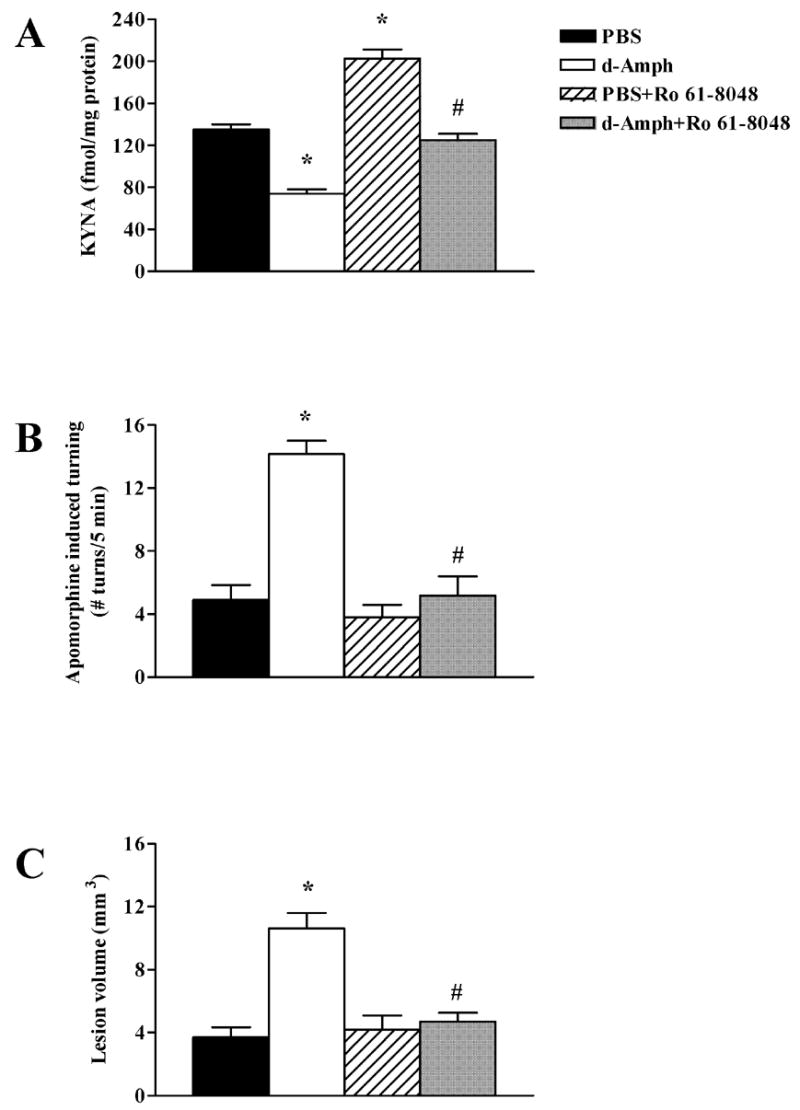
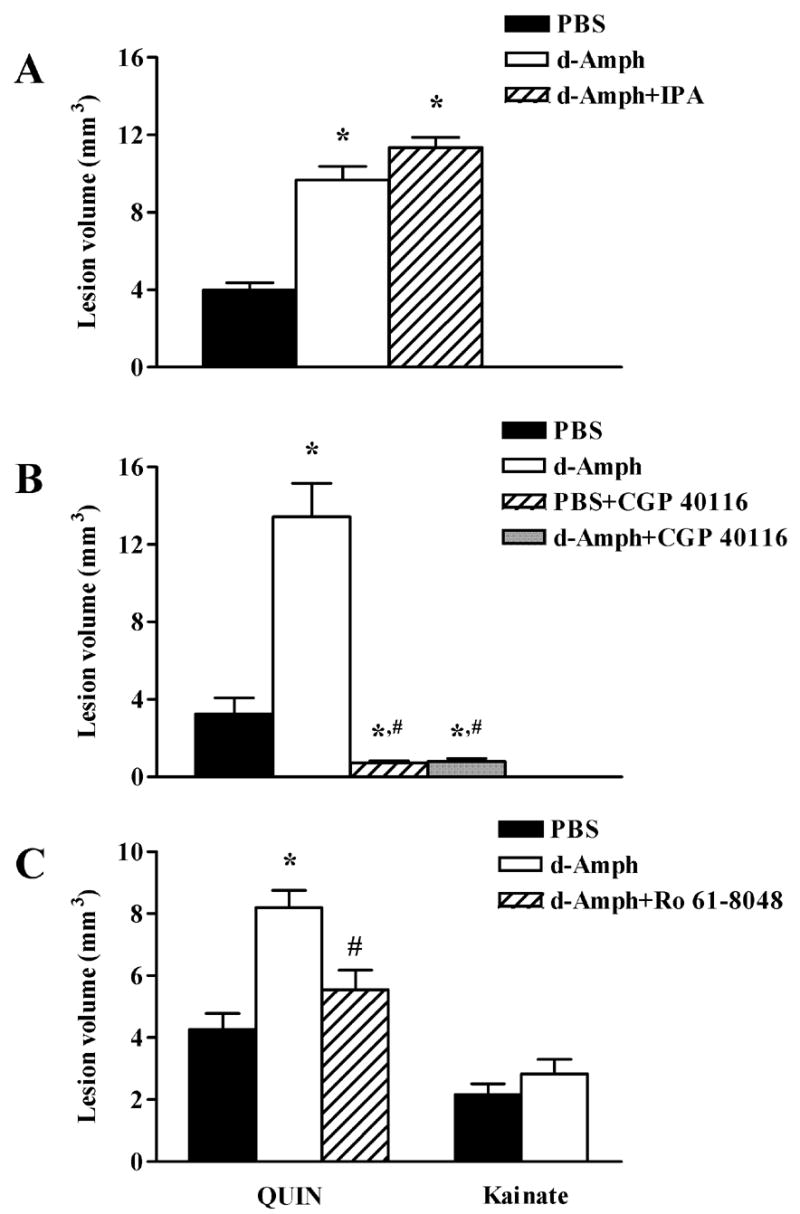
The N-methyl-d-aspartate (NMDA) subtype of glutamate receptors plays an important role in brain physiology, but excessive receptor stimulation results in seizures and excitotoxic nerve cell death. NMDA receptor-mediated neuronal excitation and injury can be prevented by high, non-physiological concentrations of the neuroinhibitory tryptophan metabolite kynurenic acid (KYNA). Here we report that endogenous KYNA, which is formed in and released from astrocytes, controls NMDA receptors in vivo. This was revealed with the aid of the dopaminergic drugs d-amphetamine and apomorphine, which cause rapid, transient decreases in striatal KYNA levels in rats. Intrastriatal injections of the excitotoxins NMDA or quinolinate (but not the non-NMDA receptor agonist kainate) at the time of maximal KYNA reduction resulted in two- to threefold increases in excitotoxic lesion size. Pre-treatment with a kynurenine 3-hydroxylase inhibitor or with dopamine receptor antagonists, i.e., two classes of pharmacological agents that prevented the reduction in brain KYNA caused by dopaminergic stimulation, abolished the potentiation of neurotoxicity. Thus, the present study identifies a previously unappreciated role of KYNA as a functional link between dopamine receptor stimulation and NMDA neurotoxicity in the striatum.
谷氨酸受体的N-甲基-D-天冬氨酸(NMDA)亚型在脑生理学中发挥着重要作用,但受体过度刺激会导致癫痫发作和兴奋性毒性神经细胞死亡。高浓度、非生理性的神经抑制性色氨酸代谢产物犬尿喹啉酸(KYNA)可预防NMDA受体介导的神经元兴奋和损伤。在此我们报告,由星形胶质细胞生成并释放的内源性KYNA在体内控制着NMDA受体。这是借助多巴胺能药物d-苯丙胺和阿扑吗啡得以揭示的,这两种药物会使大鼠纹状体中KYNA水平迅速、短暂下降。在KYNA降至最低水平时,向纹状体内注射兴奋性毒素NMDA或喹啉酸(而非非NMDA受体激动剂海藻酸)会导致兴奋性毒性损伤大小增加两到三倍。用犬尿氨酸3-羟化酶抑制剂或多巴胺受体拮抗剂进行预处理,即两类可防止多巴胺能刺激引起脑内KYNA减少的药物,可消除神经毒性的增强作用。因此,本研究确定了KYNA此前未被认识到的作用,即作为多巴胺受体刺激与纹状体中NMDA神经毒性之间的功能联系。