Oelkers Karsten, Goffard Nicolas, Weiller Georg F, Gresshoff Peter M, Mathesius Ulrike, Frickey Tancred
School of Biochemistry and Molecular Biology, The Australian National University, Canberra, ACT, Australia.
BMC Plant Biol. 2008 Jan 3;8:1. doi: 10.1186/1471-2229-8-1.
Plants encode a large number of leucine-rich repeat receptor-like kinases. Legumes encode several LRR-RLK linked to the process of root nodule formation, the ligands of which are unknown. To identify ligands for these receptors, we used a combination of profile hidden Markov models and position-specific iterative BLAST, allowing us to detect new members of the CLV3/ESR (CLE) protein family from publicly available sequence databases.
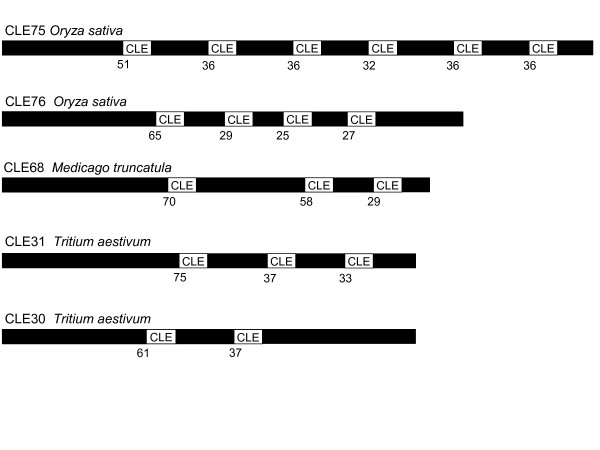
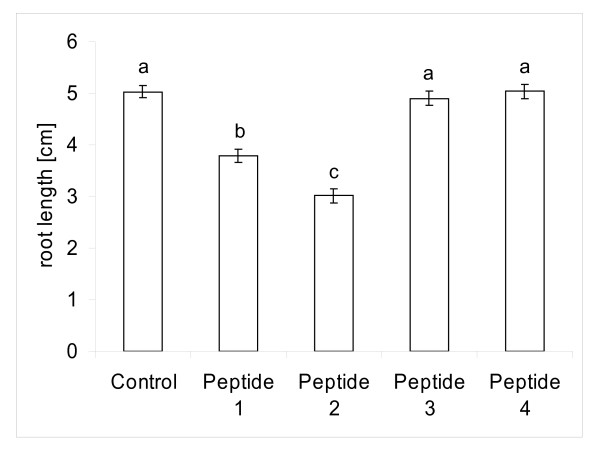
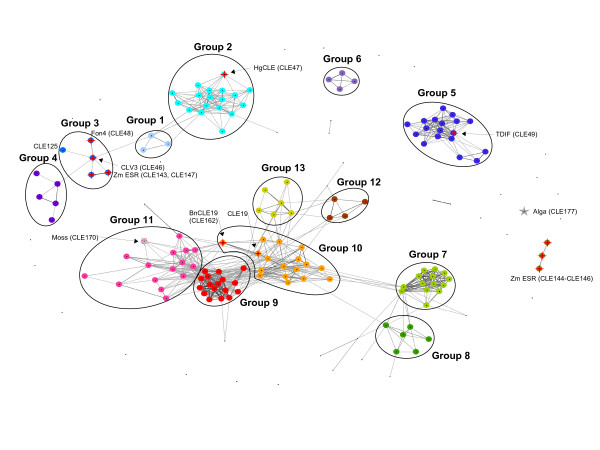
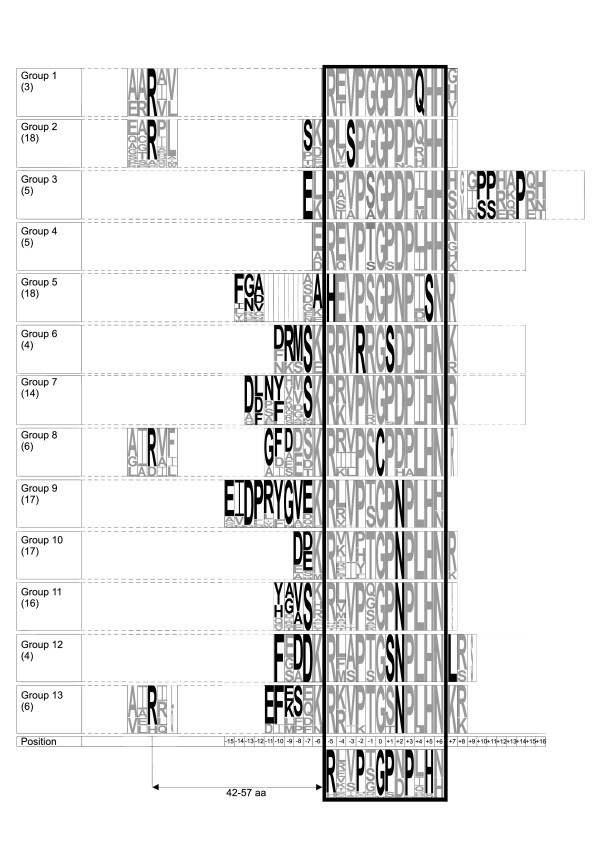
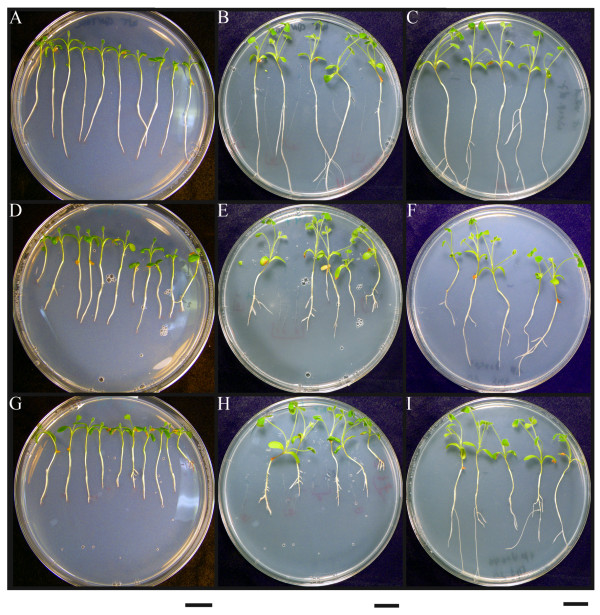
We identified 114 new members of the CLE protein family from various plant species, as well as five protein sequences containing multiple CLE domains. We were able to cluster the CLE domain proteins into 13 distinct groups based on their pairwise similarities in the primary CLE motif. In addition, we identified secondary motifs that coincide with our sequence clusters. The groupings based on the CLE motifs correlate with known biological functions of CLE signaling peptides and are analogous to groupings based on phylogenetic analysis and ectopic overexpression studies. We tested the biological function of two of the predicted CLE signaling peptides in the legume Medicago truncatula. These peptides inhibit the activity of the root apical and lateral root meristems in a manner consistent with our functional predictions based on other CLE signaling peptides clustering in the same groups.
Our analysis provides an identification and classification of a large number of novel potential CLE signaling peptides. The additional motifs we found could lead to future discovery of recognition sites for processing peptidases as well as predictions for receptor binding specificity.
植物编码大量富含亮氨酸重复序列的受体样激酶。豆科植物编码几种与根瘤形成过程相关的LRR-RLK,其配体尚不清楚。为了鉴定这些受体的配体,我们结合了轮廓隐马尔可夫模型和位置特异性迭代BLAST,从而能够从公开可用的序列数据库中检测CLV3/ESR(CLE)蛋白家族的新成员。
我们从各种植物物种中鉴定出114个CLE蛋白家族的新成员,以及5个含有多个CLE结构域的蛋白质序列。基于它们在主要CLE基序中的成对相似性,我们能够将CLE结构域蛋白聚类为13个不同的组。此外,我们鉴定出与我们的序列簇一致的二级基序。基于CLE基序的分组与CLE信号肽的已知生物学功能相关,并且类似于基于系统发育分析和异位过表达研究的分组。我们在豆科植物蒺藜苜蓿中测试了两种预测的CLE信号肽的生物学功能。这些肽以与我们基于同一组中其他CLE信号肽聚类的功能预测一致的方式抑制根尖和侧根分生组织的活性。
我们的分析提供了大量新型潜在CLE信号肽的鉴定和分类。我们发现的额外基序可能会导致未来发现加工肽酶的识别位点以及预测受体结合特异性。