Ersner-Hershfield Hal, Mikels Joseph A, Sullivan Sarah J, Carstensen Laura L
Department of Psychology, Stanford University, CA 94305, USA.
J Pers Soc Psychol. 2008 Jan;94(1):158-67. doi: 10.1037/0022-3514.94.1.158.
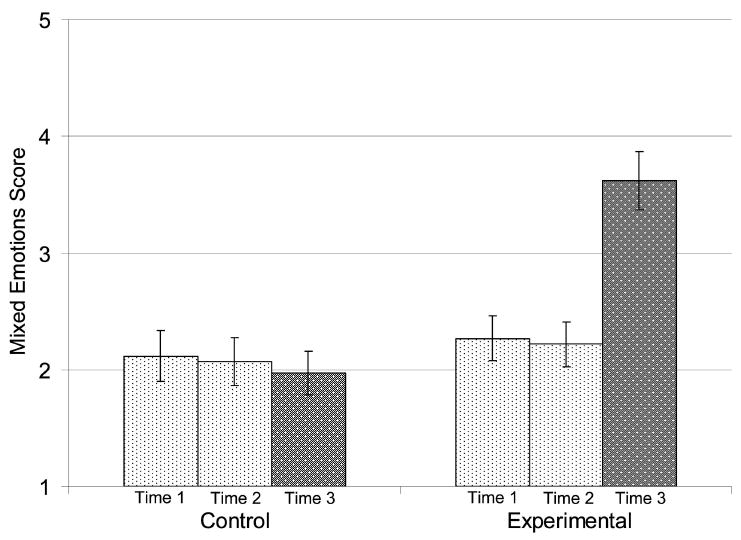
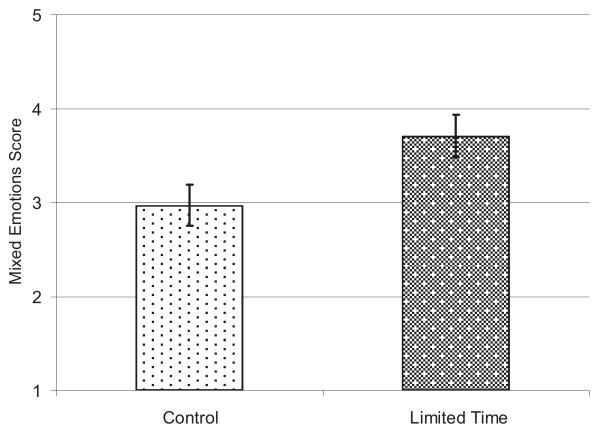
The experience of mixed emotions increases with age. Socioemotional selectivity theory suggests that mixed emotions are associated with shifting time horizons. Theoretically, perceived constraints on future time increase appreciation for life, which, in turn, elicits positive emotions such as happiness. Yet, the very same temporal constraints heighten awareness that these positive experiences come to an end, thus yielding mixed emotional states. In 2 studies, the authors examined the link between the awareness of anticipated endings and mixed emotional experience. In Study 1, participants repeatedly imagined being in a meaningful location. Participants in the experimental condition imagined being in the meaningful location for the final time. Only participants who imagined "last times" at meaningful locations experienced more mixed emotions. In Study 2, college seniors reported their emotions on graduation day. Mixed emotions were higher when participants were reminded of the ending that they were experiencing. Findings suggest that poignancy is an emotional experience associated with meaningful endings.
复杂情感的体验会随着年龄的增长而增加。社会情感选择理论表明,复杂情感与不断变化的时间视野有关。从理论上讲,对未来时间的感知限制会增强对生活的欣赏,进而引发诸如幸福等积极情绪。然而,正是同样的时间限制提高了人们对这些积极体验即将结束的意识,从而产生复杂的情绪状态。在两项研究中,作者检验了预期结局意识与复杂情感体验之间的联系。在研究1中,参与者反复想象身处一个有意义的地方。处于实验条件下的参与者想象这是最后一次身处这个有意义的地方。只有那些想象在有意义的地方“最后一次”的参与者体验到了更多的复杂情感。在研究2中,大四学生报告了他们在毕业那天的情绪。当参与者被提醒他们正在经历的结局时,复杂情感更强烈。研究结果表明,辛酸是一种与有意义的结局相关的情感体验。