van Meel Eline, Klumperman Judith
Cell Microscopy Center, Department of Cell Biology, University Medical Center Utrecht, Heidelberglaan 100, Utrecht, The Netherlands.
Histochem Cell Biol. 2008 Mar;129(3):253-66. doi: 10.1007/s00418-008-0384-0. Epub 2008 Feb 15.
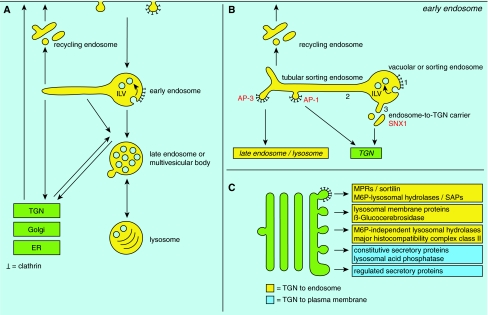
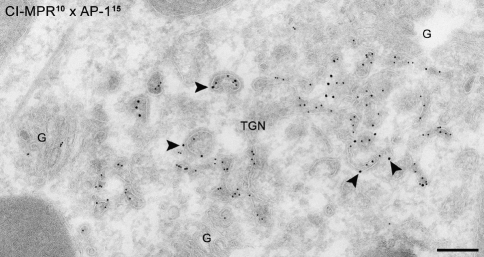
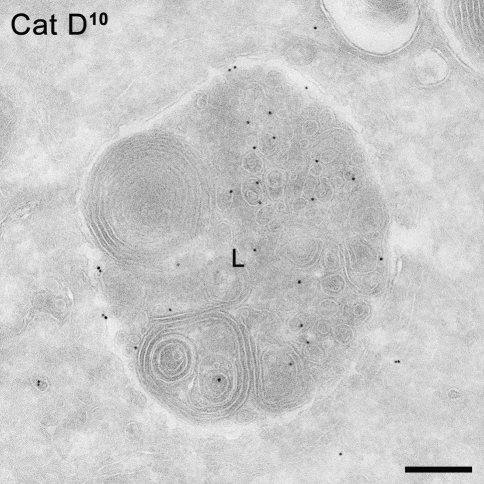
Lysosomes are specialized compartments for the degradation of endocytosed and intracellular material and essential regulators of cellular homeostasis. The importance of lysosomes is illustrated by the rapidly growing number of human disorders related to a defect in lysosomal functioning. Here, we review current insights in the mechanisms of lysosome biogenesis and protein sorting within the endo-lysosomal system. We present increasing evidence for the existence of parallel pathways for the delivery of newly synthesized lysosomal proteins directly from the trans-Golgi network (TGN) to the endo-lysosomal system. These pathways are either dependent or independent of mannose 6-phosphate receptors and likely involve multiple exits for lysosomal proteins from the TGN. In addition, we discuss the different endosomal intermediates and subdomains that are involved in sorting of endocytosed cargo. Throughout our review, we highlight some examples in the literature showing how imaging, especially electron microscopy, has made major contributions to our understanding of the endo-lysosomal system today.
溶酶体是用于降解内吞物质和细胞内物质的特殊区室,也是细胞稳态的重要调节因子。与溶酶体功能缺陷相关的人类疾病数量迅速增加,这说明了溶酶体的重要性。在这里,我们综述了目前对内溶酶体系统中溶酶体生物发生和蛋白质分选机制的见解。我们提出了越来越多的证据,表明存在从反式高尔基体网络(TGN)直接向内溶酶体系统输送新合成的溶酶体蛋白的平行途径。这些途径要么依赖于甘露糖6-磷酸受体,要么与之无关,并且可能涉及溶酶体蛋白从TGN的多个出口。此外,我们讨论了参与内吞货物分选的不同内体中间体和亚结构域。在我们的综述中,我们重点介绍了文献中的一些例子,展示了成像技术,尤其是电子显微镜,如何为我们目前对内溶酶体系统的理解做出了重大贡献。