Petróczi Andrea, Aidman Eugene
Kingston University, Faculty of Science, School of Life Sciences, Penrhyn Road, Kingston upon Thames, Surrey, KT1 2EE, UK.
Subst Abuse Treat Prev Policy. 2008 Mar 10;3:7. doi: 10.1186/1747-597X-3-7.
Performance enhancement (PE) is a natural and essential ingredient of competitive sport. Except for nutritional supplement contamination, accidental use of doping is highly unlikely. It requires deliberation, planning and commitment; and is influenced by a host of protective and risk factors.
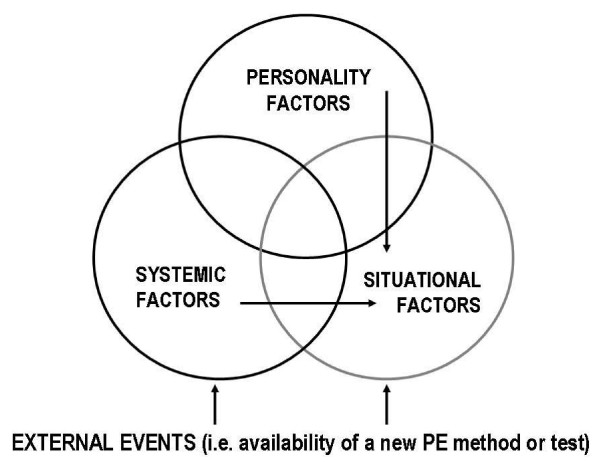
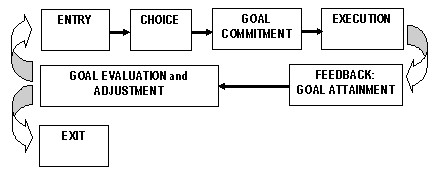
In the course of their career, athletes constantly set goals and make choices regarding the way these goals can be achieved. The cycle of choice - goal commitment - execution - feedback on goal attainment - goal evaluation/adjustment has numerous exit points, each providing an opportunity for behaviour change, which may or may not be related to the use of prohibited methods. The interplay between facilitating and inhibiting systemic and personality factors, constantly influenced by situational factors could result in an outcome vector of 'doping attitudes', which combines with subjective norms to influence intentions to choose prohibited PE methods. These influences also vary from one stage of athlete development to the next, making some athletes more vulnerable to engaging in doping practices than others, and more vulnerable at certain time periods - and not others.
Model-testing requires a series of carefully planned and coordinated studies. Correlational studies can establish relationships where the directionality is not-known or not important. Experimental studies with the manipulation of doping expectancies and risk factors can be used to demonstrate causality and evaluate potential intervention strategies. The final model can be tested via a behavioural simulation, with outcomes compared to those expected from literature precedence or used as a simulated computer game for empirical data collection.
A hypothesized life-cycle model of PE identifies vulnerability factors across the stages of athlete development with the view of informing the design of anti-doping assessment and intervention. The model suggests that, instead of focusing on the actual engagement in prohibited PE practices, deterrence strategies are likely to be more effective if they target the influencing factors at the appropriate stage and identify groups of athletes and their respective career stages, which pose particular risks of engagement in doping practices. This enables a more effective intervention approach by targeting specific risk factors and expectancies.
成绩提升(PE)是竞技运动中自然且重要的组成部分。除了营养补充剂污染外,意外使用兴奋剂的可能性极小。这需要深思熟虑、精心策划和坚定决心,并且受到一系列保护因素和风险因素的影响。
在其职业生涯中,运动员不断设定目标,并就如何实现这些目标做出选择。选择 - 目标承诺 - 执行 - 目标达成反馈 - 目标评估/调整的循环有许多出口点,每个出口点都为行为改变提供了机会,这种改变可能与使用违禁方法有关,也可能无关。促进和抑制系统性及个性因素之间的相互作用,不断受到情境因素的影响,可能导致“兴奋剂态度”的结果向量,该向量与主观规范相结合,影响选择违禁成绩提升方法的意图。这些影响在运动员发展的不同阶段也有所不同,使得一些运动员比其他运动员更容易参与兴奋剂行为,并且在某些时间段更容易受到影响,而在其他时间段则不然。
模型验证需要一系列精心策划和协调的研究。相关性研究可以建立方向性未知或不重要的关系。通过操纵兴奋剂预期和风险因素进行的实验研究可用于证明因果关系并评估潜在的干预策略。最终模型可以通过行为模拟进行测试,将结果与文献先例预期的结果进行比较,或用作收集实证数据的模拟电脑游戏。
一个假设的成绩提升生命周期模型识别了运动员发展各阶段中的脆弱因素,旨在为反兴奋剂评估和干预的设计提供信息。该模型表明,威慑策略若针对适当阶段的影响因素,并识别出参与兴奋剂行为风险特别高的运动员群体及其各自的职业生涯阶段,而不是专注于实际参与违禁成绩提升行为,可能会更有效。这通过针对特定风险因素和预期,实现了更有效的干预方法。