Roberts Bayard, Ocaka Kaducu Felix, Browne John, Oyok Thomas, Sondorp Egbert
Conflict and Health Programme, Health Policy Unit, Department of Public Health and Policy, London School of Hygiene and Tropical Medicine, Keppel Street, London, WC1E 7HT, UK.
BMC Psychiatry. 2008 May 19;8:38. doi: 10.1186/1471-244X-8-38.
The 20 year war in northern Uganda between the Lord's Resistance Army and the Ugandan government has resulted in the displacement of up to 2 million people within Uganda. The purpose of the study was to measure rates of post-traumatic stress disorder (PTSD) and depression amongst these internally displaced persons (IDPs), and investigate associated demographic and trauma exposure risk factors.
A cross-sectional multi-staged, random cluster survey with 1210 adult IDPs was conducted in November 2006 in Gulu and Amuru districts of northern Uganda. Levels of exposure to traumatic events and PTSD were measured using the Harvard Trauma Questionnaire (original version), and levels of depression were measured using the Hopkins Symptom Checklist-25. Multivariate logistic regression was used to analyse the association of demographic and trauma exposure variables on the outcomes of PTSD and depression.
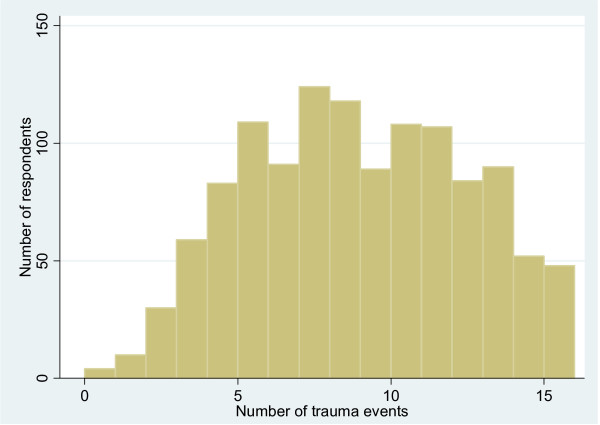
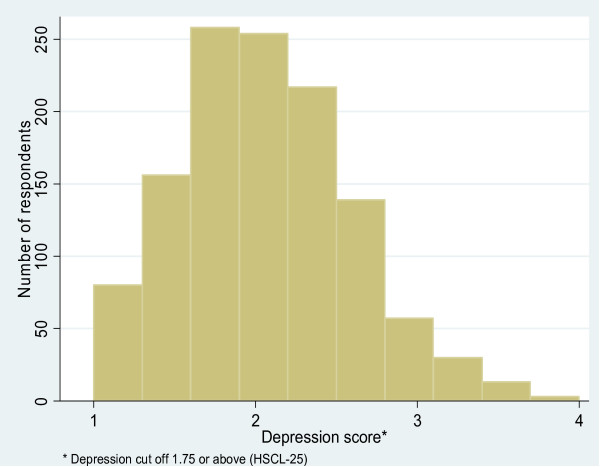
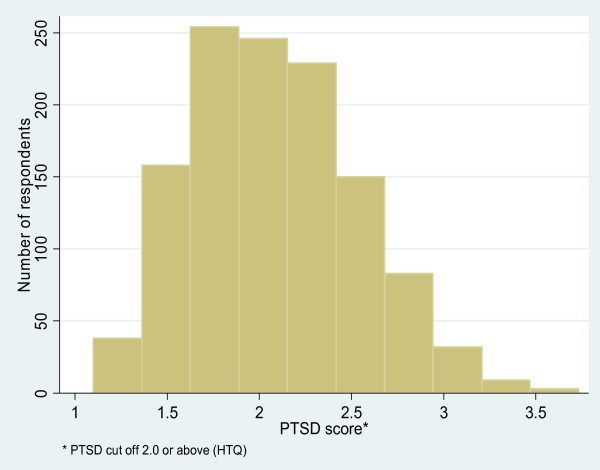
Over half (54%) of the respondents met symptom criteria for PTSD, and over two thirds (67%) of respondents met symptom criteria for depression. Over half (58%) of respondents had experienced 8 or more of the 16 trauma events covered in the questionnaire. Factors strongly linked with PTSD and depression included gender, marital status, distance of displacement, experiencing ill health without medical care, experiencing rape or sexual abuse, experiencing lack of food or water, and experiencing higher rates of trauma exposure.
This study provides evidence of exposure to traumatic events and deprivation of essential goods and services suffered by IDPs, and the resultant effect this has upon their mental health. Protection and social and psychological assistance are urgently required to help IDPs in northern Uganda re-build their lives.
乌干达北部上帝抵抗军与乌干达政府之间长达20年的战争致使乌干达境内多达200万人流离失所。本研究旨在测定这些境内流离失所者(IDP)中创伤后应激障碍(PTSD)和抑郁症的发病率,并调查相关的人口统计学和创伤暴露风险因素。
2006年11月,在乌干达北部的古卢区和阿鲁区对1210名成年境内流离失所者进行了一项横断面多阶段随机整群调查。使用哈佛创伤问卷(原始版本)测定创伤事件暴露水平和创伤后应激障碍水平,并使用霍普金斯症状清单-25测定抑郁水平。采用多变量逻辑回归分析人口统计学和创伤暴露变量与创伤后应激障碍和抑郁症结果之间的关联。
超过半数(54%)的受访者符合创伤后应激障碍的症状标准,超过三分之二(67%)的受访者符合抑郁症的症状标准。超过半数(58%)的受访者经历了问卷中涵盖的16种创伤事件中的8种或更多。与创伤后应激障碍和抑郁症密切相关的因素包括性别、婚姻状况、流离失所距离、在无医疗救治情况下健康状况不佳、遭受强奸或性虐待、经历食物或水短缺以及创伤暴露率较高。
本研究提供了证据,证明境内流离失所者遭受了创伤事件以及基本物资和服务的匮乏,以及这对他们心理健康产生的影响。迫切需要提供保护以及社会和心理援助,以帮助乌干达北部的境内流离失所者重建生活。