Jones Stephany G, Vyazovskiy Vladyslav V, Cirelli Chiara, Tononi Giulio, Benca Ruth M
Neuroscience Training Program, University of Wisconsin-Madison, USA.
BMC Neurosci. 2008 May 27;9:47. doi: 10.1186/1471-2202-9-47.
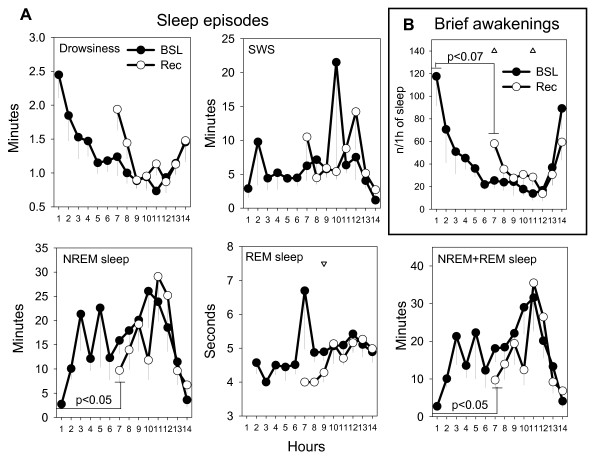
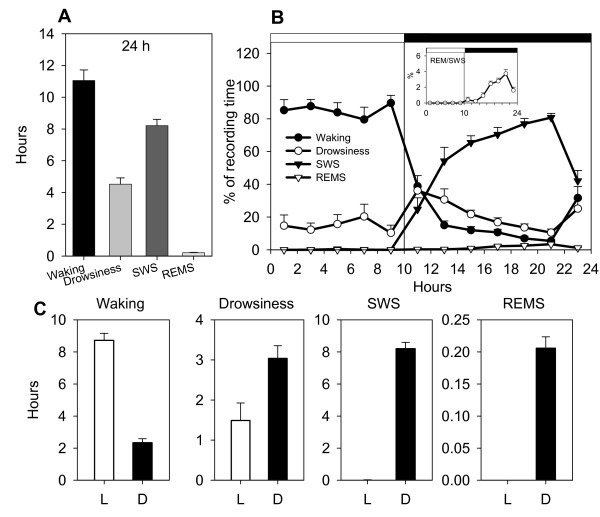
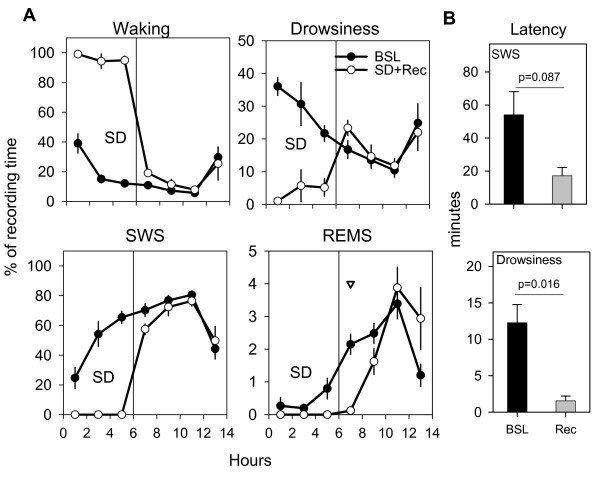
Sleep is regulated by both a circadian and a homeostatic process. The homeostatic process reflects the duration of prior wakefulness: the longer one stays awake, the longer and/or more intense is subsequent sleep. In mammals, the best marker of the homeostatic sleep drive is slow wave activity (SWA), the electroencephalographic (EEG) power spectrum in the 0.5-4 Hz frequency range during non-rapid eye movement (NREM) sleep. In mammals, NREM sleep SWA is high at sleep onset, when sleep pressure is high, and decreases progressively to reach low levels in late sleep. Moreover, SWA increases further with sleep deprivation, when sleep also becomes less fragmented (the duration of sleep episodes increases, and the number of brief awakenings decreases). Although avian and mammalian sleep share several features, the evidence of a clear homeostatic response to sleep loss has been conflicting in the few avian species studied so far. The aim of the current study was therefore to ascertain whether established markers of sleep homeostasis in mammals are also present in the white-crowned sparrow (Zonotrichia leucophrys gambelii), a migratory songbird of the order Passeriformes. To accomplish this goal, we investigated amount of sleep, sleep time course, and measures of sleep intensity in 6 birds during baseline sleep and during recovery sleep following 6 hours of sleep deprivation.
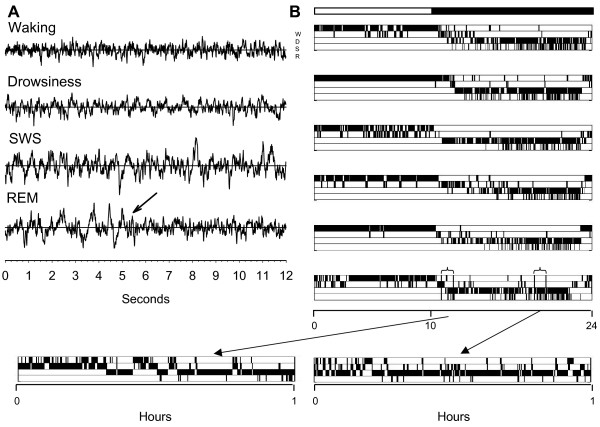
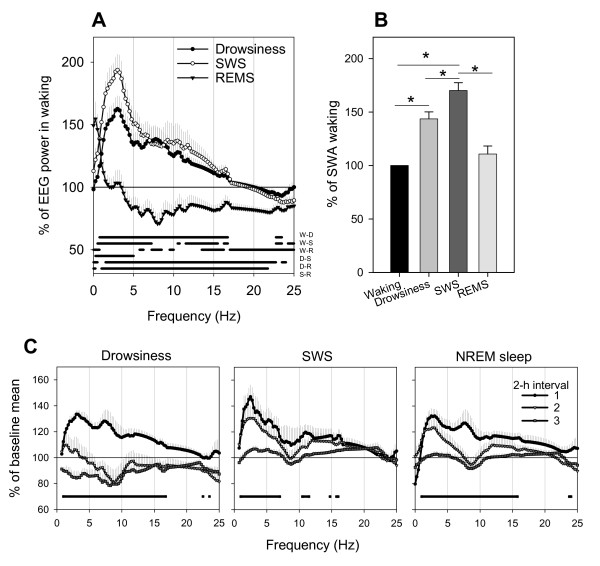
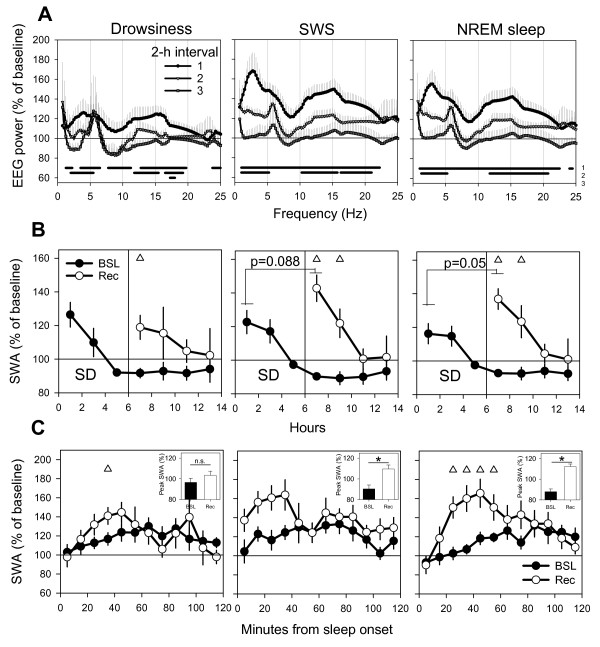
Continuous (24 hours) EEG and video recordings were used to measure baseline sleep and recovery sleep following short-term sleep deprivation. Sleep stages were scored visually based on 4-sec epochs. EEG power spectra (0.5-25 Hz) were calculated on consecutive 4-sec epochs. Four vigilance states were reliably distinguished based on behavior, visual inspection of the EEG, and spectral EEG analysis: Wakefulness (W), Drowsiness (D), slow wave sleep (SWS) and rapid-eye movement (REM) sleep. During baseline, SWA during D, SWS, and NREM sleep (defined as D and SWS combined) was highest at the beginning of the major sleep period and declined thereafter. Moreover, peak SWA in both SWS and NREM sleep increased significantly immediately following sleep deprivation relative to baseline.
As in mammals, sleep deprivation in the white-crowned sparrow increases the intensity of sleep as measured by SWA.
睡眠受昼夜节律和稳态过程的双重调节。稳态过程反映了先前清醒的时长:一个人醒着的时间越长,随后的睡眠时间就越长和/或越强烈。在哺乳动物中,稳态睡眠驱动力的最佳标志是慢波活动(SWA),即非快速眼动(NREM)睡眠期间0.5 - 4赫兹频率范围内的脑电图(EEG)功率谱。在哺乳动物中,NREM睡眠SWA在睡眠开始时较高,此时睡眠压力较大,随后逐渐下降,在睡眠后期达到较低水平。此外,睡眠剥夺时SWA会进一步增加,同时睡眠也变得不那么碎片化(睡眠片段的持续时间增加,短暂觉醒的次数减少)。虽然鸟类和哺乳动物的睡眠有几个共同特征,但在迄今为止研究的少数鸟类物种中,对睡眠剥夺的明显稳态反应的证据一直存在矛盾。因此,本研究的目的是确定哺乳动物中已确立的睡眠稳态标志物在白冠麻雀(Zonotrichia leucophrys gambelii)中是否也存在,白冠麻雀是雀形目候鸟。为实现这一目标,我们研究了6只鸟在基础睡眠期间以及6小时睡眠剥夺后的恢复睡眠期间的睡眠量、睡眠时程和睡眠强度指标。
连续(24小时)的脑电图和视频记录用于测量短期睡眠剥夺后的基础睡眠和恢复睡眠。根据4秒时间段对睡眠阶段进行视觉评分。在连续的4秒时间段上计算脑电图功率谱(0.5 - 25赫兹)。基于行为、脑电图的目视检查和脑电图频谱分析可靠地区分了四种警觉状态:清醒(W)、困倦(D)、慢波睡眠(SWS)和快速眼动(REM)睡眠。在基础睡眠期间,D、SWS和NREM睡眠(定义为D和SWS合并)期间的SWA在主要睡眠期开始时最高,此后下降。此外,相对于基础睡眠,睡眠剥夺后SWS和NREM睡眠中的SWA峰值均显著增加。
与哺乳动物一样,白冠麻雀的睡眠剥夺会增加以SWA衡量的睡眠强度。