Department of Internal Medicine, Stanford University School of Medicine, Stanford, California, USA.
Ther Clin Risk Manag. 2007 Dec;3(6):1035-145.
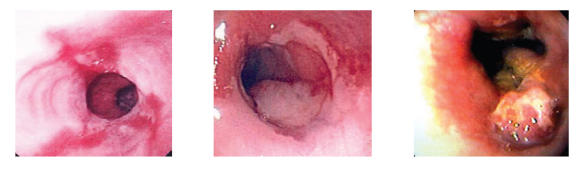
Barrett's esophagus is a metaplastic alteration of the normal esophageal epithelium that is detected on endoscopic examination and pathologically confirmed by the presence of intestinal metaplasia on biopsy. Its major significance is as a predisposing factor for esophageal adenocarcinoma, which carries a high mortality rate and a rapidly growing incidence in the United States. Detection of Barrett's esophagus allows for endoscopic surveillance in order to detect the potential development of dysplasia and early cancer before symptoms develop, and thereby significantly increases treatment options and may lower mortality from esophageal adenocarcinoma. Much current work in the field is aimed at reducing the risk of progression from Barrett's esophagus to cancer, and in the identification of biomarkers that may predict progression towards cancer. Barrett's esophagus is present in 10%-20% of patients with gastroesophageal reflux disease (GERD) and has also been detected in patients who deny classic GERD symptoms and are undergoing endoscopy for other indications. We used an evidence-based approach to describe treatment options for patients with Barrett's esophagus.
巴雷特食管是一种食管正常上皮的化生改变,通过内镜检查发现,并通过活检证实存在肠上皮化生来病理确诊。其主要意义在于作为食管腺癌的一个诱发因素,在美国,其死亡率很高,发病率增长迅速。发现巴雷特食管后,可以进行内镜监测,以便在出现症状之前检测出潜在的异型增生和早期癌症,从而显著增加治疗选择,并可能降低食管腺癌的死亡率。目前该领域的许多研究工作旨在降低从巴雷特食管进展为癌症的风险,并确定可能预测癌症进展的生物标志物。巴雷特食管在 10%-20%的胃食管反流病(GERD)患者中存在,在否认典型 GERD 症状并因其他指征接受内镜检查的患者中也有发现。我们采用循证方法描述巴雷特食管患者的治疗选择。