Betancourt Theresa Stichick, Khan Kashif Tanveer
Harvard School of Public Health, Cambridge, MA 02115, USA.
Int Rev Psychiatry. 2008 Jun;20(3):317-28. doi: 10.1080/09540260802090363.
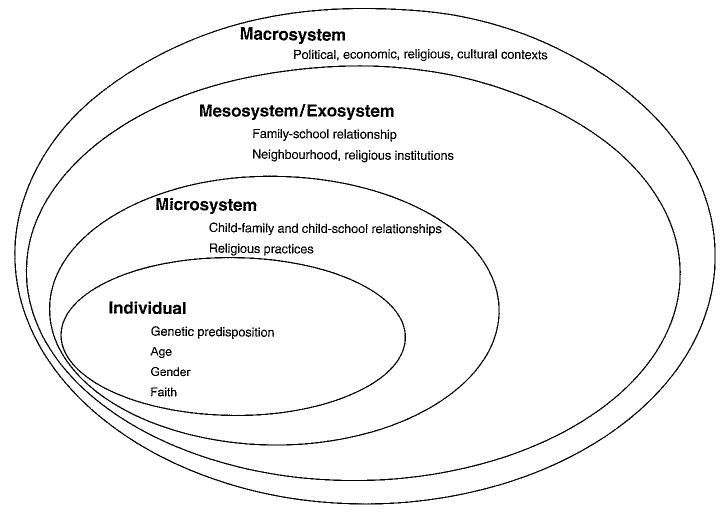
This paper examines the concept of resilience in the context of children affected by armed conflict. Resilience has been frequently viewed as a unique quality of certain 'invulnerable' children. In contrast, this paper argues that a number of protective processes contribute to resilient mental health outcomes in children when considered through the lens of the child's social ecology. While available research has made important contributions to understanding risk factors for negative mental health consequences of war-related violence and loss, the focus on trauma alone has resulted in inadequate attention to factors associated with resilient mental health outcomes. This paper presents key studies in the literature that address the interplay between risk and protective processes in the mental health of war-affected children from an ecological, developmental perspective. It suggests that further research on war-affected children should pay particular attention to coping and meaning making at the individual level; the role of attachment relationships, caregiver health, resources and connection in the family, and social support available in peer and extended social networks. Cultural and community influences such as attitudes towards mental health and healing as well as the meaning given to the experience of war itself are also important aspects of the larger social ecology.
本文探讨了受武装冲突影响儿童背景下的复原力概念。复原力常常被视为某些“不易受伤害”儿童的独特品质。相比之下,本文认为,从儿童社会生态的角度来看,一些保护过程有助于儿童实现心理健康复原。虽然现有研究在理解与战争相关的暴力和损失对心理健康产生负面影响的风险因素方面做出了重要贡献,但仅关注创伤导致对与心理健康复原结果相关因素的关注不足。本文从生态和发展的角度介绍了文献中的关键研究,这些研究探讨了受战争影响儿童心理健康中风险与保护过程之间的相互作用。研究表明,对受战争影响儿童的进一步研究应特别关注个体层面的应对和意义建构;依恋关系、照顾者健康、家庭中的资源与联系以及同伴和扩展社交网络中可得的社会支持的作用。文化和社区影响,如对心理健康和康复的态度以及赋予战争经历本身的意义,也是更广泛社会生态的重要方面。