Zheng Heping, Chruszcz Maksymilian, Lasota Piotr, Lebioda Lukasz, Minor Wladek
Department of Molecular Physiology and Biological Physics, University of Virginia, 1340 Jefferson Park Avenue, Charlottesville, VA 22908, USA.
J Inorg Biochem. 2008 Sep;102(9):1765-76. doi: 10.1016/j.jinorgbio.2008.05.006. Epub 2008 May 28.
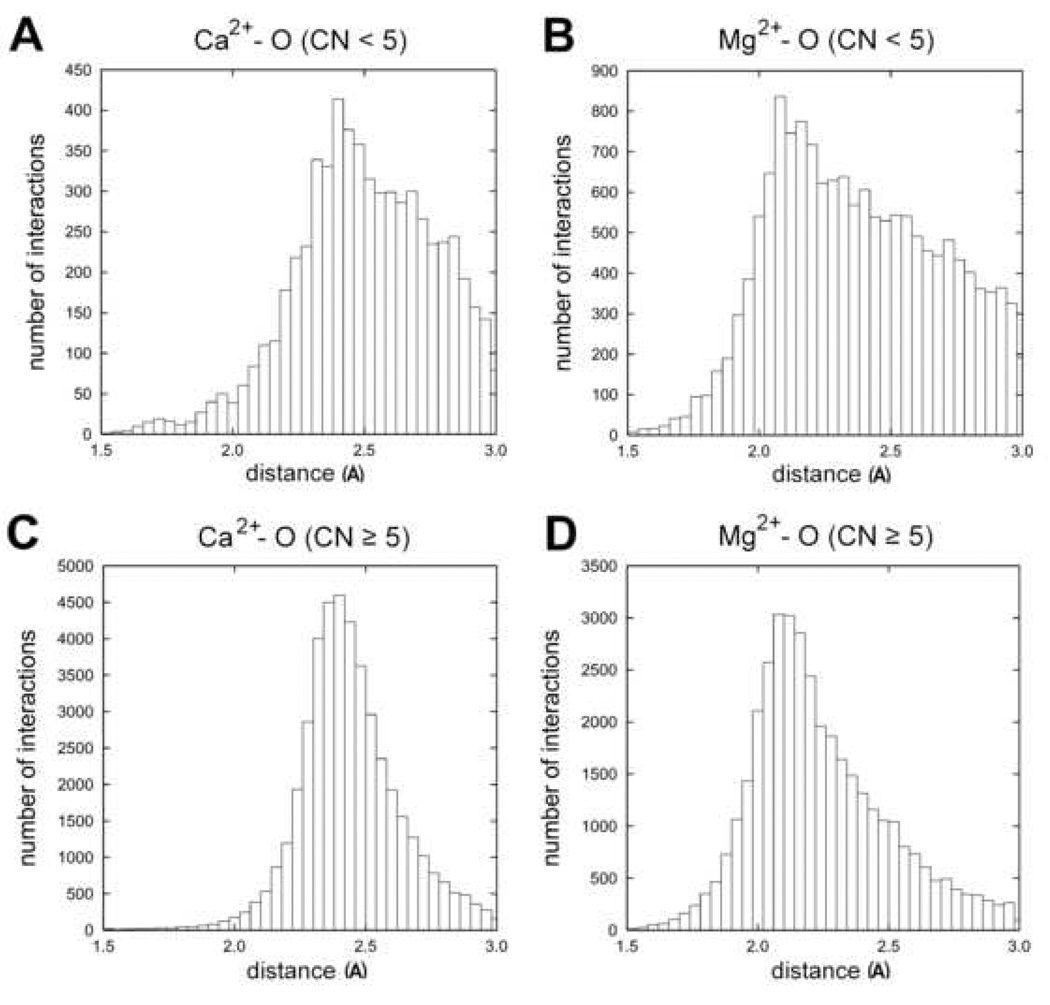
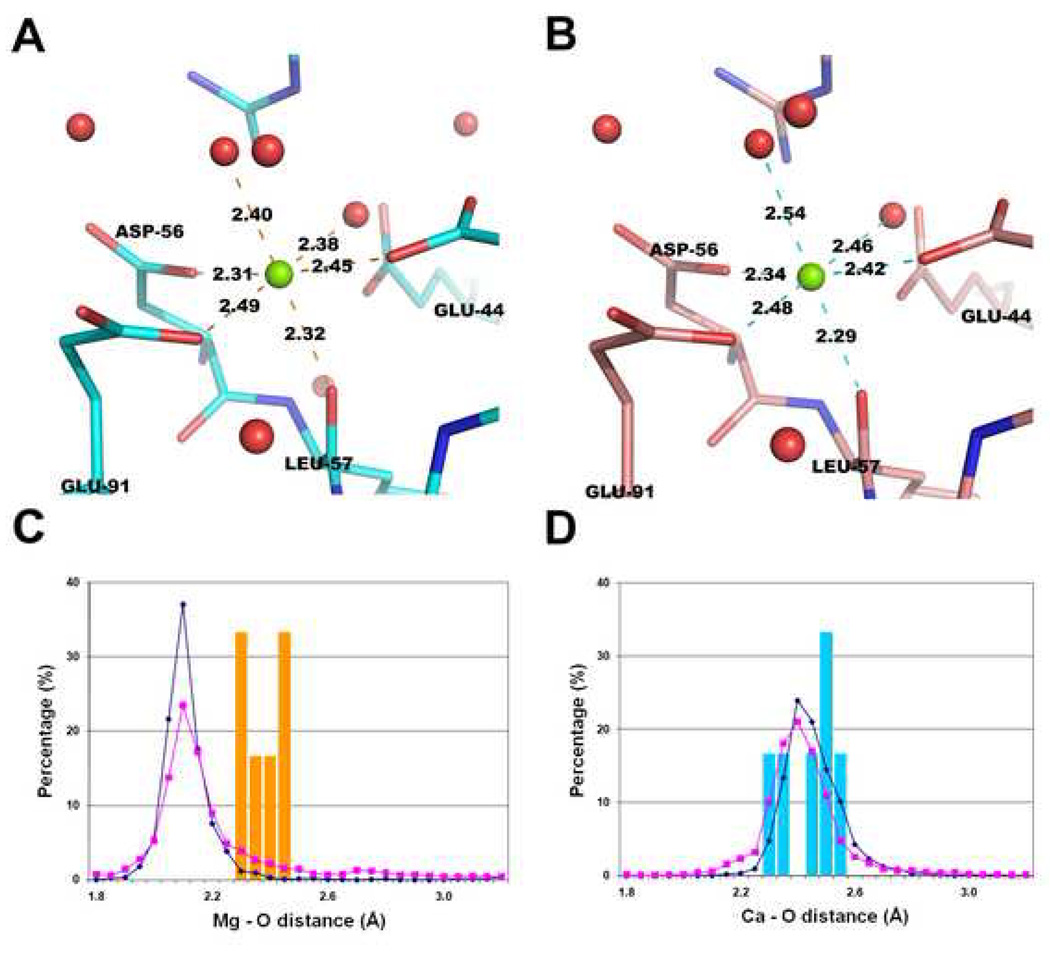
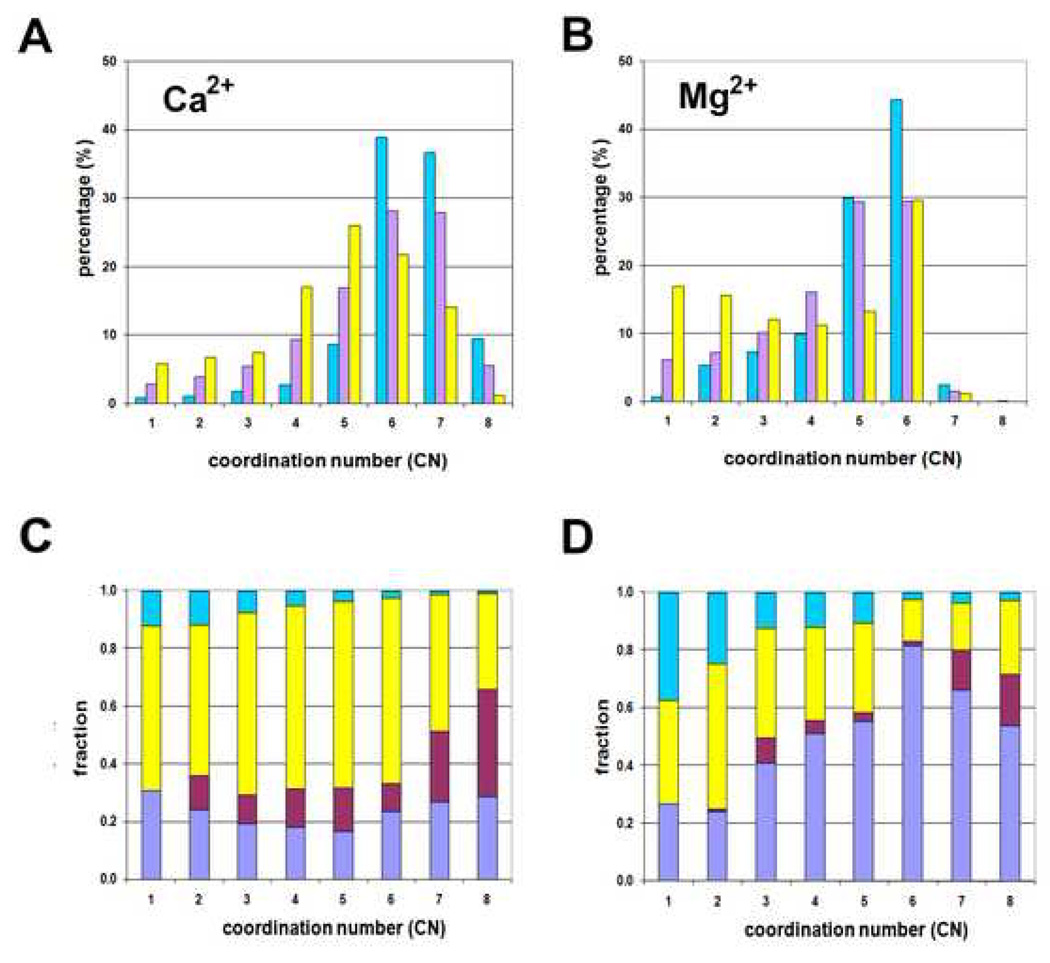
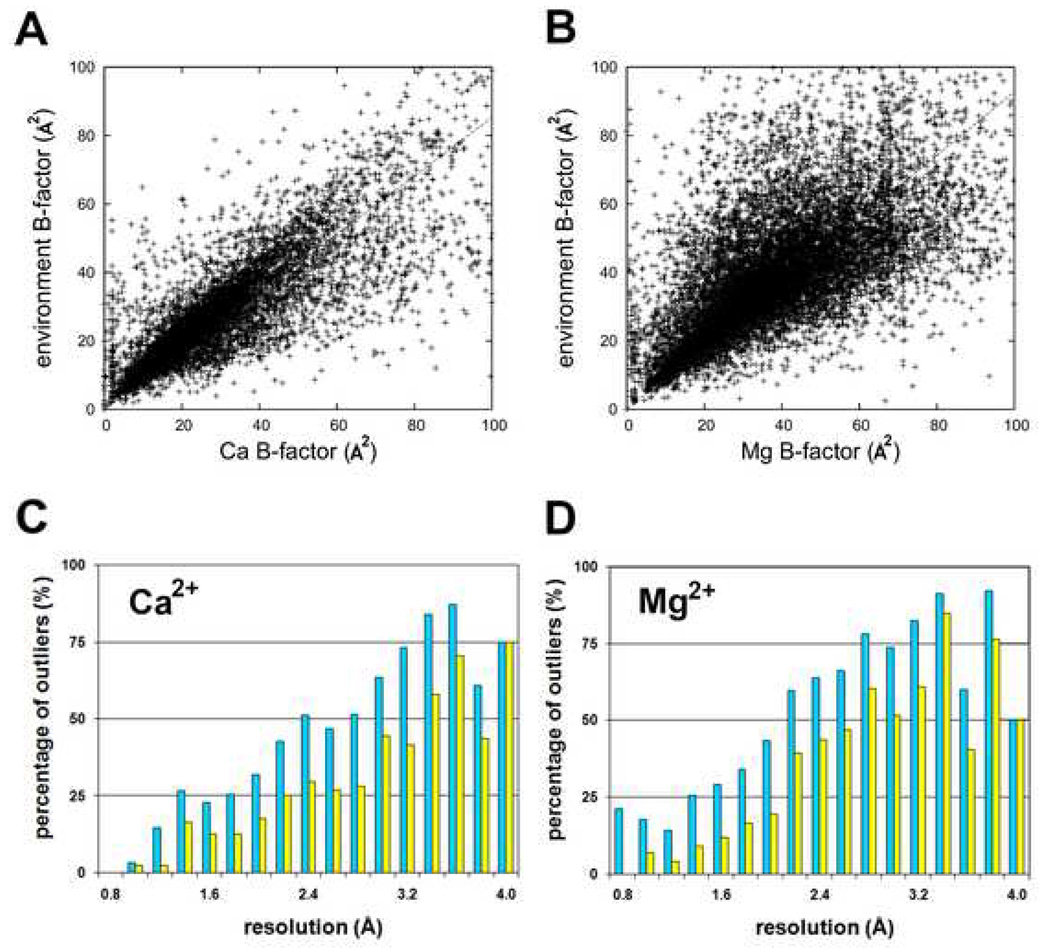
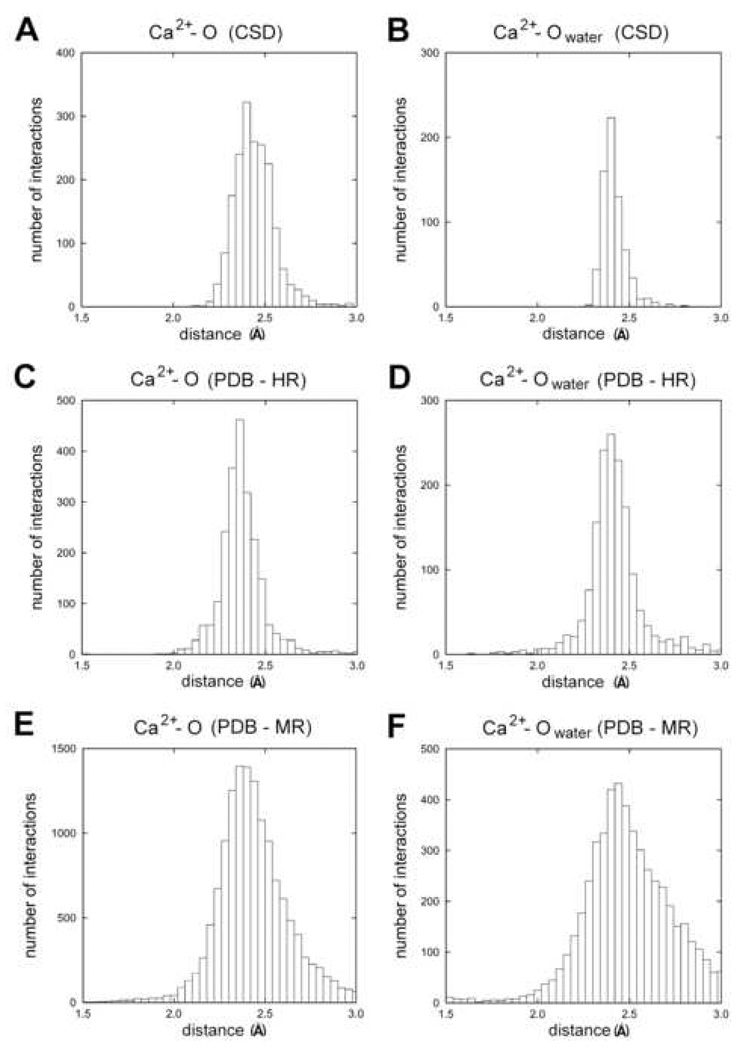
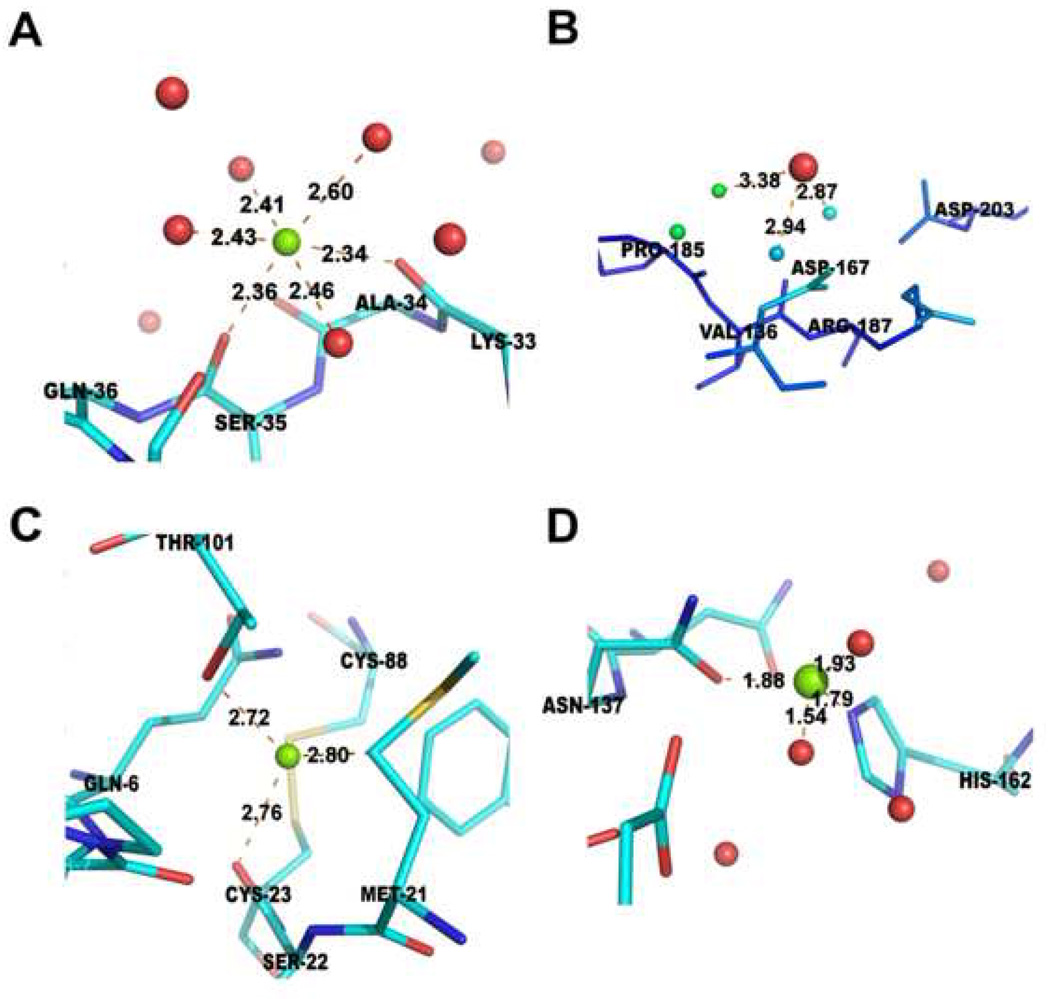
Analysis of metal-protein interaction distances, coordination numbers, B-factors (displacement parameters), and occupancies of metal-binding sites in protein structures determined by X-ray crystallography and deposited in the PDB shows many unusual values and unexpected correlations. By measuring the frequency of each amino acid in metal ion-binding sites, the positive or negative preferences of each residue for each type of cation were identified. Our approach may be used for fast identification of metal-binding structural motifs that cannot be identified on the basis of sequence similarity alone. The analysis compares data derived separately from high and medium-resolution structures from the PDB with those from very high-resolution small-molecule structures in the Cambridge Structural Database (CSD). For high-resolution protein structures, the distribution of metal-protein or metal-water interaction distances agrees quite well with data from CSD, but the distribution is unrealistically wide for medium (2.0-2.5A) resolution data. Our analysis of cation B-factors versus average B-factors of atoms in the cation environment reveals substantial numbers of structures contain either an incorrect metal ion assignment or an unusual coordination pattern. Correlation between data resolution and completeness of the metal coordination spheres is also found.
对通过X射线晶体学测定并保存在蛋白质数据银行(PDB)中的蛋白质结构中金属 - 蛋白质相互作用距离、配位数、B因子(位移参数)以及金属结合位点占有率的分析显示出许多异常值和意外的相关性。通过测量金属离子结合位点中每种氨基酸的出现频率,确定了每个残基对每种阳离子类型的正偏好或负偏好。我们的方法可用于快速识别仅基于序列相似性无法识别的金属结合结构基序。该分析将分别来自PDB的高分辨率和中分辨率结构的数据与剑桥结构数据库(CSD)中非常高分辨率的小分子结构的数据进行比较。对于高分辨率蛋白质结构,金属 - 蛋白质或金属 - 水相互作用距离的分布与CSD的数据相当吻合,但对于中分辨率(2.0 - 2.5埃)数据,该分布却异常宽泛。我们对阳离子B因子与阳离子环境中原子的平均B因子的分析表明,大量结构要么存在不正确的金属离子归属,要么存在异常的配位模式。同时还发现了数据分辨率与金属配位球完整性之间的相关性。