Goldstein Allan M, Nagy Nandor
Department of Pediatric Surgery and the Pediatric Intestinal Rehabilitation Program, Harvard Medical School, Boston, Massachusetts 02114, USA.
Pediatr Res. 2008 Oct;64(4):326-33. doi: 10.1203/PDR.0b013e31818535e8.
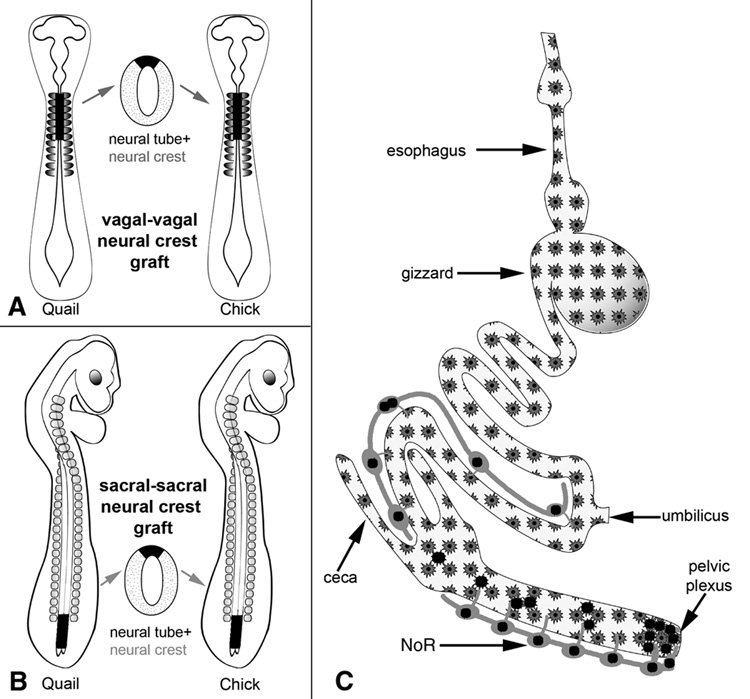
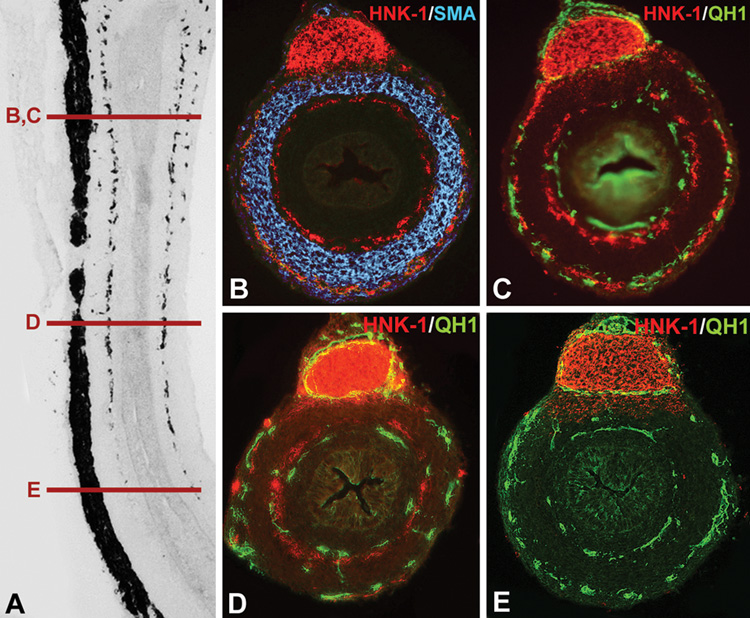
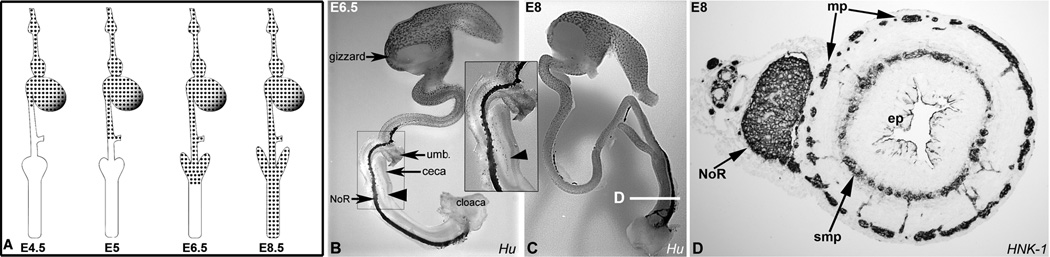
The avian embryo has been an important model system for studying enteric nervous system (ENS) development for over 50 y. Since the initial demonstration in chick embryos that the ENS is derived from the neural crest, investigators have used the avian model to reveal the cellular origins and migratory pathways of enteric neural crest-derived cells, with more recent work focusing on the molecular mechanisms regulating ENS development. Seminal contributions have been made in this field by researchers who have taken advantage of the strengths of the avian model system. These strengths include in vivo accessibility throughout development, ability to generate quail-chick chimeras, and the capacity to modulate gene expression in vivo in a spatially and temporally targeted manner. The recent availability of the chicken genome further enhances this model system, allowing investigators to combine classic embryologic methods with current genetic techniques. The strengths and versatility of the avian embryo continue to make it a valuable experimental system for studying the development of the ENS.
五十多年来,禽类胚胎一直是研究肠神经系统(ENS)发育的重要模型系统。自从最初在鸡胚中证明ENS起源于神经嵴以来,研究人员一直使用禽类模型来揭示肠神经嵴衍生细胞的细胞起源和迁移途径,最近的工作则集中在调节ENS发育的分子机制上。利用禽类模型系统优势的研究人员在该领域做出了开创性贡献。这些优势包括在整个发育过程中易于进行体内研究、能够生成鹌鹑-鸡嵌合体,以及能够在体内以时空靶向方式调节基因表达。鸡基因组的最新可得性进一步增强了这个模型系统,使研究人员能够将经典胚胎学方法与当前的遗传技术相结合。禽类胚胎的优势和多功能性使其仍然是研究ENS发育的宝贵实验系统。