Bredholt Harald, Fjaervik Espen, Johnsen Geir, Zotchev Sergey B
Alpharma AS, Harbitzaleen 3, 0275 Oslo, Norway.
Mar Drugs. 2008 Jan 23;6(1):12-24.
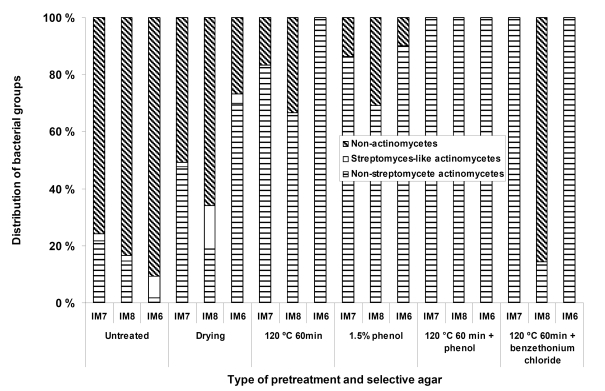
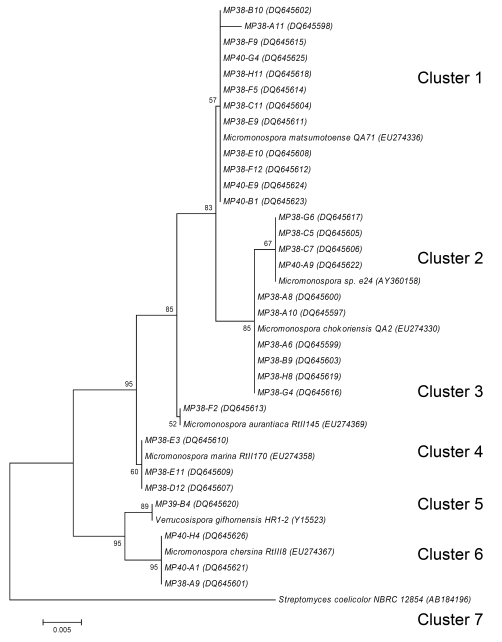
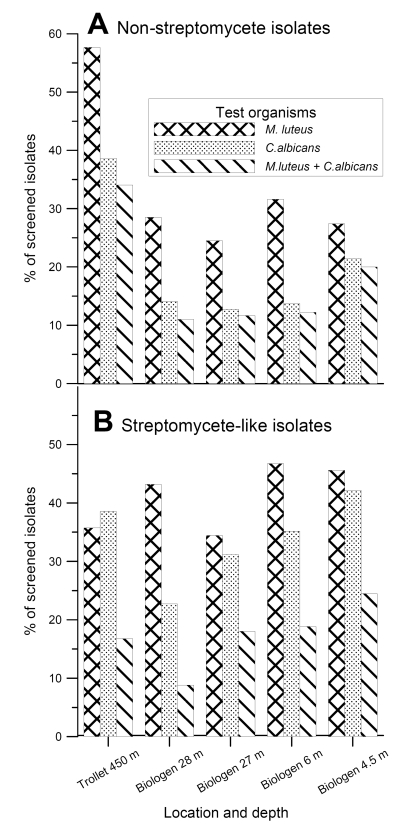
The marine environment represents a largely untapped source for isolation of new microorganisms with potential to produce biologically active secondary metabolites. Among such microorganisms, Gram-positive actinomycete bacteria are of special interest, since they are known to produce chemically diverse compounds with a wide range of biological activities. We have set out to isolate and characterize actinomycete bacteria from the sediments in one of the largest Norwegian fjords, the Trondheim fjord, with respect to diversity and antibiotic-producing potential. Approximately 3,200 actinomycete bacteria were isolated using four different agar media from the sediment samples collected at different locations and depths (4.5 to 450 m). Grouping of the isolates first according to the morphology followed by characterization of isolates chosen as group representatives by molecular taxonomy revealed that Micromonospora was the dominating actinomycete genus isolated from the sediments. The deep water sediments contained a higher relative amount of Micromonospora compared to the shallow water samples. Nine percent of the isolates clearly required sea water for normal growth, suggesting that these strains represent obligate marine organisms. Extensive screening of the extracts from all collected isolates for antibacterial and antifungal activities revealed strong antibiotic-producing potential among them. The latter implies that actinomycetes from marine sediments in Norwegian fjords can be potential sources for the discovery of novel anti-infective agents.
海洋环境是一个很大程度上尚未开发的新微生物来源,这些微生物有潜力产生具有生物活性的次生代谢产物。在这类微生物中,革兰氏阳性放线菌特别受关注,因为已知它们能产生化学结构多样且具有广泛生物活性的化合物。我们着手从挪威最大的峡湾之一特隆赫姆峡湾的沉积物中分离和鉴定放线菌,研究其多样性和产生抗生素的潜力。使用四种不同的琼脂培养基,从不同地点和深度(4.5至450米)采集的沉积物样本中分离出了约3200株放线菌。首先根据形态对分离株进行分组,然后通过分子分类学对选为组代表的分离株进行鉴定,结果表明小单孢菌是从沉积物中分离出的主要放线菌属。与浅水样本相比,深水沉积物中小单孢菌的相对含量更高。9%的分离株明显需要海水才能正常生长,这表明这些菌株代表专性海洋生物。对所有采集的分离株提取物进行广泛的抗菌和抗真菌活性筛选,结果显示它们具有很强的产生抗生素的潜力。这意味着挪威峡湾海洋沉积物中的放线菌可能是发现新型抗感染药物的潜在来源。