Hovi Sirpa-Liisa, Veerus Piret, Rahu Mati, Hemminki Elina
Finnish Office for Health Technology Assessment (Finohta), National Research and Development Centre for Welfare and Health (STAKES), PO. Box 220, FI-00531 Helsinki, Finland.
BMC Med Res Methodol. 2008 Aug 1;8:51. doi: 10.1186/1471-2288-8-51.
Preventive drugs require long-term trials to show their effectiveness or harms and often a lot of changes occur during post-marketing studies. The purpose of this article is to describe the research process in a long-term randomized controlled trial and discuss the impact and consequences of changes in the research environment.
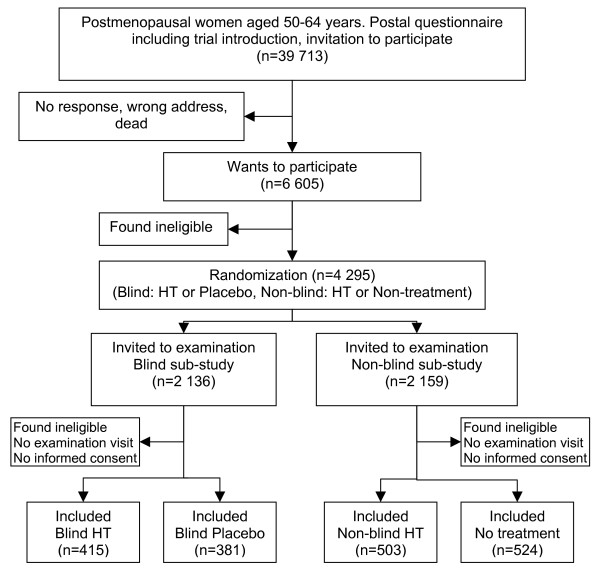
The Estonian Postmenopausal Hormone Therapy trial (EPHT), originally planned to continue for five years, was planned in co-operation with the Women's International Study of Long-Duration Oestrogen after Menopause (WISDOM) in the UK. In addition to health outcomes, EPHT was specifically designed to study the impact of postmenopausal hormone therapy (HT) on health services utilization.
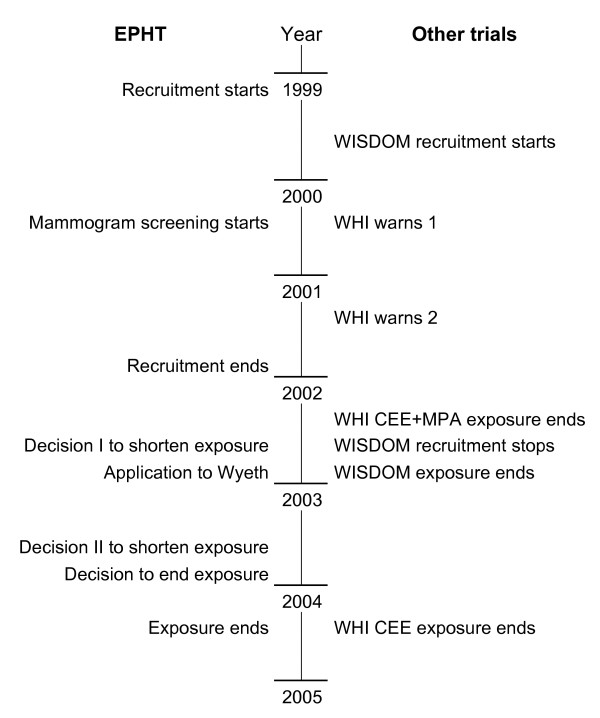
After EPHT recruited in 1999-2001 the Women's Health Initiative (WHI) in the USA decided to stop the estrogen-progestin trial after a mean of 5.2 years in July 2002 because of increased risk of breast cancer and later in 2004 the estrogen-only trial because HT increased the risk of stroke, decreased the risk of hip fracture, and did not affect coronary heart disease incidence. WISDOM was halted in autumn 2002. These decisions had a major influence on EPHT.
Changes in Estonian society challenged EPHT to find a balance between the needs of achieving responses to the trial aims with a limited budget and simultaneously maintaining the safety of trial participants. Flexibility was the main key for success. Rapid changes are not limited only to transiting societies but are true also in developed countries and the risk must be included in planning all long-term trials. The role of ethical and data monitoring committees in situations with emerging new data from other studies needs specification. Longer funding for preventive trials and more flexibility in budgeting are mandatory. Who should prove the effectiveness of an (old) drug for a new preventive indication? In preventive drug trials companies may donate drugs but they take a financial risk, especially with licensed drugs. Public funding is crucial to avoid commercial biases. Legislation to share the costs of large post-marketing trials as well as regulation of manufacturer's participation is needed. [ISRCTN35338757].
预防性药物需要长期试验来证明其有效性或危害,并且在上市后研究期间常常会发生很多变化。本文旨在描述一项长期随机对照试验的研究过程,并讨论研究环境变化的影响和后果。
爱沙尼亚绝经后激素治疗试验(EPHT)原计划持续五年,是与英国的绝经后长期雌激素国际女性研究(WISDOM)合作开展的。除了健康结局外,EPHT还专门设计用于研究绝经后激素治疗(HT)对卫生服务利用的影响。
在1999 - 2001年EPHT招募受试者后,美国的女性健康倡议(WHI)于2002年7月在平均5.2年后决定停止雌激素 - 孕激素试验,原因是乳腺癌风险增加,随后在2004年停止了单纯雌激素试验,因为HT增加了中风风险,降低了髋部骨折风险,且未影响冠心病发病率。WISDOM于2002年秋季停止。这些决定对EPHT产生了重大影响。
爱沙尼亚社会的变化促使EPHT在有限预算下实现试验目标与同时确保试验参与者安全之间寻求平衡。灵活性是成功的关键。快速变化不仅限于转型社会,在发达国家也是如此,并且这种风险必须纳入所有长期试验的规划中。在有来自其他研究的新数据出现的情况下,伦理和数据监测委员会的作用需要明确规定。为预防性试验提供更长时间的资金以及在预算方面给予更多灵活性是必不可少的。谁应该证明一种(旧)药物对新的预防适应症的有效性?在预防性药物试验中,公司可能捐赠药物,但他们承担着财务风险,尤其是对于已获许可的药物。公共资金对于避免商业偏见至关重要。需要立法来分担大型上市后试验的成本以及规范制造商的参与。[国际标准随机对照试验编号:ISRCTN35338757]