Esteve-Lanao Jonathan, Lucia Alejandro, deKoning Jos J, Foster Carl
Department of Exercise Physiology, European University of Madrid, Madrid, Spain.
PLoS One. 2008 Aug 13;3(8):e2943. doi: 10.1371/journal.pone.0002943.
Distance running performance is a viable model of human locomotion.
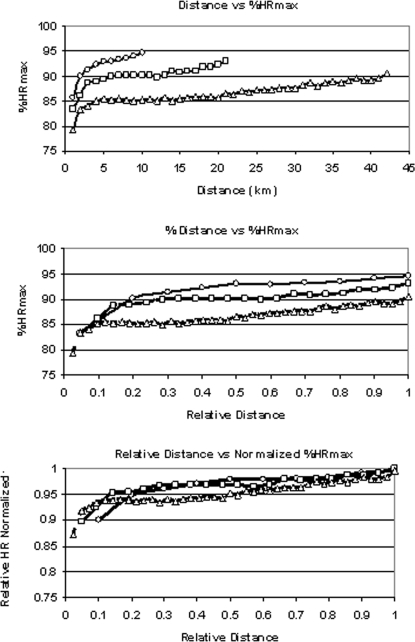
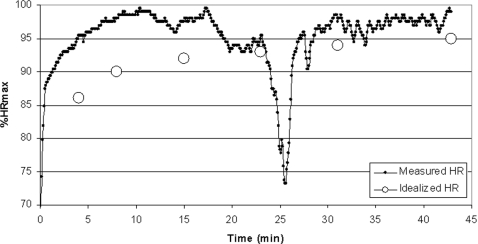
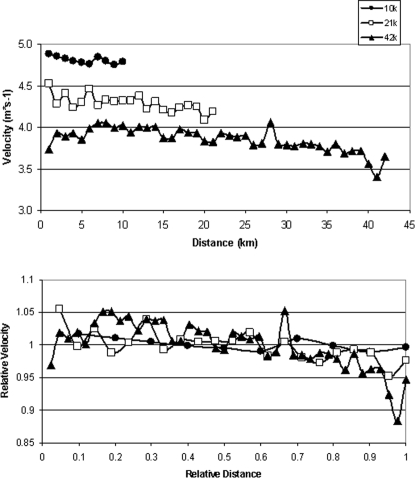
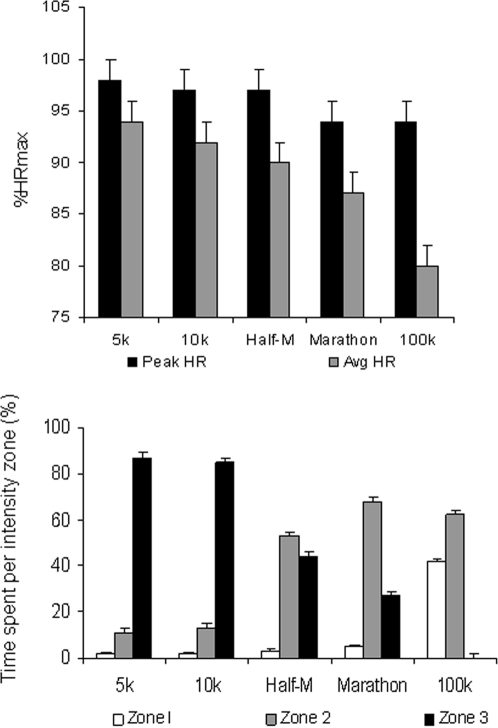
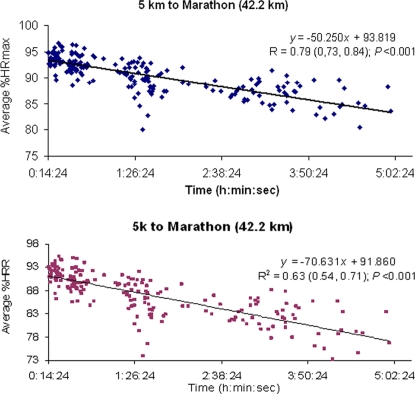
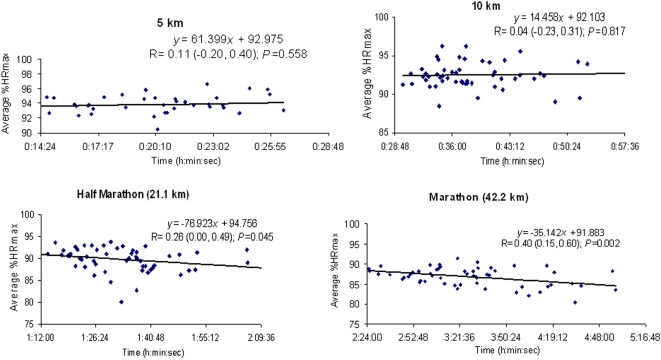
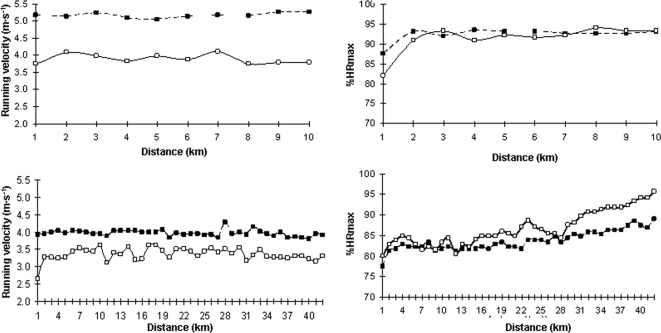
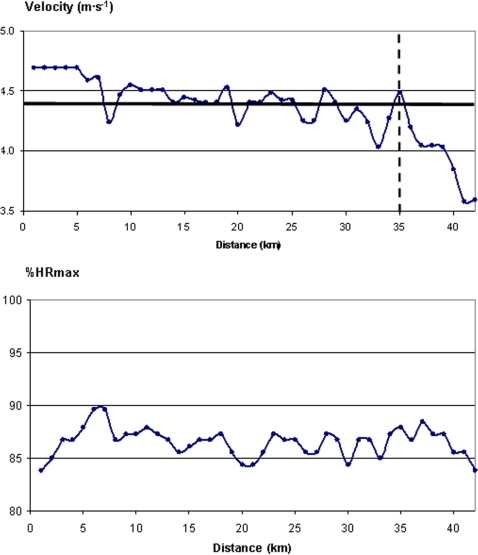
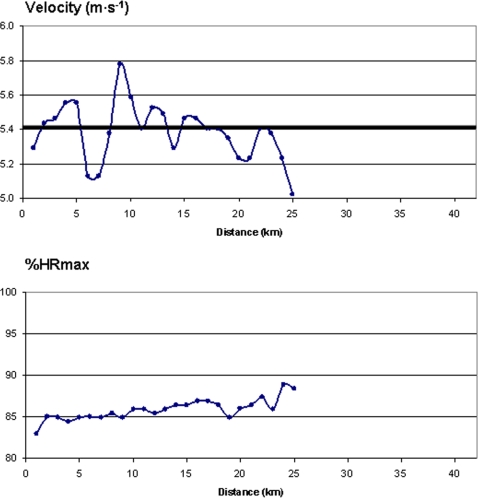
METHODOLOGY/PRINCIPAL FINDINGS: To evaluate the physiologic strain during competitions ranging from 5-100 km, we evaluated heart rate (HR) records of competitive runners (n = 211). We found evidence that: 1) physiologic strain (% of maximum HR (%HRmax)) increased in proportional manner relative to distance completed, and was regulated by variations in running pace; 2) the %HRmax achieved decreased with relative distance; 3) slower runners had similar %HRmax response within a racing distance compared to faster runners, and despite differences in pace, the profile of %HRmax during a race was very similar in runners of differing ability; and 4) in cases where there was a discontinuity in the running performance, there was evidence that physiologic effort was maintained for some time even after the pace had decreased.
CONCLUSIONS/SIGNIFICANCE: The overall results suggest that athletes are actively regulating their relative physiologic strain during competition, although there is evidence of poor regulation in the case of competitive failures.
长跑表现是人类运动的一种可行模型。
方法/主要发现:为了评估5至100公里比赛期间的生理压力,我们评估了竞技跑步者(n = 211)的心率(HR)记录。我们发现证据表明:1)生理压力(最大心率百分比(%HRmax))相对于完成的距离呈比例增加,并受跑步速度变化的调节;2)达到的%HRmax随相对距离而降低;3)与速度较快的跑步者相比,速度较慢的跑步者在比赛距离内具有相似的%HRmax反应,并且尽管速度不同,但不同能力的跑步者在比赛期间%HRmax的变化曲线非常相似;4)在跑步表现出现间断的情况下,有证据表明即使速度降低后,生理努力仍会维持一段时间。
结论/意义:总体结果表明,运动员在比赛期间积极调节其相对生理压力,尽管在比赛失败的情况下有调节不佳的证据。