Functional Medicine Research Center, MetaProteomics, LLC, 9770 44th Ave, NW, Ste 100, Gig Harbor, WA 98332, USA.
Nutr Metab (Lond). 2008 Nov 4;5:29. doi: 10.1186/1743-7075-5-29.
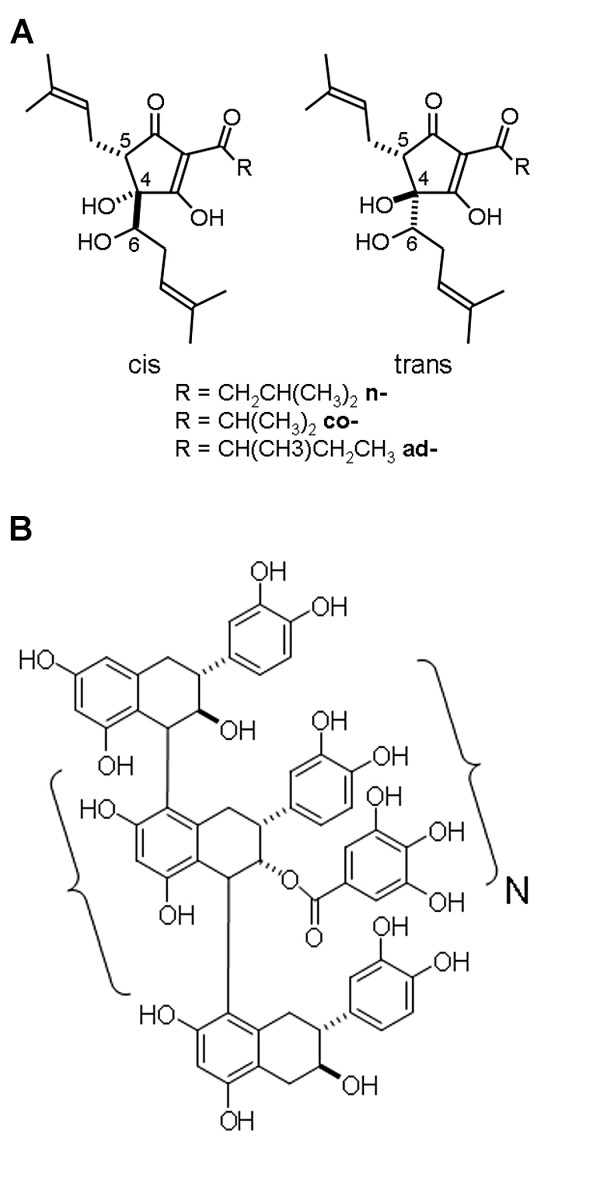
As the worldwide dietary pattern becomes more westernized, the metabolic syndrome is reaching epidemic proportions. Lifestyle modifications including diet and exercise are recommended as first-line intervention for treating metabolic syndrome. Previously, we reported that a modified Mediterranean-style, low glycemic load diet with soy protein and phytosterols had a more favorable impact than the American Heart Association Step 1 diet on cardiovascular disease (CVD) risk factors. Subsequently, we screened for phytochemicals with a history of safe use that were capable of increasing insulin sensitivity through modulation of protein kinases, and identified hops rho iso-alpha acid and acacia proanthocyanidins. The objective of this study was to investigate whether enhancement of a modified Mediterranean-style, low glycemic load diet (MED) with specific phytochemicals (soy protein, phytosterols, rho iso-alpha acids and proanthocyanidins; PED) could improve cardiometabolic risk factors in subjects with metabolic syndrome and hypercholesterolemia.
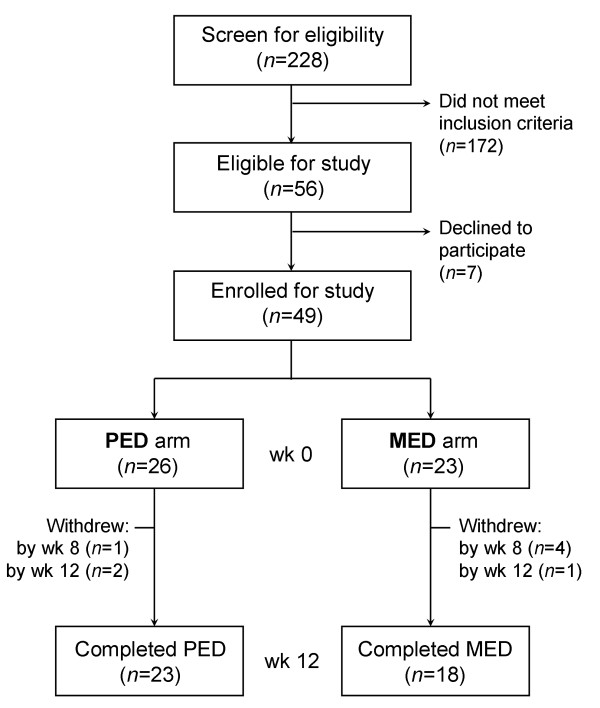
Forty-nine subjects with metabolic syndrome and hypercholesterolemia, aged 25-80, entered a randomized, 2-arm, 12-week intervention trial; 23 randomized to the MED arm; 26 to the PED arm. Forty-four subjects completed at least 8 weeks [MED (n = 19); PED (n = 25)]. All subjects were instructed to follow the same aerobic exercise program. Three-day diet diaries and 7-day exercise diaries were assessed at each visit. Fasting blood samples were collected at baseline, 8 and 12 weeks for analysis.
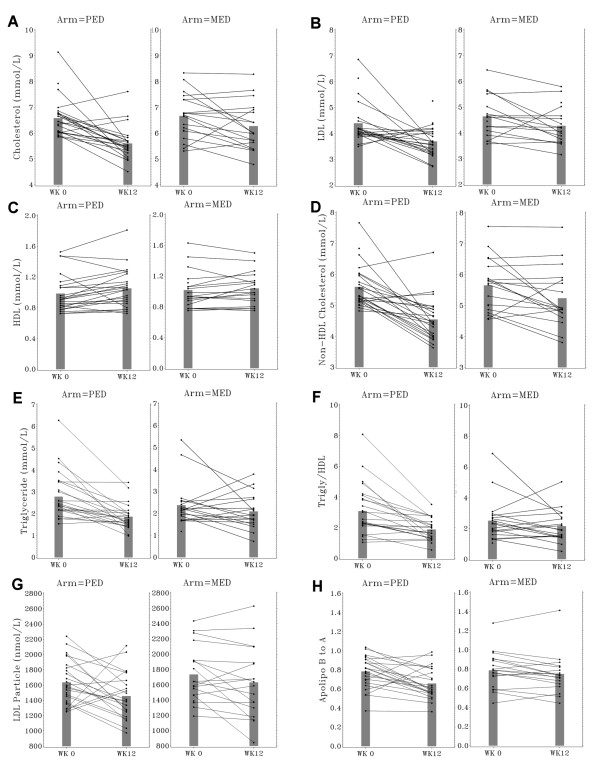
Both arms experienced equal weight loss (MED: -5.7 kg; PED: -5.9 kg). However, at 12 weeks, the PED arm experienced greater reductions (P < 0.05) in cholesterol, non-HDL cholesterol, triglycerides (TG), cholesterol/HDL and TG/HDL compared with the MED arm. Only the PED arm experienced increased HDL (P < 0.05) and decreased TG/HDL (P < 0.01), and continued reduction in apo B/apo A-I from 8 to 12 weeks. Furthermore, 43% of PED subjects vs. only 22% of MED subjects had net resolution of metabolic syndrome. The Framingham 10-year CVD risk score decreased by 5.6% in the PED arm (P < 0.01) and 2.9% in the MED arm (P < 0.05).
These results demonstrate that specific phytochemical supplementation increased the effectiveness of the modified Mediterranean-style low glycemic load dietary program on variables associated with metabolic syndrome and CVD.
随着全球饮食模式日益西化,代谢综合征的发病率呈上升趋势。饮食和运动等生活方式的改变被推荐作为治疗代谢综合征的一线干预措施。此前,我们报告了一种改良的地中海式低升糖负荷饮食,其中含有大豆蛋白和植物固醇,与美国心脏协会的第一步饮食相比,对心血管疾病(CVD)风险因素的影响更为有利。随后,我们筛选了具有安全使用历史的植物化学物质,这些物质能够通过调节蛋白激酶来提高胰岛素敏感性,并确定了啤酒花 rho 异-α酸和金合欢原花青素。本研究的目的是探讨在代谢综合征和高胆固醇血症患者中,用特定的植物化学物质(大豆蛋白、植物固醇、rho 异-α酸和原花青素;PED)增强改良的地中海式低升糖负荷饮食(MED)是否能改善心血管代谢危险因素。
49 名年龄在 25-80 岁之间的代谢综合征和高胆固醇血症患者参与了一项随机、双盲、12 周的干预试验;23 名随机分配到 MED 组;26 名随机分配到 PED 组。44 名受试者至少完成了 8 周[MED(n=19);PED(n=25)]。所有受试者均被指示遵循相同的有氧运动方案。在每次就诊时评估 3 天的饮食日记和 7 天的运动日记。在基线、8 周和 12 周时采集空腹血样进行分析。
两组体重减轻幅度相同(MED:-5.7kg;PED:-5.9kg)。然而,在 12 周时,PED 组的胆固醇、非高密度脂蛋白胆固醇、甘油三酯(TG)、胆固醇/高密度脂蛋白和 TG/高密度脂蛋白的降低幅度明显大于 MED 组(P<0.05)。只有 PED 组的高密度脂蛋白(HDL)增加(P<0.05),TG/HDL 降低(P<0.01),载脂蛋白 B/载脂蛋白 A-I 从 8 周持续降低到 12 周。此外,43%的 PED 组患者与 22%的 MED 组患者的代谢综合征得到了完全缓解。弗雷明汉 10 年 CVD 风险评分在 PED 组下降了 5.6%(P<0.01),在 MED 组下降了 2.9%(P<0.05)。
这些结果表明,特定的植物化学物质补充剂增强了改良的地中海式低升糖负荷饮食方案对代谢综合征和 CVD 相关变量的有效性。