Inzelberg Rivka, Schechtman Edna, Hocherman Shraga
The Sagol Neuroscience Center and Department of Neurology Sheba Medical Center, Tel Hashomer, Israel.
PLoS One. 2008;3(11):e3663. doi: 10.1371/journal.pone.0003663. Epub 2008 Nov 6.
Visuo-motor coordination (VMC) requires normal cognitive executive functionality, an ability to transform visual inputs into movement plans and motor-execution skills, all of which are known to be impaired in Parkinson's disease (PD). Not surprisingly, a VMC deficit in PD is well documented. Still, it is not known how this deficit relates to motor symptoms that are assessed routinely in the neurological clinic. Such relationship should reveal how particular motor dysfunctions combine with cognitive and sensory-motor impairments to produce a complex behavioral disability.
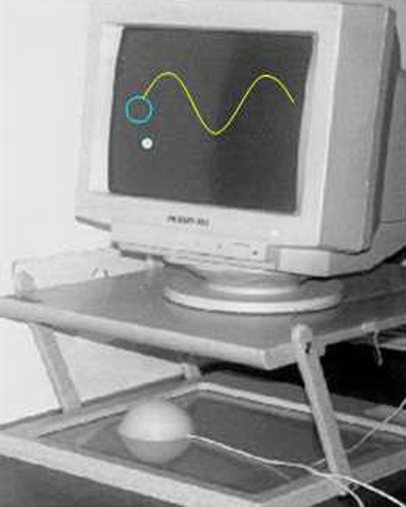
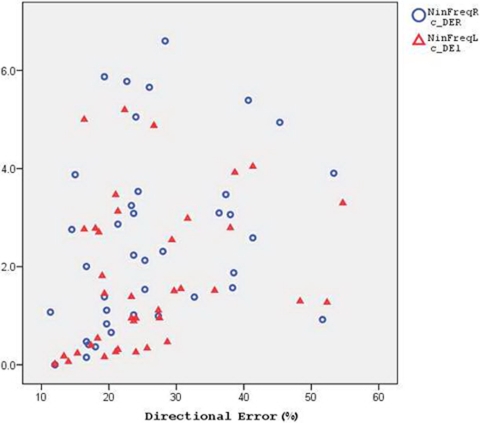
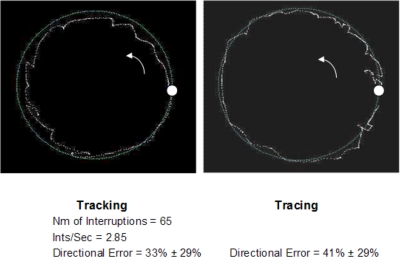
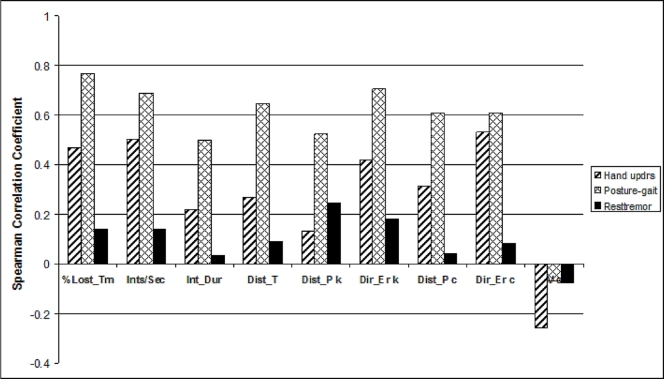
Thirty nine early/moderate PD patients were routinely evaluated, including motor Unified Parkinson's Disease Rating Scale (UPDRS) based assessment, A VMC testing battery in which the subjects had to track a target moving on screen along 3 different paths, and to freely trace these paths followed. Detailed kinematic analysis of tracking/tracing performance was done. Statistical analysis of the correlations between measures depicting various aspects of VMC control and UPDRS items was performed. The VMC measures which correlated most strongly with clinical symptoms represent the ability to organize tracking movements and program their direction, rather than measures representing motor-execution skills of the hand. The strong correlations of these VMC measures with total UPDRS score were weakened when the UPDRS hand-motor part was considered specifically, and were insignificant in relation to tremor of the hand. In contrast, all correlations of VMC measures with the gait/posture part of the UPDRS were found to be strongest.
Our apparently counterintuitive findings suggest that the VMC deficit pertains more strongly to a PD related change in cognitive-executive control, than to a reduction in motor capabilities. The recently demonstrated relationship between gait/posture impairment and a cognitive decline, as found in PD, concords with this suggestion and may explain the strong correlation between VMC dysfunction and gait/posture impairment. Accordingly, we propose that what appears to reflect a motor deficit in fact represents a multisystem failure, dominated by a cognitive decline.
视觉运动协调(VMC)需要正常的认知执行功能,即将视觉输入转化为运动计划和运动执行技能的能力,而帕金森病(PD)患者的这些能力均受损。不出所料,PD患者存在VMC缺陷已有充分记录。然而,尚不清楚这种缺陷与神经科门诊常规评估的运动症状有何关系。这种关系应能揭示特定的运动功能障碍如何与认知和感觉运动障碍相结合,导致复杂的行为残疾。
对39例早/中度PD患者进行了常规评估,包括基于运动统一帕金森病评定量表(UPDRS)的评估、一个VMC测试组,受试者必须沿着3条不同路径跟踪屏幕上移动的目标,并自由描绘这些路径。对跟踪/描绘性能进行了详细的运动学分析。对描述VMC控制各个方面的测量指标与UPDRS项目之间的相关性进行了统计分析。与临床症状相关性最强的VMC测量指标代表了组织跟踪运动并规划其方向的能力,而非代表手部运动执行技能的指标。当专门考虑UPDRS手部运动部分时,这些VMC测量指标与UPDRS总分的强相关性减弱,与手部震颤的相关性不显著。相比之下,发现VMC测量指标与UPDRS的步态/姿势部分的所有相关性最强。
我们看似违反直觉的研究结果表明,VMC缺陷与PD相关的认知执行控制变化的关联更强,而非与运动能力下降有关。最近在PD中发现的步态/姿势障碍与认知衰退之间的关系与这一观点一致,可能解释了VMC功能障碍与步态/姿势障碍之间的强相关性。因此,我们认为,看似反映运动缺陷的情况实际上代表了一种多系统功能障碍,主要由认知衰退主导。