Hernández Martín A, Mohn William W, Martínez Eliana, Rost Enrique, Alvarez Adrián F, Alvarez Héctor M
Centro Regional de Investigación y Desarrollo Científico Tecnológico, Facultad de Ciencias Naturales, Universidad Nacional de Patagonia San Juan Bosco, Km 4-Ciudad Universitaria, 9000 Comodoro Rivadavia, Chubut, Argentina.
BMC Genomics. 2008 Dec 12;9:600. doi: 10.1186/1471-2164-9-600.
Members of the genus Rhodococcus are frequently found in soil and other natural environments and are highly resistant to stresses common in those environments. The accumulation of storage compounds permits cells to survive and metabolically adapt during fluctuating environmental conditions. The purpose of this study was to perform a genome-wide bioinformatic analysis of key genes encoding metabolism of diverse storage compounds by Rhodococcus jostii RHA1 and to examine its ability to synthesize and accumulate triacylglycerols (TAG), wax esters, polyhydroxyalkanoates (PHA), glycogen and polyphosphate (PolyP).
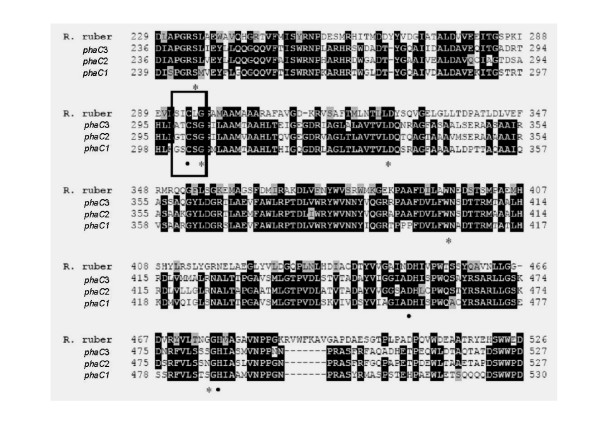
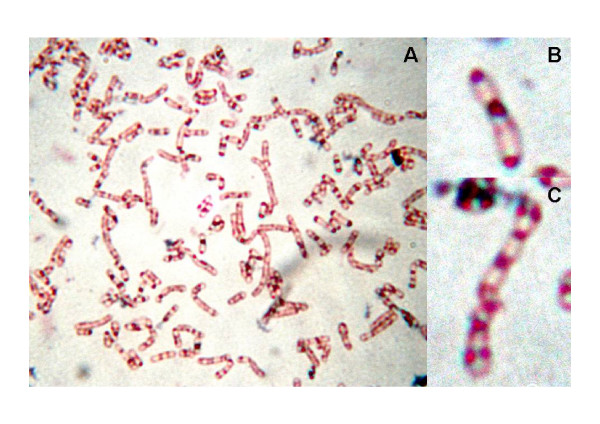
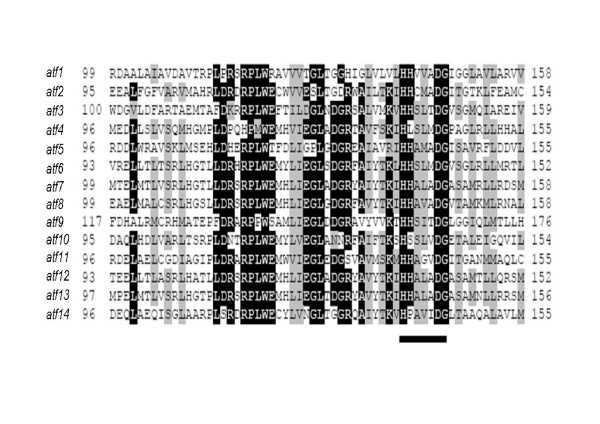
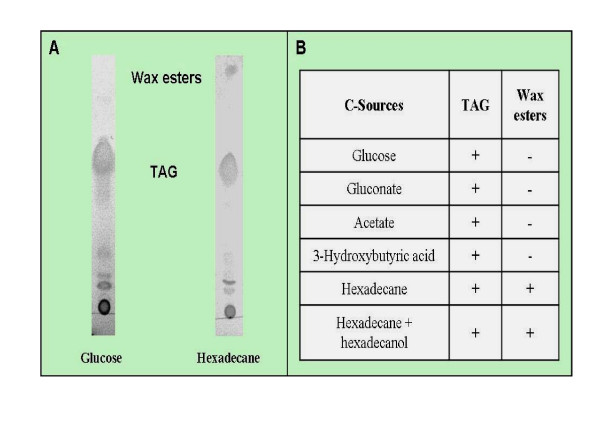
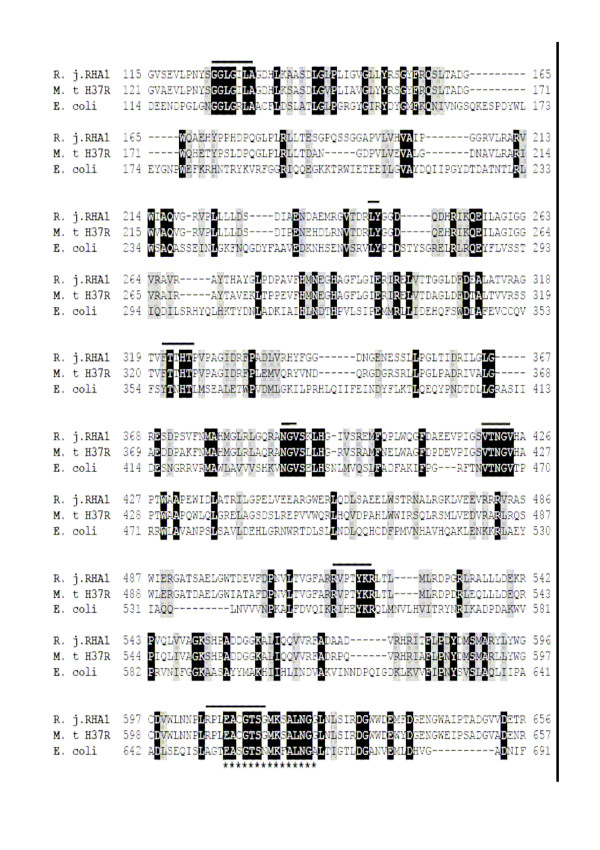
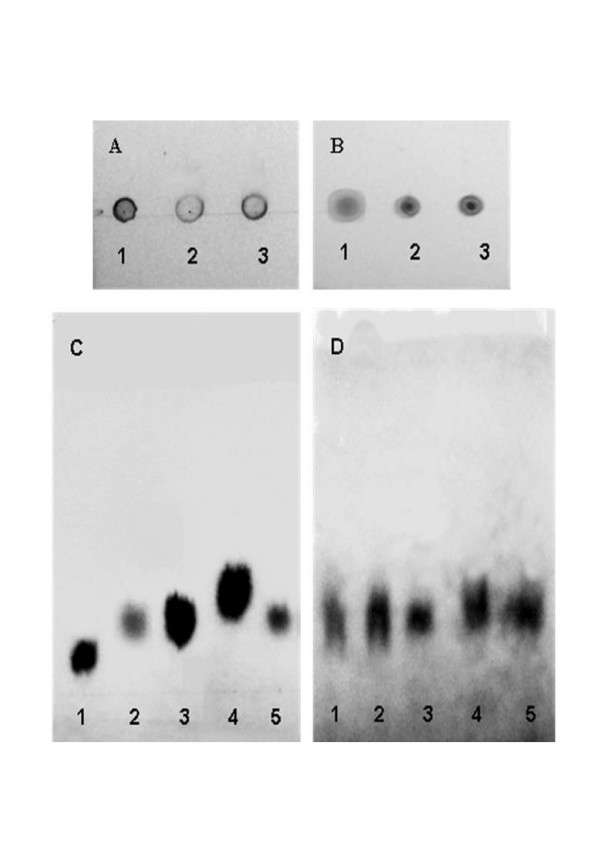
We identified in the RHA1 genome: 14 genes encoding putative wax ester synthase/acyl-CoA:diacylglycerol acyltransferase enzymes (WS/DGATs) likely involved in TAG and wax esters biosynthesis; a total of 54 genes coding for putative lipase/esterase enzymes possibly involved in TAG and wax ester degradation; 3 sets of genes encoding PHA synthases and PHA depolymerases; 6 genes encoding key enzymes for glycogen metabolism, one gene coding for a putative polyphosphate kinase and 3 putative exopolyphosphatase genes. Where possible, key amino acid residues in the above proteins (generally in active sites, effectors binding sites or substrate binding sites) were identified in order to support gene identification. RHA1 cells grown under N-limiting conditions, accumulated TAG as the main storage compounds plus wax esters, PHA (with 3-hydroxybutyrate and 3-hydroxyvalerate monomers), glycogen and PolyP. Rhodococcus members were previously known to accumulate TAG, wax esters, PHAs and polyP, but this is the first report of glycogen accumulation in this genus.
RHA1 possess key genes to accumulate diverse storage compounds. Under nitrogen-limiting conditions lipids are the principal storage compounds. An extensive capacity to synthesize and metabolize storage compounds appears to contribute versatility to RHA1 in its responses to environmental stresses.
红球菌属成员常见于土壤和其他自然环境中,对这些环境中常见的压力具有高度抗性。储存化合物的积累使细胞能够在波动的环境条件下存活并进行代谢适应。本研究的目的是对约氏红球菌RHA1中编码多种储存化合物代谢的关键基因进行全基因组生物信息学分析,并研究其合成和积累三酰甘油(TAG)、蜡酯、聚羟基脂肪酸酯(PHA)、糖原和多聚磷酸盐(PolyP)的能力。
我们在RHA1基因组中鉴定出:14个编码假定蜡酯合酶/酰基辅酶A:二酰甘油酰基转移酶(WS/DGATs)的基因,可能参与TAG和蜡酯的生物合成;总共54个编码假定脂肪酶/酯酶的基因,可能参与TAG和蜡酯的降解;3组编码PHA合酶和PHA解聚酶的基因;6个编码糖原代谢关键酶的基因,1个编码假定多聚磷酸盐激酶的基因和3个假定胞外多聚磷酸酶基因。在可能的情况下,确定了上述蛋白质中的关键氨基酸残基(通常在活性位点、效应物结合位点或底物结合位点)以支持基因鉴定。在氮限制条件下生长的RHA1细胞积累了TAG作为主要储存化合物,以及蜡酯、PHA(含3-羟基丁酸和3-羟基戊酸单体)、糖原和PolyP。此前已知红球菌成员会积累TAG、蜡酯、PHA和多聚磷酸盐,但这是该属中糖原积累的首次报道。
RHA1拥有积累多种储存化合物的关键基因。在氮限制条件下,脂质是主要的储存化合物。合成和代谢储存化合物的广泛能力似乎有助于RHA1在应对环境压力时具有多功能性。