Mazzoni Alberto, Panzeri Stefano, Logothetis Nikos K, Brunel Nicolas
Division of Statistical Physics, Institute for Scientific Interchange, Turin, Italy.
PLoS Comput Biol. 2008 Dec;4(12):e1000239. doi: 10.1371/journal.pcbi.1000239. Epub 2008 Dec 12.
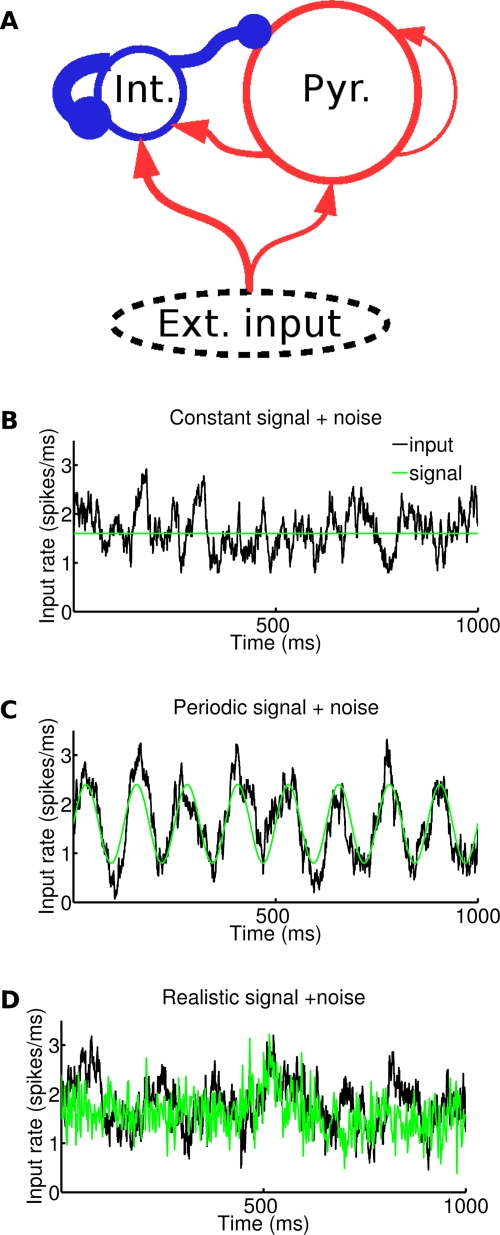
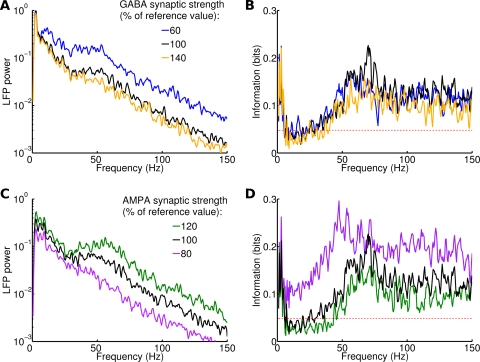
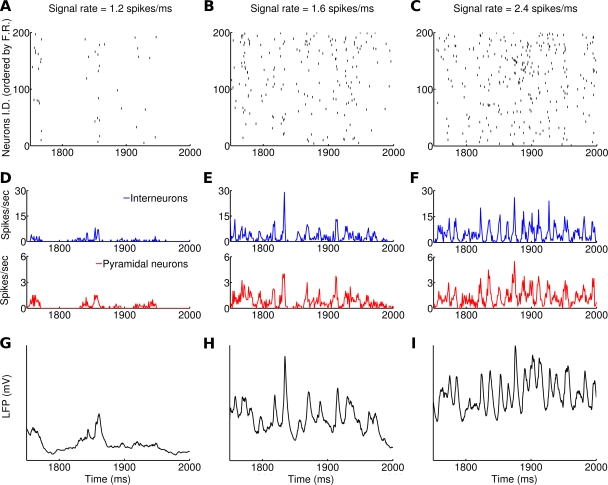
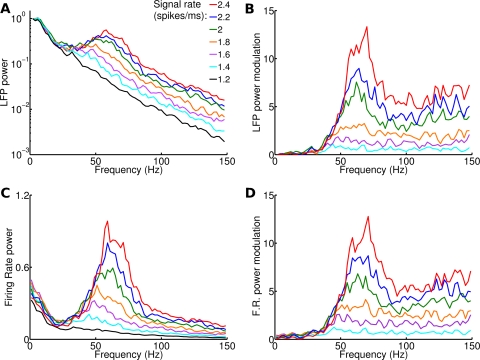
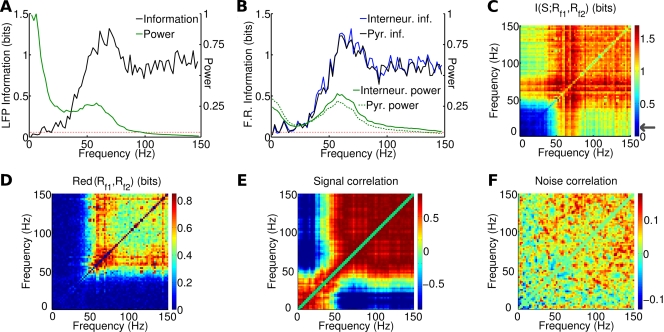
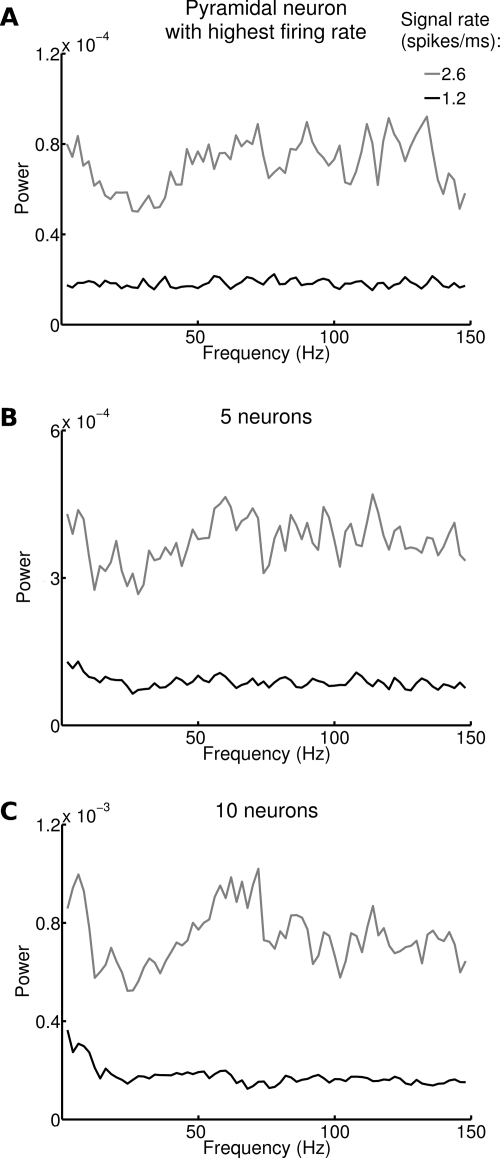
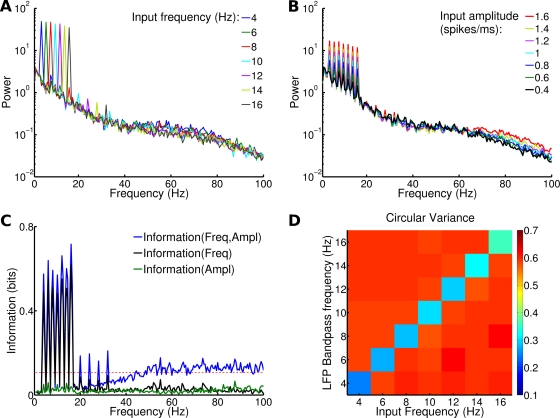
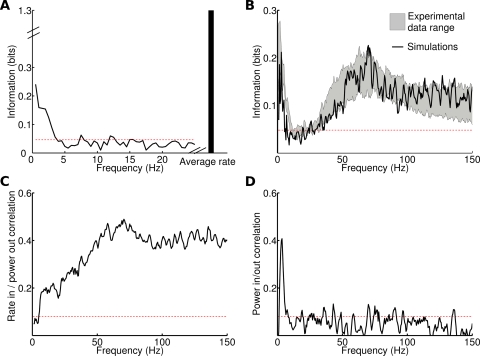
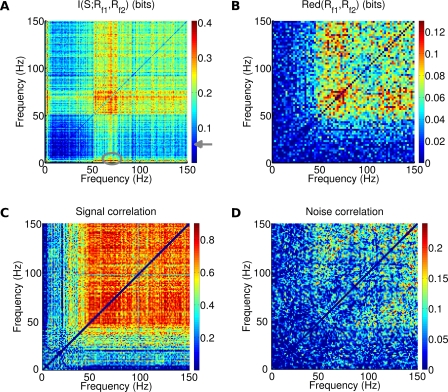
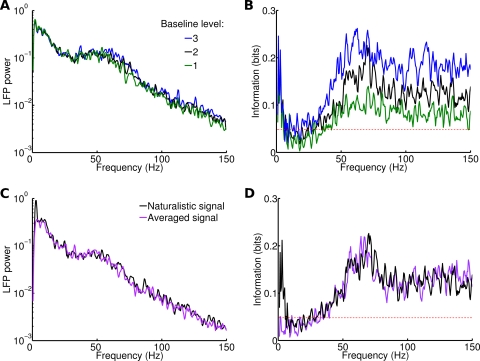
Recordings of local field potentials (LFPs) reveal that the sensory cortex displays rhythmic activity and fluctuations over a wide range of frequencies and amplitudes. Yet, the role of this kind of activity in encoding sensory information remains largely unknown. To understand the rules of translation between the structure of sensory stimuli and the fluctuations of cortical responses, we simulated a sparsely connected network of excitatory and inhibitory neurons modeling a local cortical population, and we determined how the LFPs generated by the network encode information about input stimuli. We first considered simple static and periodic stimuli and then naturalistic input stimuli based on electrophysiological recordings from the thalamus of anesthetized monkeys watching natural movie scenes. We found that the simulated network produced stimulus-related LFP changes that were in striking agreement with the LFPs obtained from the primary visual cortex. Moreover, our results demonstrate that the network encoded static input spike rates into gamma-range oscillations generated by inhibitory-excitatory neural interactions and encoded slow dynamic features of the input into slow LFP fluctuations mediated by stimulus-neural interactions. The model cortical network processed dynamic stimuli with naturalistic temporal structure by using low and high response frequencies as independent communication channels, again in agreement with recent reports from visual cortex responses to naturalistic movies. One potential function of this frequency decomposition into independent information channels operated by the cortical network may be that of enhancing the capacity of the cortical column to encode our complex sensory environment.
局部场电位(LFP)记录显示,感觉皮层在很宽的频率和幅度范围内呈现节律性活动和波动。然而,这种活动在编码感觉信息中的作用仍 largely unknown。为了理解感觉刺激结构与皮层反应波动之间的转换规则,我们模拟了一个稀疏连接的兴奋性和抑制性神经元网络,该网络模拟局部皮层群体,并且我们确定了该网络产生的LFP如何编码有关输入刺激的信息。我们首先考虑了简单的静态和周期性刺激,然后基于观看自然电影场景的麻醉猴子丘脑的电生理记录考虑了自然主义输入刺激。我们发现,模拟网络产生了与从初级视觉皮层获得的LFP惊人一致的与刺激相关的LFP变化。此外,我们的结果表明,该网络将静态输入尖峰率编码为由抑制性 - 兴奋性神经相互作用产生的伽马范围振荡,并将输入的缓慢动态特征编码为由刺激 - 神经相互作用介导的缓慢LFP波动。该模型皮层网络通过使用低和高响应频率作为独立的通信通道来处理具有自然时间结构的动态刺激,这再次与视觉皮层对自然主义电影的反应的近期报道一致。由皮层网络操作的这种分解为独立信息通道的频率分解的一个潜在功能可能是增强皮层柱编码我们复杂感觉环境的能力。