Mathews Rebeccah J, Sprakes Michael B, McDermott Michael F
Section of Musculoskeletal Disease, Leeds Institute of Molecular Medicine, St James's University Hospital, Leeds, UK.
Arthritis Res Ther. 2008;10(6):228. doi: 10.1186/ar2525. Epub 2008 Nov 25.
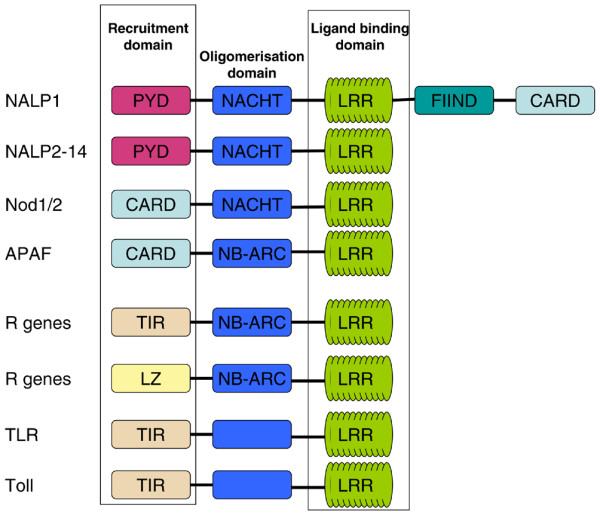
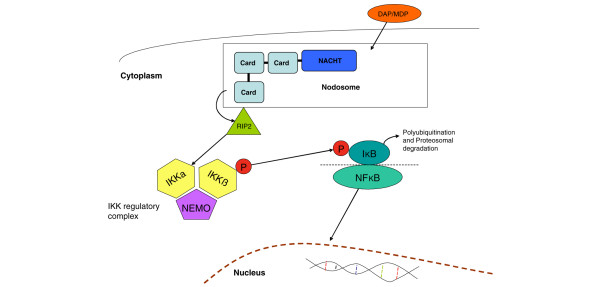
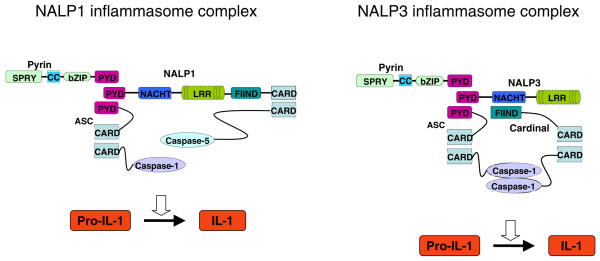
The nucleotide-binding and oligomerization domain, leucine-rich repeat (also known as NOD-like receptors, both abbreviated to NLR) family of intracellular pathogen recognition receptors are increasingly being recognized to play a pivotal role in the pathogenesis of a number of rare monogenic diseases, as well as some more common polygenic conditions. Bacterial wall constituents and other cellular stressor molecules are recognized by a range of NLRs, which leads to activation of the innate immune response and upregulation of key proinflammatory pathways, such as IL-1beta production and translocation of nuclear factor-kappaB to the nucleus. These signalling pathways are increasingly being targeted as potential sites for new therapies. This review discusses the role played by NLRs in a variety of inflammatory diseases and describes the remarkable success to date of these therapeutic agents in treating some of the disorders associated with aberrant NLR function.
核苷酸结合寡聚化结构域富含亮氨酸重复序列(也称为NOD样受体,均缩写为NLR)家族的细胞内病原体识别受体,在许多罕见单基因疾病以及一些更常见的多基因疾病的发病机制中日益被认为发挥着关键作用。细菌细胞壁成分和其他细胞应激分子被一系列NLR识别,这导致先天免疫反应激活以及关键促炎途径上调,如白细胞介素-1β的产生和核因子-κB向细胞核的转位。这些信号通路越来越多地被作为新疗法的潜在靶点。本综述讨论了NLR在多种炎症性疾病中的作用,并描述了这些治疗药物迄今为止在治疗一些与NLR功能异常相关疾病方面取得的显著成功。