Seiradake Elena, Henaff Daniel, Wodrich Harald, Billet Olivier, Perreau Matthieu, Hippert Claire, Mennechet Franck, Schoehn Guy, Lortat-Jacob Hugues, Dreja Hanna, Ibanes Sandy, Kalatzis Vasiliki, Wang Jennifer P, Finberg Robert W, Cusack Stephen, Kremer Eric J
European Molecular Biology Laboratory, Grenoble Outstation, Grenoble, France.
PLoS Pathog. 2009 Jan;5(1):e1000277. doi: 10.1371/journal.ppat.1000277. Epub 2009 Jan 2.
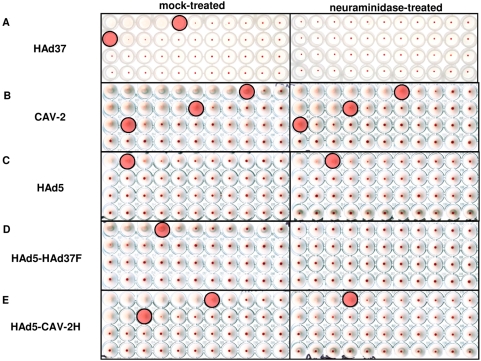
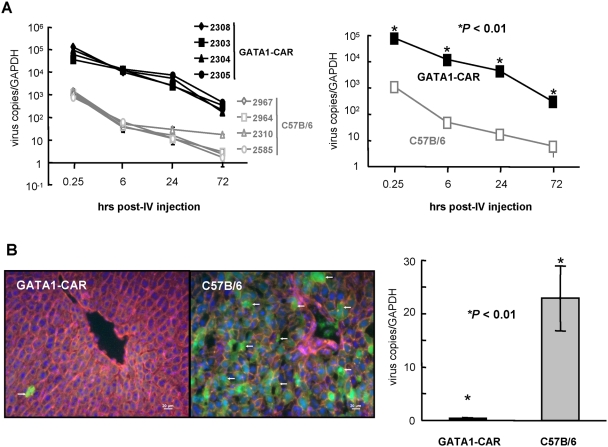
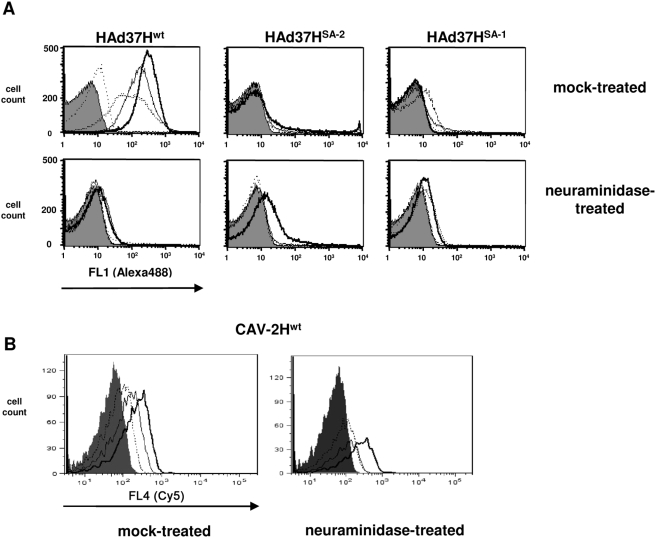
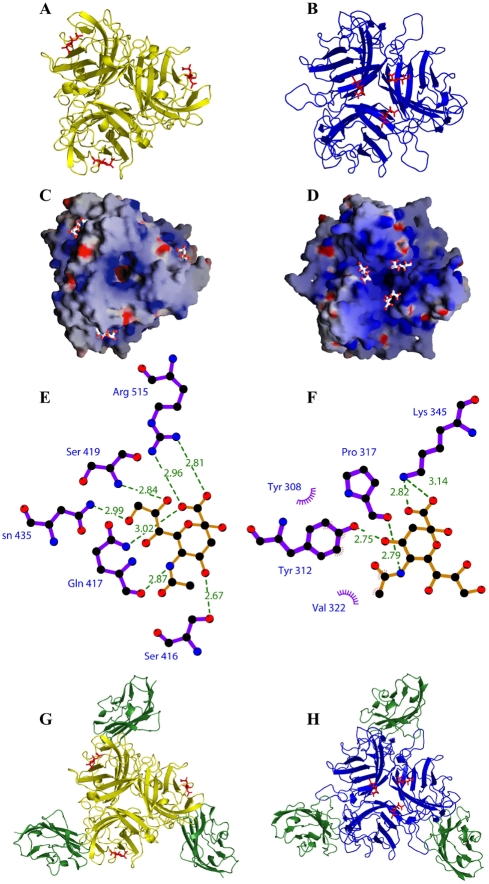
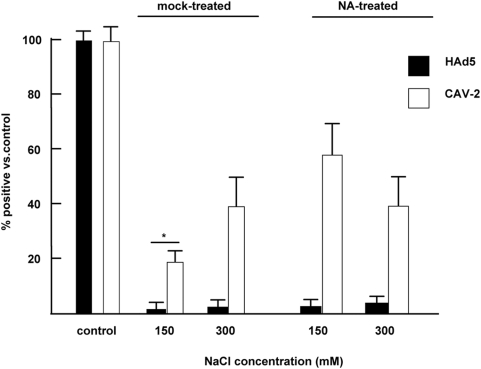
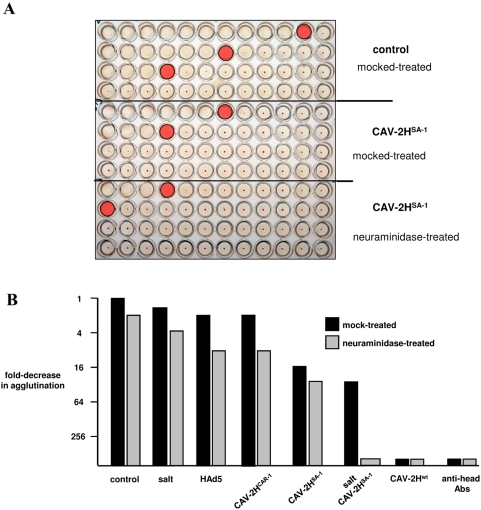
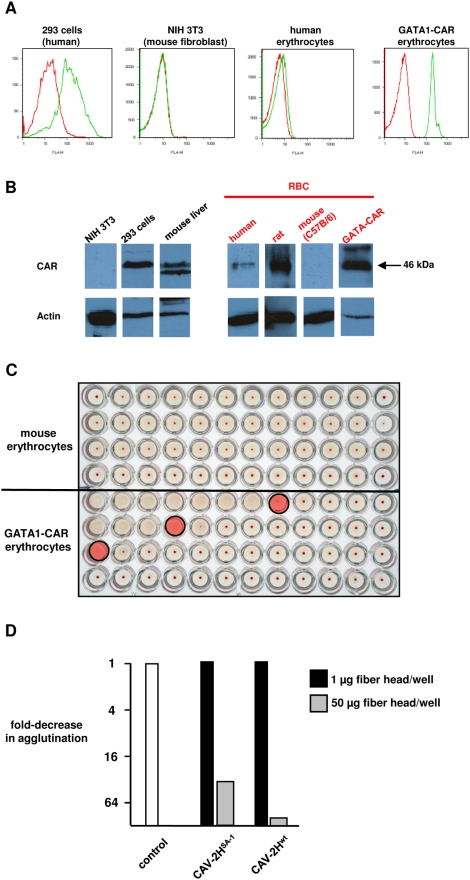
Although it has been known for 50 years that adenoviruses (Ads) interact with erythrocytes ex vivo, the molecular and structural basis for this interaction, which has been serendipitously exploited for diagnostic tests, is unknown. In this study, we characterized the interaction between erythrocytes and unrelated Ad serotypes, human 5 (HAd5) and 37 (HAd37), and canine 2 (CAV-2). While these serotypes agglutinate human erythrocytes, they use different receptors, have different tropisms and/or infect different species. Using molecular, biochemical, structural and transgenic animal-based analyses, we found that the primary erythrocyte interaction domain for HAd37 is its sialic acid binding site, while CAV-2 binding depends on at least three factors: electrostatic interactions, sialic acid binding and, unexpectedly, binding to the coxsackievirus and adenovirus receptor (CAR) on human erythrocytes. We show that the presence of CAR on erythrocytes leads to prolonged in vivo blood half-life and significantly reduced liver infection when a CAR-tropic Ad is injected intravenously. This study provides i) a molecular and structural rationale for Ad-erythrocyte interactions, ii) a basis to improve vector-mediated gene transfer and iii) a mechanism that may explain the biodistribution and pathogenic inconsistencies found between human and animal models.
尽管50年前就已知道腺病毒(Ads)在体外与红细胞相互作用,但这种相互作用的分子和结构基础尚不清楚,而这种相互作用已被意外地用于诊断测试。在本研究中,我们对红细胞与不相关的腺病毒血清型,即人5型(HAd5)和37型(HAd37)以及犬2型(CAV - 2)之间的相互作用进行了表征。虽然这些血清型会凝集人红细胞,但它们使用不同的受体,具有不同的嗜性和/或感染不同的物种。通过分子、生化、结构和基于转基因动物的分析,我们发现HAd37与红细胞相互作用的主要结构域是其唾液酸结合位点,而CAV - 2的结合至少取决于三个因素:静电相互作用、唾液酸结合以及出人意料的与人类红细胞上柯萨奇病毒和腺病毒受体(CAR)的结合。我们表明,当静脉注射嗜CAR的腺病毒时,红细胞上CAR的存在会导致体内血液半衰期延长,并显著降低肝脏感染。本研究提供了:i)腺病毒与红细胞相互作用的分子和结构原理;ii)改善载体介导的基因转移的基础;iii)一种可能解释在人类和动物模型之间发现的生物分布和致病性不一致的机制。