Department of Neuroscience, Physiology and Pharmacology, University College London, London, UK.
J Psychopharmacol. 2010 Jan;24(1):27-38. doi: 10.1177/0269881108100255. Epub 2009 Feb 9.
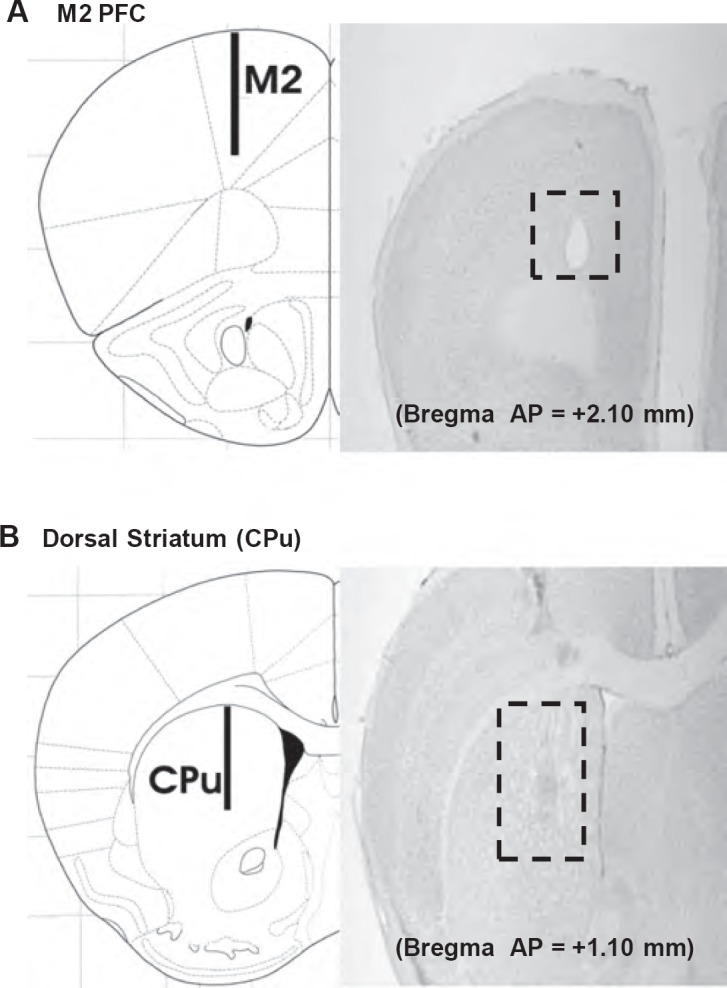
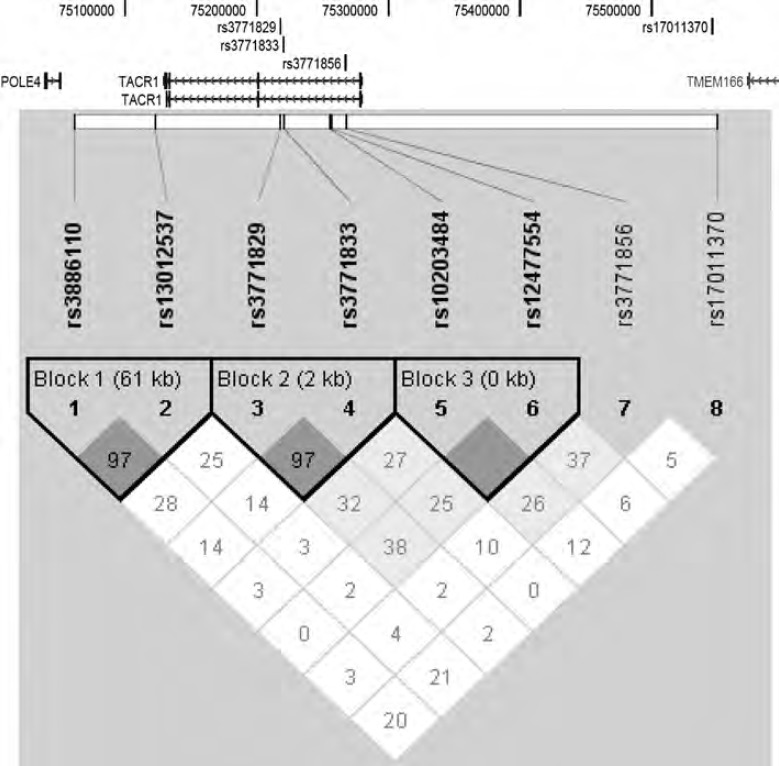
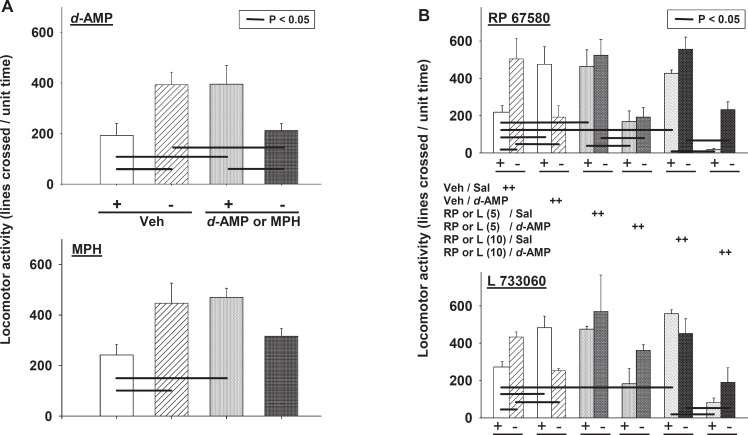
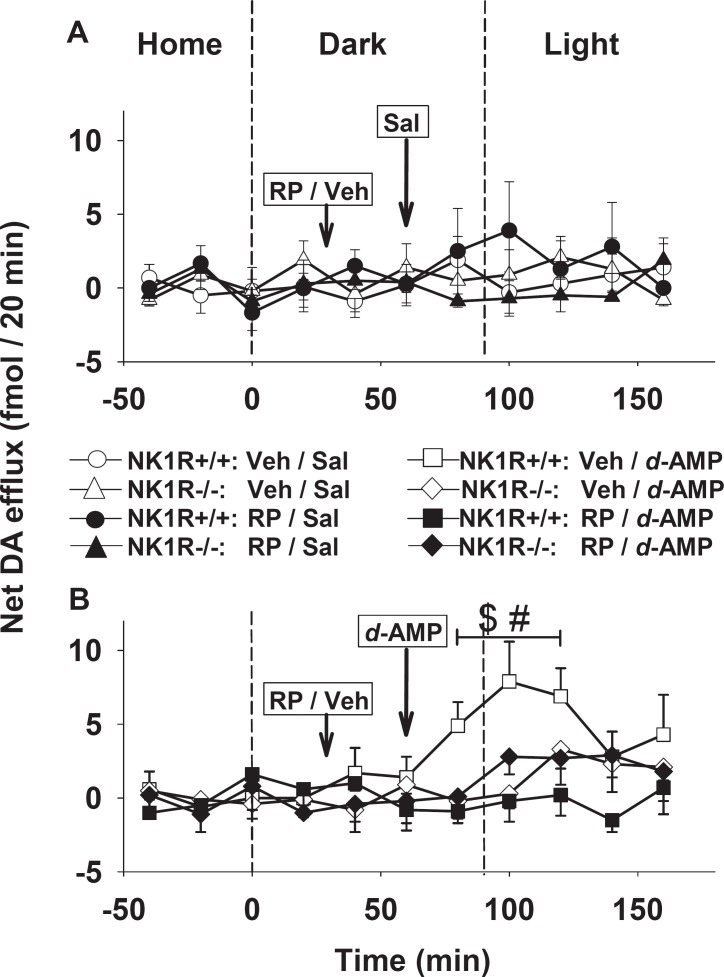
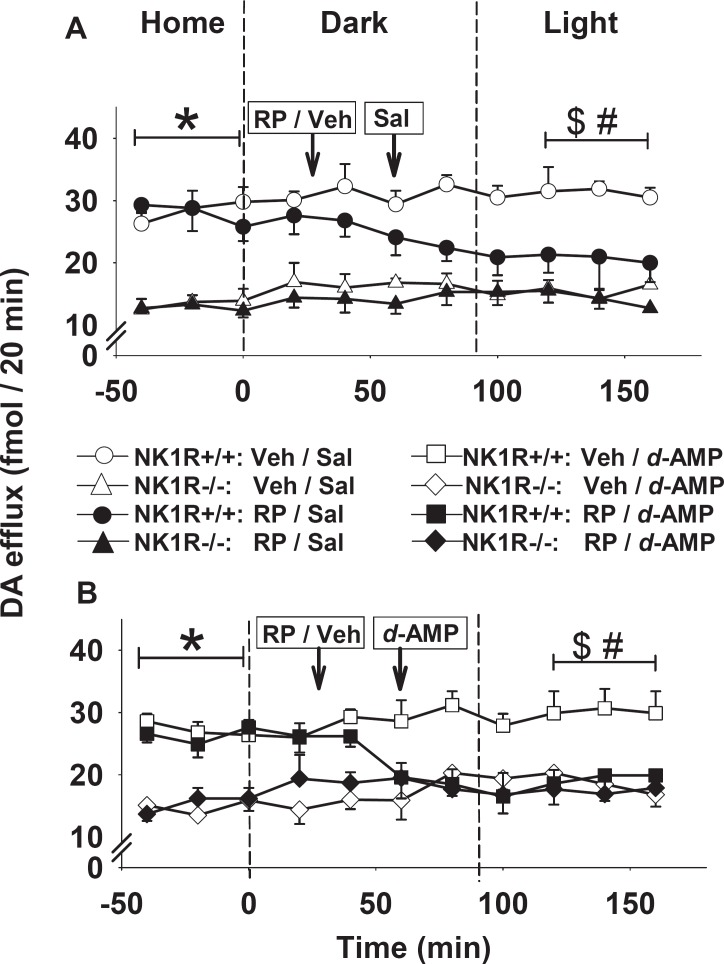
Mice with functional genetic ablation of the Tacr1 (substance P-preferring receptor) gene (NK1R-/-) are hyperactive. Here, we investigated whether this is mimicked by NK1R antagonism and whether dopaminergic transmission is disrupted in brain regions that govern motor performance. The locomotor activity of NK1R-/- and wild-type mice was compared after treatment with an NK1R antagonist and/or psychostimulant (d-amphetamine or methylphenidate). The inactivation of NK1R (by gene mutation or receptor antagonism) induced hyperactivity in mice, which was prevented by both psychostimulants. Using in vivo microdialysis, we then compared the regulation of extracellular dopamine in the prefrontal cortex (PFC) and striatum in the two genotypes. A lack of functional NK1R reduced (>50%) spontaneous dopamine efflux in the prefrontal cortex and abolished the striatal dopamine response to d-amphetamine. These behavioural and neurochemical abnormalities in NK1R-/- mice, together with their atypical response to psychostimulants, echo attention deficit hyperactivity disorder (ADHD) in humans. These findings prompted genetic studies on the TACR1 gene (the human equivalent of NK1R) in ADHD patients in a case-control study of 450 ADHD patients and 600 screened supernormal controls. Four single-nucleotide polymorphisms (rs3771829, rs3771833, rs3771856, and rs1701137) at the TACR1 gene, previously known to be associated with bipolar disorder or alcoholism, were strongly associated with ADHD. In conclusion, our proposal that NK1R-/- mice offer a mouse model of ADHD was borne out by our human studies, which suggest that DNA sequence changes in and around the TACR1 gene increase susceptibility to this disorder.
功能性敲除 Tacr1(P 物质优先受体)基因的小鼠(NK1R-/-)表现出过度活跃。在此,我们研究了 NK1R 拮抗是否能模拟这种情况,以及多巴胺能传递是否在控制运动表现的脑区受到干扰。在用 NK1R 拮抗剂和/或精神兴奋剂(d-安非他命或哌甲酯)处理后,比较 NK1R-/-和野生型小鼠的运动活性。NK1R 的失活(通过基因突变或受体拮抗)诱导小鼠过度活跃,两种精神兴奋剂均可预防。然后,我们使用体内微透析比较了两种基因型下前额皮质(PFC)和纹状体中外源性多巴胺的调节。缺乏功能性 NK1R 可减少(>50%)前额皮质中的自发多巴胺外排,并消除纹状体对 d-安非他命的多巴胺反应。NK1R-/-小鼠的这些行为和神经化学异常,以及它们对精神兴奋剂的非典型反应,与人类的注意缺陷多动障碍(ADHD)相呼应。这些发现促使我们在一项针对 450 名 ADHD 患者和 600 名筛查正常对照的病例对照研究中,对 TACR1 基因(NK1R 的人类对应物)进行了基因研究。TACR1 基因中的四个单核苷酸多态性(rs3771829、rs3771833、rs3771856 和 rs1701137)先前与双相情感障碍或酒精中毒有关,与 ADHD 强烈相关。总之,我们的研究建议 NK1R-/-小鼠是一种 ADHD 的小鼠模型,这一建议得到了我们的人类研究的支持,这些研究表明,TACR1 基因及其周围的 DNA 序列变化增加了对这种疾病的易感性。