Rosa Patrícia Sammarco, Soares Cleverson Teixeira, Belone Andréa de Faria Fernandes, Vilela Raquel, Ura Somei, Filho Milton Cury, Mendoza Leonel
Instituto Lauro de Souza Lima, Bauru, SP, Brazil.
J Med Case Rep. 2009 Feb 16;3:67. doi: 10.1186/1752-1947-3-67.
Jorge Lobo's disease (Lacaziosis) is a subcutaneous infection of humans living in the Amazon region of Latin America, and in dolphins inhabiting the east coastal areas of the United States. The disease mainly affects people from rural areas living or working in close contact with vegetation and aquatic environments. Most patients refer having developed lesions after accidental trauma with plant thorns or insect bites. Inter-human transmission has never been confirmed suggesting that Lacazia loboi is acquired from environmental propagules.
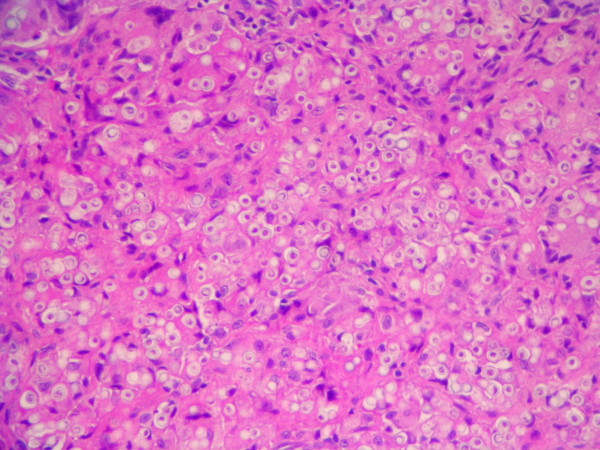
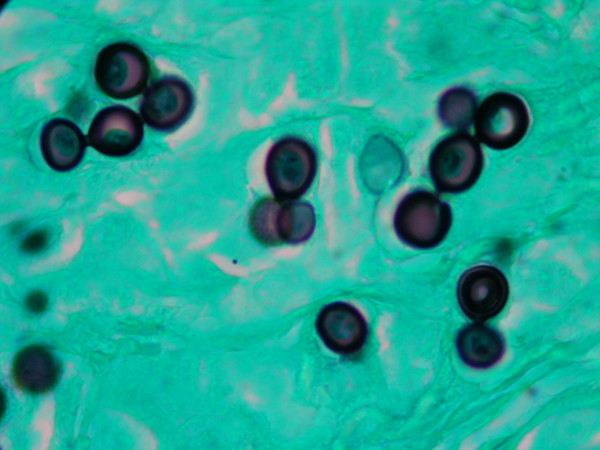
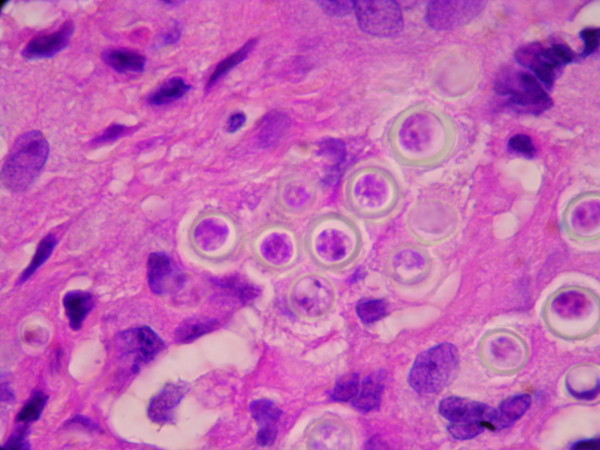
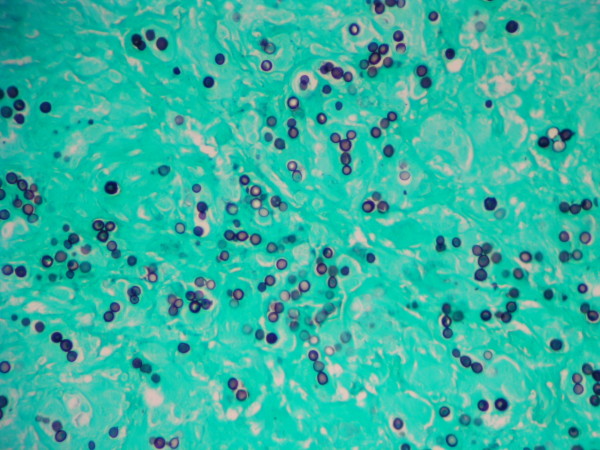
We report the case of a 41-year-old woman from São Paulo, Brazil, a non-endemic area of Jorge Lobo's disease, with L. loboi skin infection most likely accidentally acquired while manipulating experimentally infected mice in the laboratory.
Because many patients with Jorge Lobo's disease do not recall accidental skin trauma before their infections, the possibility of accidentally acquired Jorge Lobo's disease through unnoticed broken skin should be considered during the clinical investigation of nodular skin diseases in people who have contact with the fungus or who live in endemic areas. This is the second report of animal to human transmission of this disease.
若热·洛博病(拉卡济奥病)是一种发生于生活在拉丁美洲亚马逊地区的人类以及生活在美国东海岸地区的海豚身上的皮下感染疾病。该疾病主要影响那些生活或工作在与植被和水生环境密切接触的农村地区的人群。大多数患者表示在被植物刺意外刺伤或被昆虫叮咬后出现了病变。人与人之间的传播从未得到证实,这表明拉卡济奥枝孢菌是通过环境中的繁殖体获得的。
我们报告了一名来自巴西圣保罗的41岁女性病例,圣保罗并非若热·洛博病的流行地区,该女性感染了拉卡济奥枝孢菌,很可能是在实验室中处理实验感染的小鼠时意外感染的。
由于许多若热·洛博病患者在感染前不记得有过意外的皮肤创伤,因此在对接触过该真菌或生活在流行地区的人群的结节性皮肤病进行临床调查时,应考虑通过未被注意到的皮肤破损意外感染若热·洛博病的可能性。这是该疾病动物传人传播的第二例报告。