Park Ji-Ho, Gu Luo, von Maltzahn Geoffrey, Ruoslahti Erkki, Bhatia Sangeeta N, Sailor Michael J
Department of Chemistry and Biochemistry, University of California, San Diego, La Jolla, California 92093, USA.
Nat Mater. 2009 Apr;8(4):331-6. doi: 10.1038/nmat2398. Epub 2009 Feb 22.
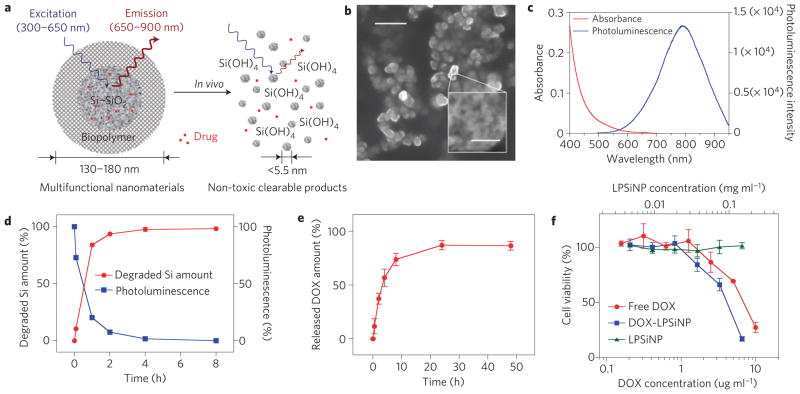
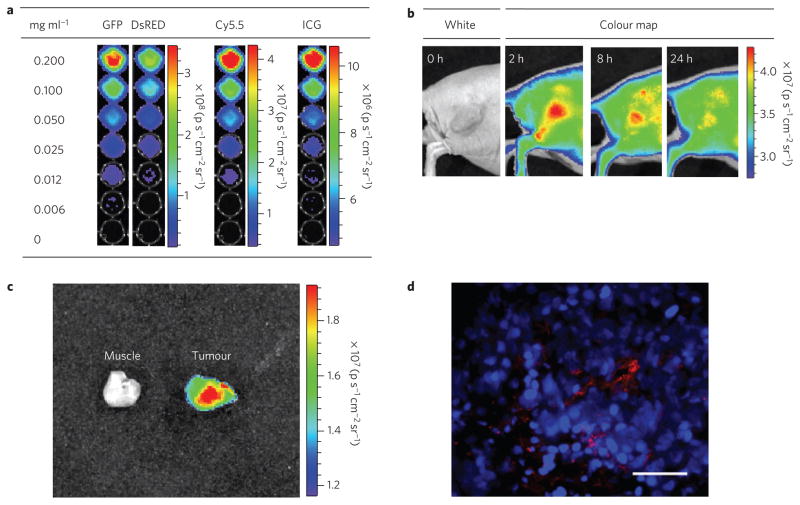
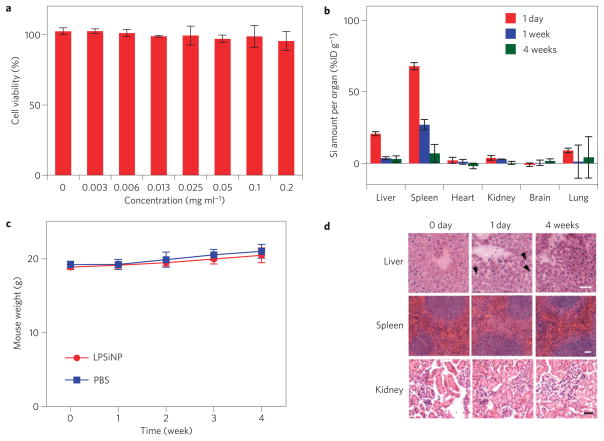
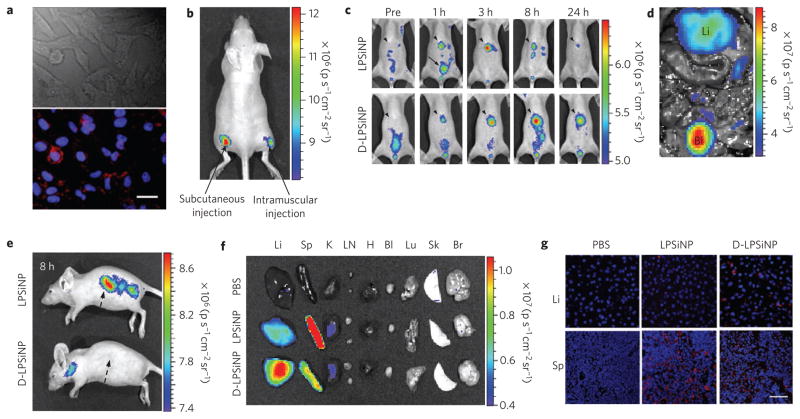
Nanomaterials that can circulate in the body hold great potential to diagnose and treat disease. For such applications, it is important that the nanomaterials be harmlessly eliminated from the body in a reasonable period of time after they carry out their diagnostic or therapeutic function. Despite efforts to improve their targeting efficiency, significant quantities of systemically administered nanomaterials are cleared by the mononuclear phagocytic system before finding their targets, increasing the likelihood of unintended acute or chronic toxicity. However, there has been little effort to engineer the self-destruction of errant nanoparticles into non-toxic, systemically eliminated products. Here, we present luminescent porous silicon nanoparticles (LPSiNPs) that can carry a drug payload and of which the intrinsic near-infrared photoluminescence enables monitoring of both accumulation and degradation in vivo. Furthermore, in contrast to most optically active nanomaterials (carbon nanotubes, gold nanoparticles and quantum dots), LPSiNPs self-destruct in a mouse model into renally cleared components in a relatively short period of time with no evidence of toxicity. As a preliminary in vivo application, we demonstrate tumour imaging using dextran-coated LPSiNPs (D-LPSiNPs). These results demonstrate a new type of multifunctional nanostructure with a low-toxicity degradation pathway for in vivo applications.
能够在体内循环的纳米材料在疾病诊断和治疗方面具有巨大潜力。对于此类应用而言,重要的是纳米材料在执行其诊断或治疗功能后的一段合理时间内能够无害地从体内清除。尽管人们努力提高其靶向效率,但大量经全身给药的纳米材料在找到目标之前就被单核吞噬系统清除,增加了意外急性或慢性毒性的可能性。然而,几乎没有人致力于将错误纳米颗粒的自毁设计成无毒的、可经全身清除的产物。在此,我们展示了发光多孔硅纳米颗粒(LPSiNPs),其能够携带药物载荷,并且其固有的近红外光致发光能够监测体内的积累和降解情况。此外,与大多数光学活性纳米材料(碳纳米管、金纳米颗粒和量子点)不同,LPSiNPs在小鼠模型中会在相对较短的时间内自毁为可经肾脏清除的成分,且没有毒性迹象。作为初步的体内应用,我们展示了使用葡聚糖包被的LPSiNPs(D-LPSiNPs)进行肿瘤成像。这些结果证明了一种新型的多功能纳米结构,其具有用于体内应用的低毒性降解途径。