Boniface Katia, Bak-Jensen Kristian S, Li Ying, Blumenschein Wendy M, McGeachy Mandy J, McClanahan Terrill K, McKenzie Brent S, Kastelein Robert A, Cua Daniel J, de Waal Malefyt René
Department of Immunology, Schering-Plough Biopharma, Palo Alto, CA 94304, USA.
J Exp Med. 2009 Mar 16;206(3):535-48. doi: 10.1084/jem.20082293. Epub 2009 Mar 9.
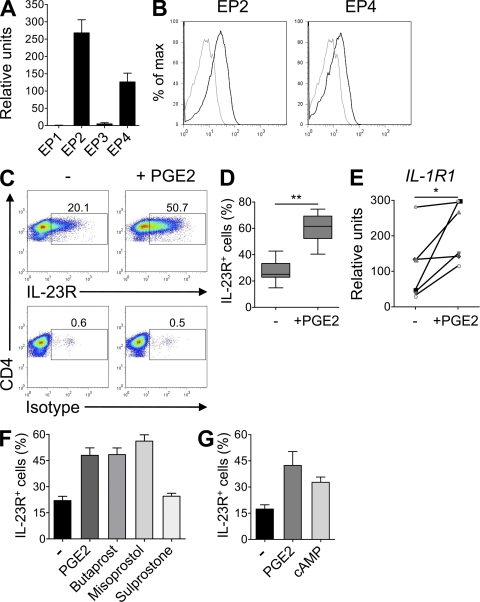
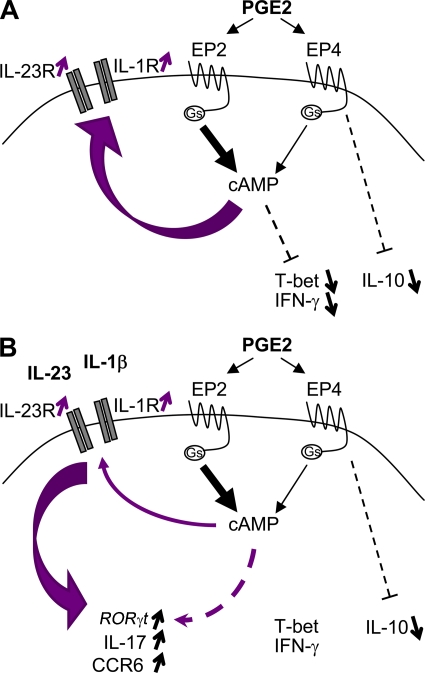
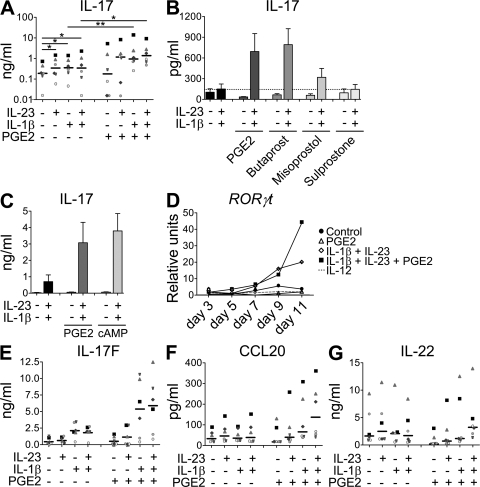
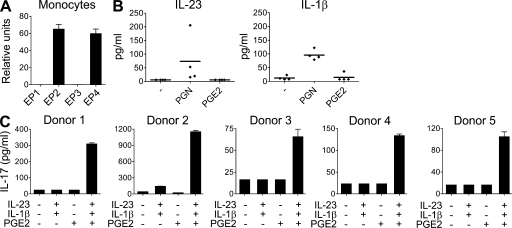
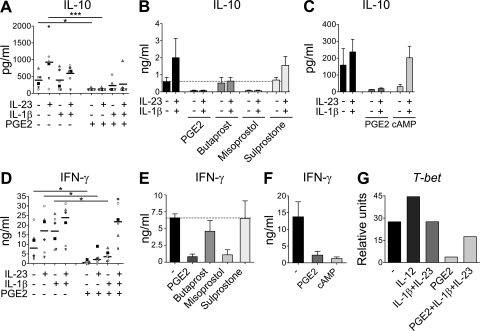
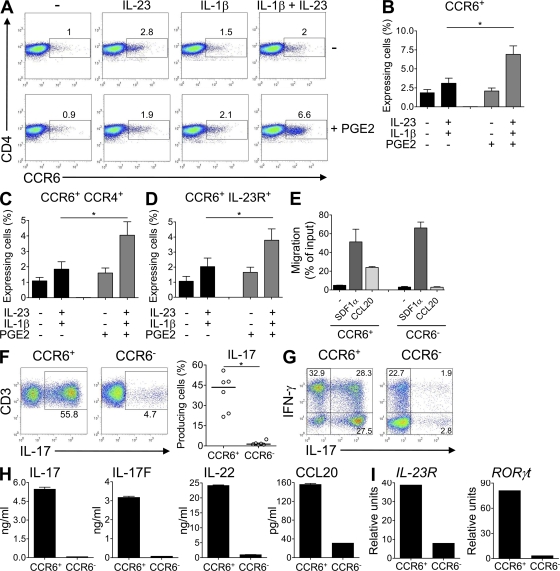
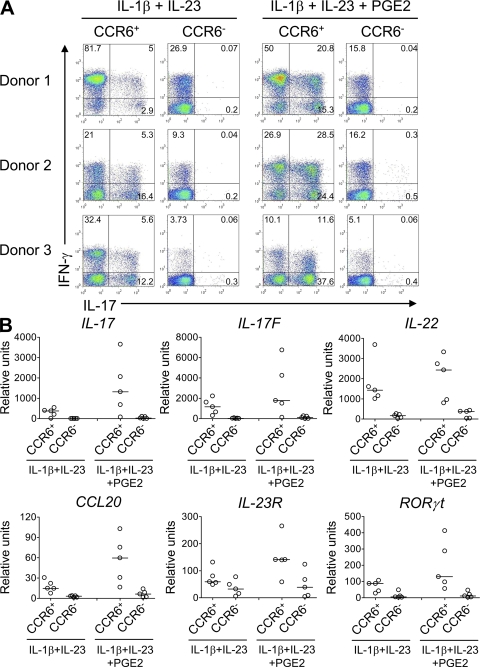
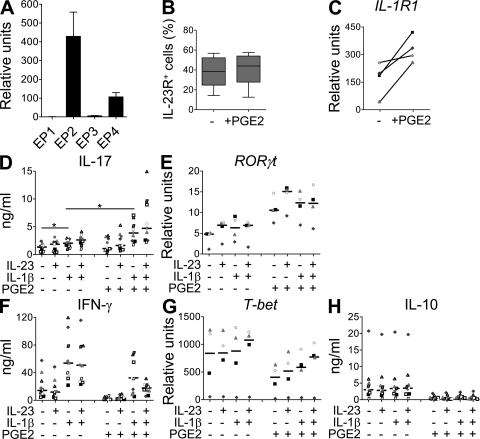
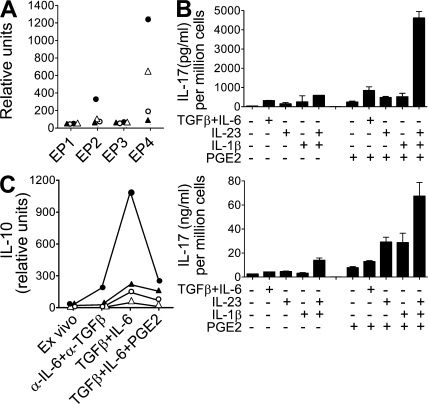
Prostaglandins, particularly prostaglandin E2 (PGE2), play an important role during inflammation. This is exemplified by the clinical use of cyclooxygenase 2 inhibitors, which interfere with PGE2 synthesis, as effective antiinflammatory drugs. Here, we show that PGE2 directly promotes differentiation and proinflammatory functions of human and murine IL-17-producing T helper (Th17) cells. In human purified naive T cells, PGE2 acts via prostaglandin receptor EP2- and EP4-mediated signaling and cyclic AMP pathways to up-regulate IL-23 and IL-1 receptor expression. Furthermore, PGE2 synergizes with IL-1beta and IL-23 to drive retinoic acid receptor-related orphan receptor (ROR)-gammat, IL-17, IL-17F, CCL20, and CCR6 expression, which is consistent with the reported Th17 phenotype. While enhancing Th17 cytokine expression mainly through EP2, PGE2 differentially regulates interferon (IFN)-gamma production and inhibits production of the antiinflammatory cytokine IL-10 in Th17 cells predominantly through EP4. Furthermore, PGE2 is required for IL-17 production in the presence of antigen-presenting cells. Hence, the combination of inflammatory cytokines and noncytokine immunomodulators, such as PGE2, during differentiation and activation determines the ultimate phenotype of Th17 cells. These findings, together with the altered IL-12/IL-23 balance induced by PGE2 in dendritic cells, further highlight the crucial role of the inflammatory microenvironment in Th17 cell development and regulation.
前列腺素,尤其是前列腺素E2(PGE2),在炎症过程中发挥重要作用。这一点在临床使用环氧合酶2抑制剂中得到了体现,这些抑制剂干扰PGE2的合成,是有效的抗炎药物。在此,我们表明PGE2直接促进人和小鼠产生白细胞介素-17的辅助性T细胞(Th17细胞)的分化和促炎功能。在人纯化的初始T细胞中,PGE2通过前列腺素受体EP2和EP4介导的信号传导以及环磷酸腺苷途径起作用,以上调IL-23和IL-1受体的表达。此外,PGE2与IL-1β和IL-23协同作用,驱动维甲酸受体相关孤儿受体(ROR)-γt、IL-17、IL-17F、CCL20和CCR6的表达,这与报道的Th17表型一致。虽然PGE2主要通过EP2增强Th17细胞因子的表达,但它以不同方式调节干扰素(IFN)-γ的产生,并主要通过EP4抑制Th17细胞中抗炎细胞因子IL-10的产生。此外,在存在抗原呈递细胞的情况下,IL-17的产生需要PGE2。因此,在分化和激活过程中,炎性细胞因子和非细胞因子免疫调节剂(如PGE2)的组合决定了Th17细胞的最终表型。这些发现,连同PGE2在树突状细胞中诱导的IL-12/IL-23平衡的改变,进一步突出了炎症微环境在Th17细胞发育和调节中的关键作用。