Zhu Haisun, Gegear Robert J, Casselman Amy, Kanginakudru Sriramana, Reppert Steven M
Department of Neurobiology, University of Massachusetts Medical School, Plantation Street, Worcester, MA 01605, USA.
BMC Biol. 2009 Mar 31;7:14. doi: 10.1186/1741-7007-7-14.
In the fall, Eastern North American monarch butterflies (Danaus plexippus) undergo a magnificent long-range migration. In contrast to spring and summer butterflies, fall migrants are juvenile hormone deficient, which leads to reproductive arrest and increased longevity. Migrants also use a time-compensated sun compass to help them navigate in the south/southwesterly direction en route for Mexico. Central issues in this area are defining the relationship between juvenile hormone status and oriented flight, critical features that differentiate summer monarchs from fall migrants, and identifying molecular correlates of behavioral state.
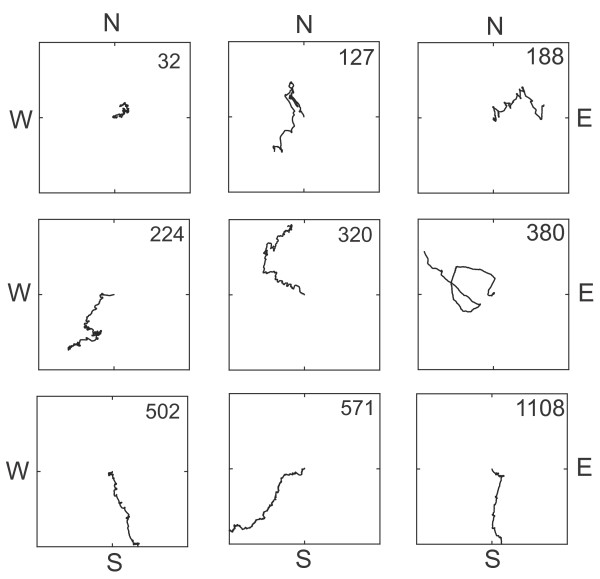
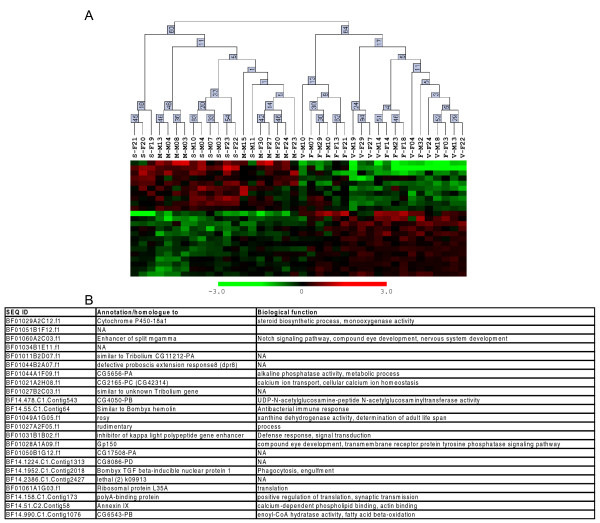
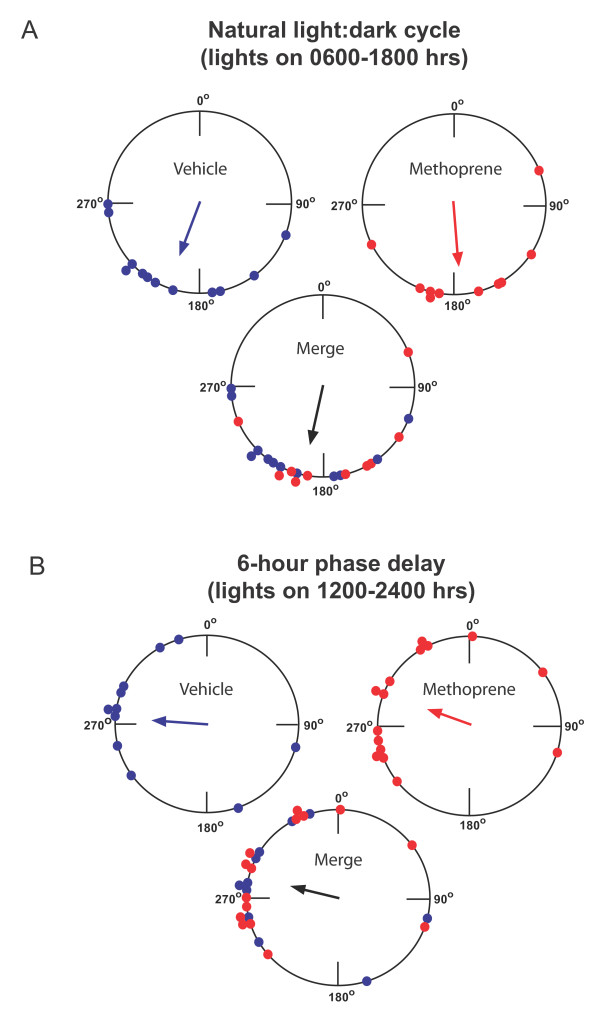
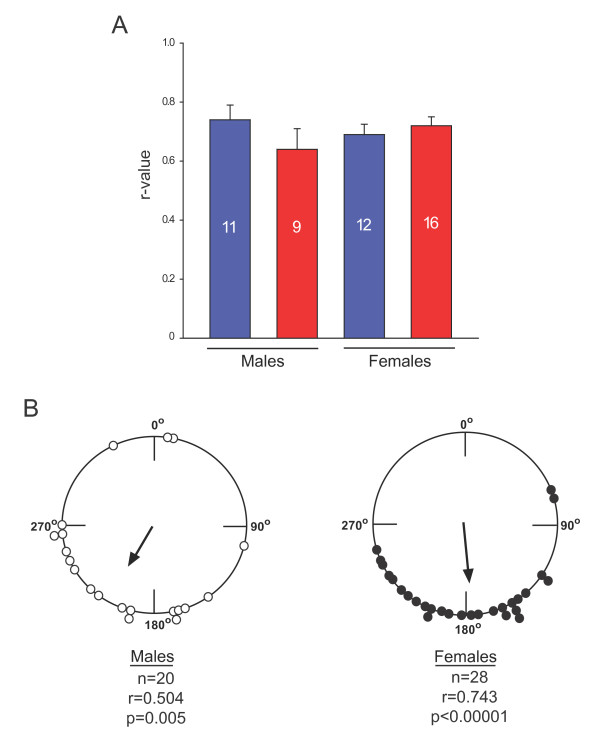
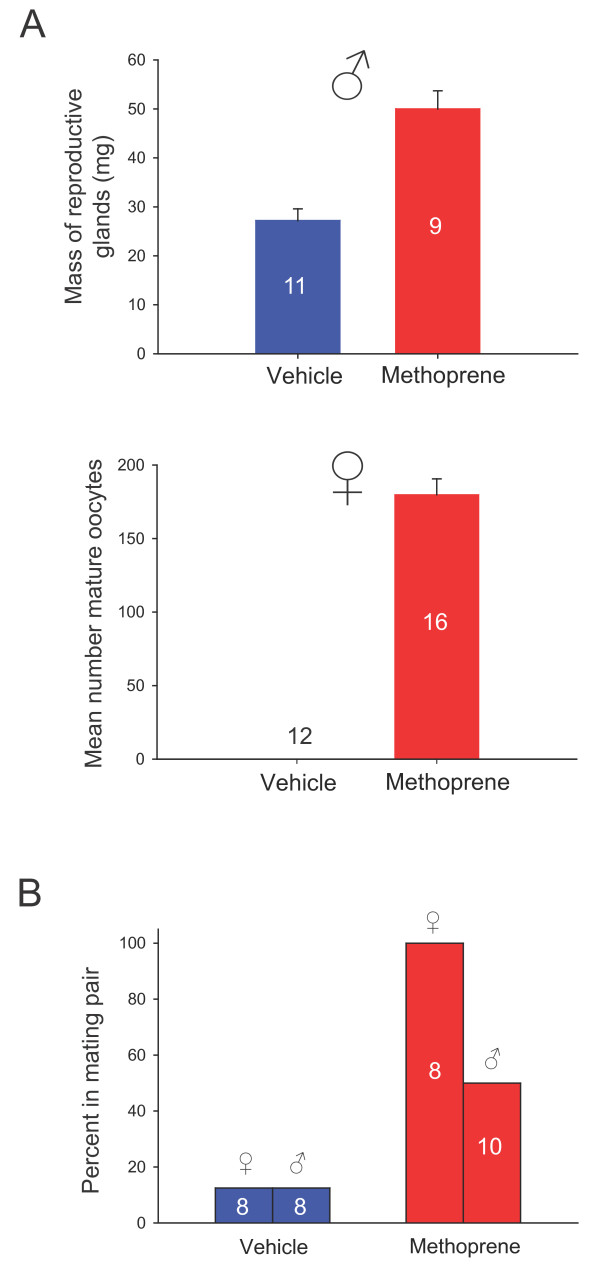
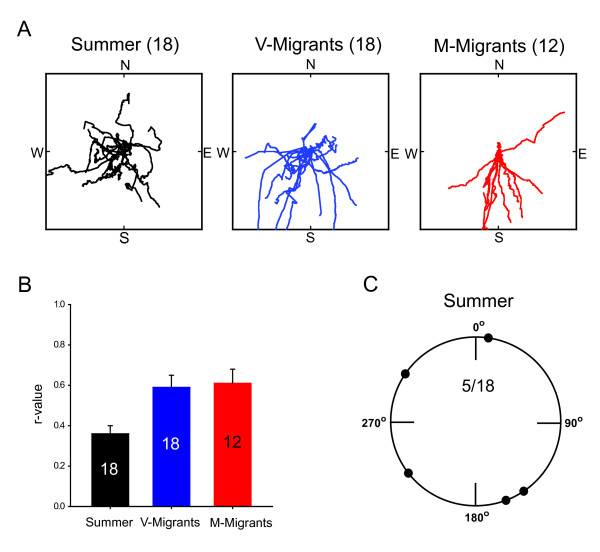
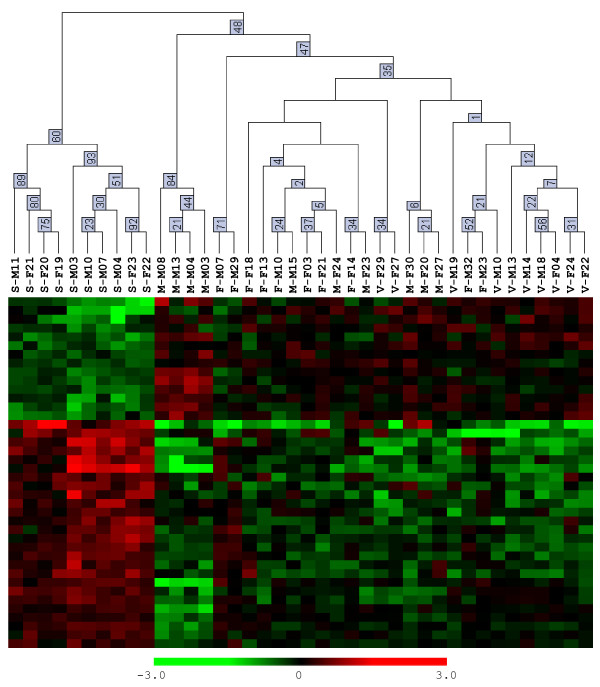
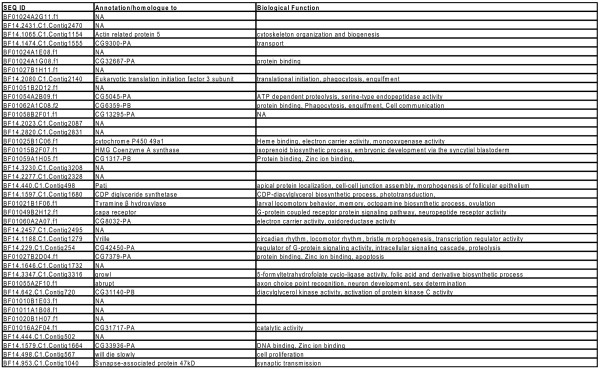
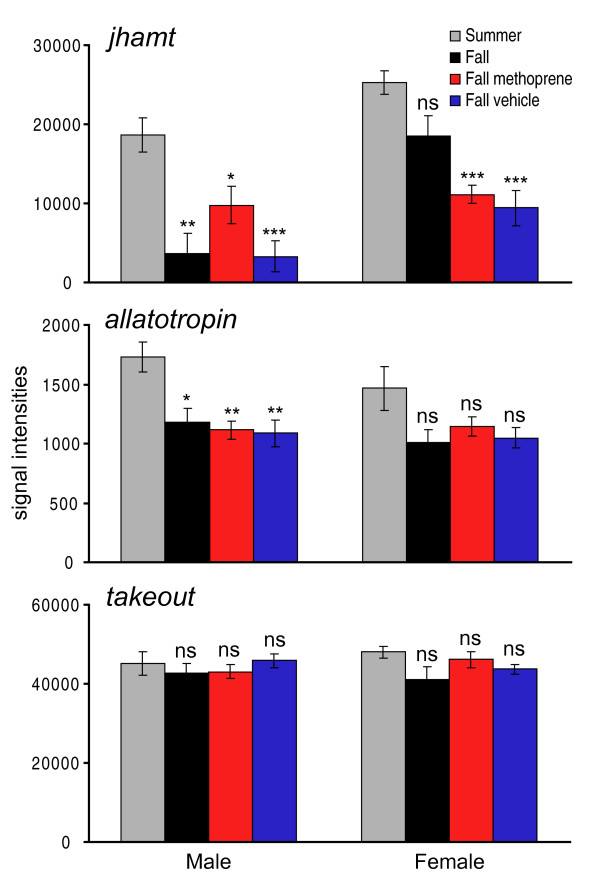
Here we show that increasing juvenile hormone activity to induce summer-like reproductive development in fall migrants does not alter directional flight behavior or its time-compensated orientation, as monitored in a flight simulator. Reproductive summer butterflies, in contrast, uniformly fail to exhibit directional, oriented flight. To define molecular correlates of behavioral state, we used microarray analysis of 9417 unique cDNA sequences. Gene expression profiles reveal a suite of 40 genes whose differential expression in brain correlates with oriented flight behavior in individual migrants, independent of juvenile hormone activity, thereby molecularly separating fall migrants from summer butterflies. Intriguing genes that are differentially regulated include the clock gene vrille and the locomotion-relevant tyramine beta hydroxylase gene. In addition, several differentially regulated genes (37.5% of total) are not annotated. We also identified 23 juvenile hormone-dependent genes in brain, which separate reproductive from non-reproductive monarchs; genes involved in longevity, fatty acid metabolism, and innate immunity are upregulated in non-reproductive (juvenile-hormone deficient) migrants.
The results link key behavioral traits with gene expression profiles in brain that differentiate migratory from summer butterflies and thus show that seasonal changes in genomic function help define the migratory state.
秋季,北美洲东部的黑脉金斑蝶(Danaus plexippus)会进行壮观的远距离迁徙。与春夏季节的蝴蝶不同,秋季迁徙的蝴蝶缺乏保幼激素,这导致其生殖停滞并延长了寿命。迁徙的蝴蝶还利用一种时间补偿太阳罗盘来帮助它们在前往墨西哥的途中朝南/西南方向飞行。该领域的核心问题包括确定保幼激素状态与定向飞行之间的关系、区分夏季帝王蝶和秋季迁徙者的关键特征,以及确定行为状态的分子关联。
在此我们表明,在飞行模拟器中监测到,增加保幼激素活性以诱导秋季迁徙者出现类似夏季的生殖发育,并不会改变定向飞行行为或其时间补偿定向。相比之下,处于生殖期的夏季蝴蝶均无法表现出定向飞行。为了确定行为状态的分子关联,我们对9417个独特的cDNA序列进行了微阵列分析。基因表达谱揭示了一组40个基因,其在大脑中的差异表达与个体迁徙者的定向飞行行为相关,与保幼激素活性无关,从而在分子层面上区分了秋季迁徙者和夏季蝴蝶。差异调节的有趣基因包括生物钟基因vrille和与运动相关的酪胺β羟化酶基因。此外,有几个差异调节基因(占总数的37.5%)未被注释。我们还在大脑中鉴定出23个保幼激素依赖性基因,这些基因区分了有生殖能力和无生殖能力的帝王蝶;参与长寿、脂肪酸代谢和先天免疫的基因在无生殖能力(缺乏保幼激素)的迁徙者中上调。
这些结果将关键行为特征与大脑中的基因表达谱联系起来,这些基因表达谱区分了迁徙蝴蝶和夏季蝴蝶,因此表明基因组功能的季节性变化有助于定义迁徙状态。