Gallistel C R
Rutgers University, Piscataway, NJ 08854, USA.
Psychol Rev. 2009 Apr;116(2):439-53. doi: 10.1037/a0015251.
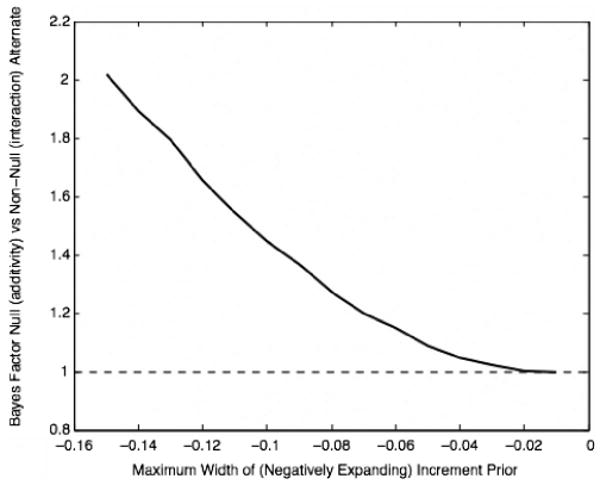
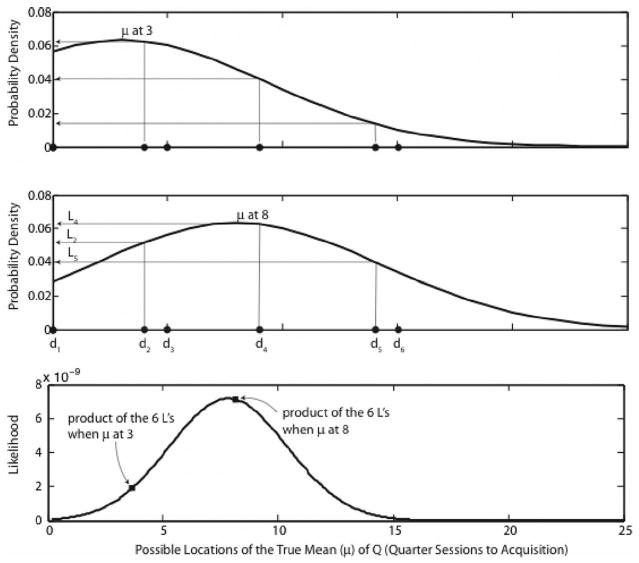
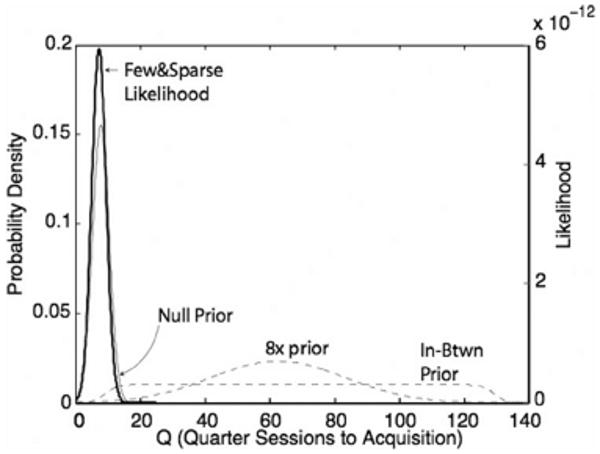
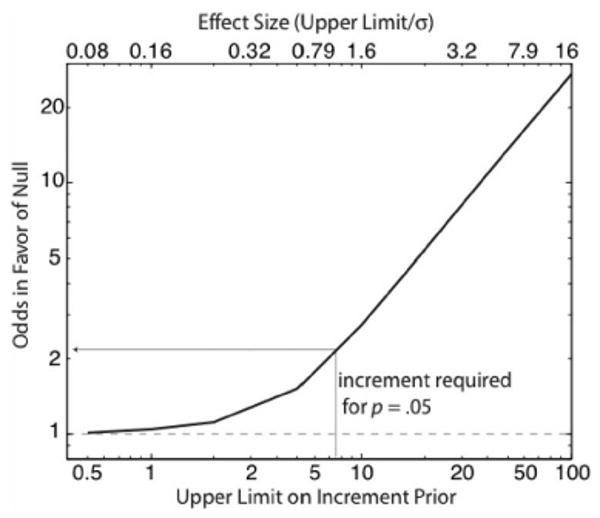
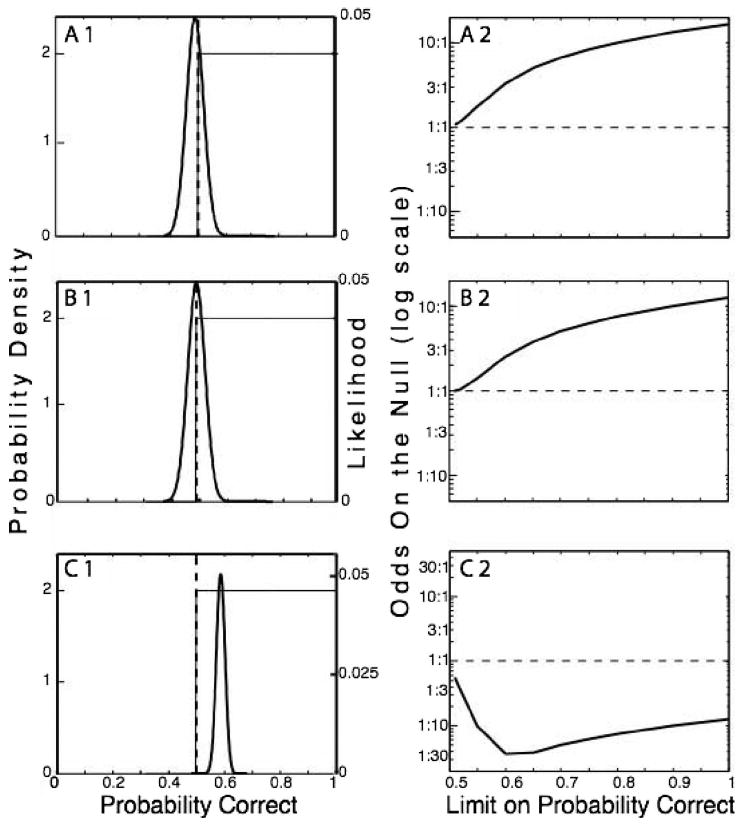
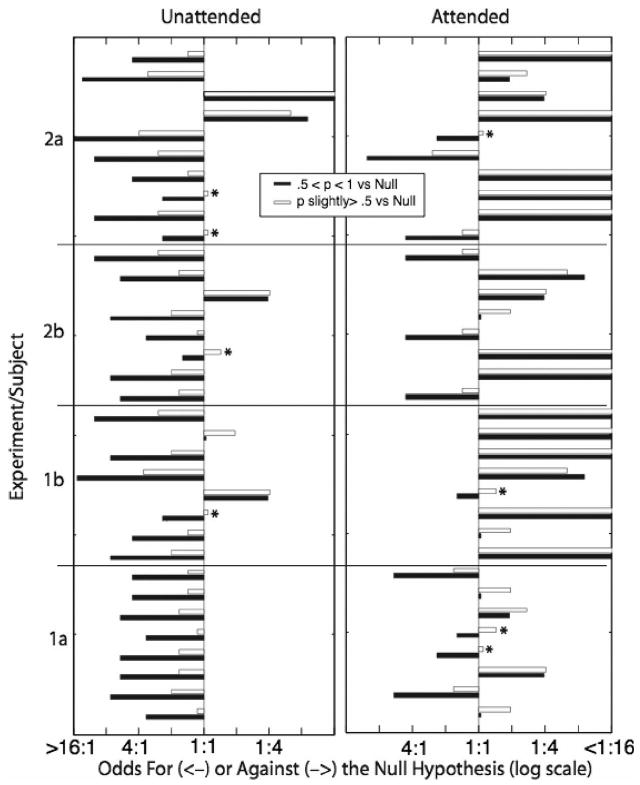
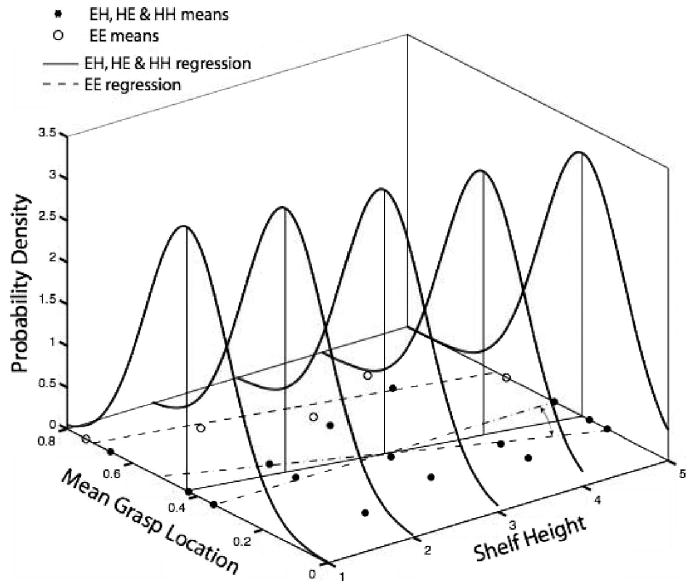
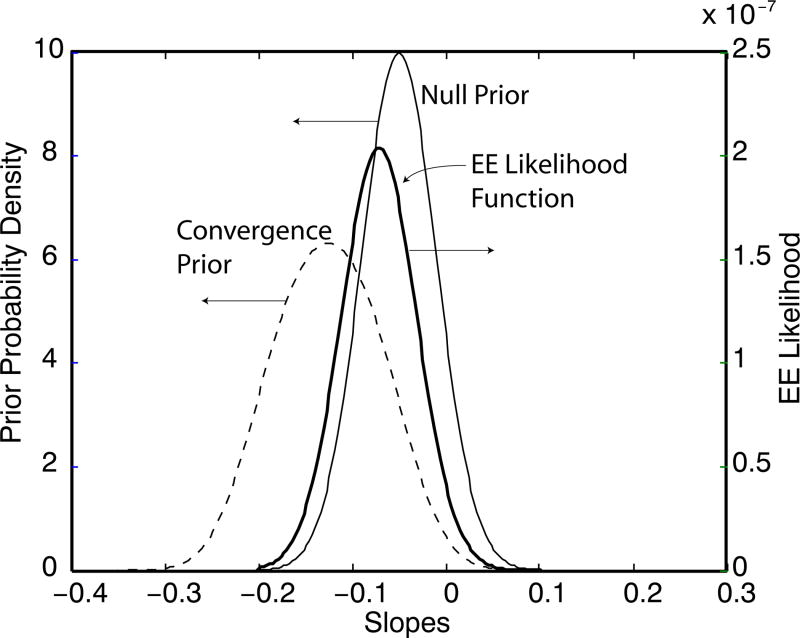
Null hypotheses are simple, precise, and theoretically important. Conventional statistical analysis cannot support them; Bayesian analysis can. The challenge in a Bayesian analysis is to formulate a suitably vague alternative, because the vaguer the alternative is (the more it spreads out the unit mass of prior probability), the more the null is favored. A general solution is a sensitivity analysis: Compute the odds for or against the null as a function of the limit(s) on the vagueness of the alternative. If the odds on the null approach 1 from above as the hypothesized maximum size of the possible effect approaches 0, then the data favor the null over any vaguer alternative to it. The simple computations and the intuitive graphic representation of the analysis are illustrated by the analysis of diverse examples from the current literature. They pose 3 common experimental questions: (a) Are 2 means the same? (b) Is performance at chance? (c) Are factors additive?
零假设简单、精确且在理论上很重要。传统统计分析无法支持它们;贝叶斯分析则可以。贝叶斯分析中的挑战在于制定一个足够模糊的备择假设,因为备择假设越模糊(它将先验概率的单位质量分布得越广),零假设就越受青睐。一个通用的解决方案是敏感性分析:将支持或反对零假设的概率计算为备择假设模糊度极限的函数。如果随着假设的可能效应的最大规模趋近于0,支持零假设的概率从上方趋近于1,那么数据支持零假设而非任何比它更模糊的备择假设。通过对当前文献中各种示例的分析,说明了该分析的简单计算和直观的图形表示。它们提出了3个常见的实验问题:(a)两个均值是否相同?(b)表现是否是随机的?(c)因素是否具有可加性?