Department of Pharmacology and Systems Therapeutics, Mount Sinai School of Medicine, One Gustave Levy Place, New York, NY 10029, USA.
Genome Med. 2009 Jan 22;1(1):11. doi: 10.1186/gm11.
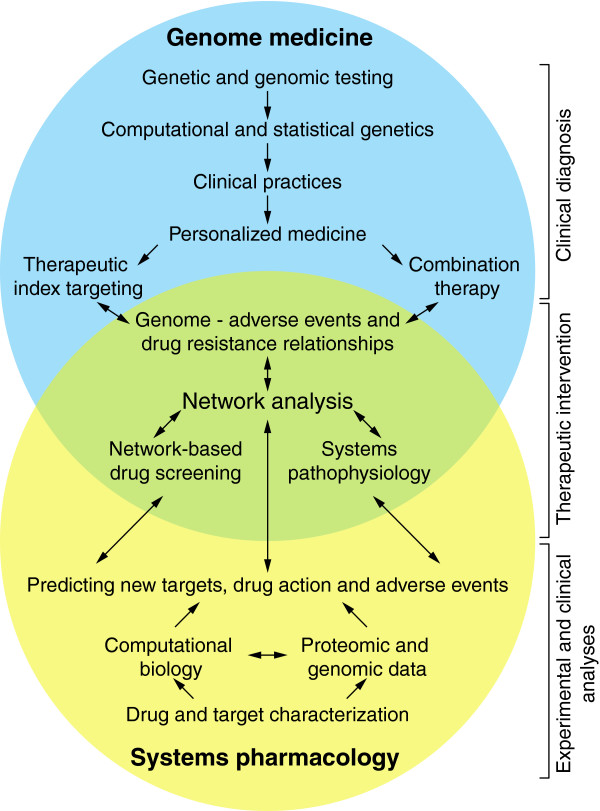
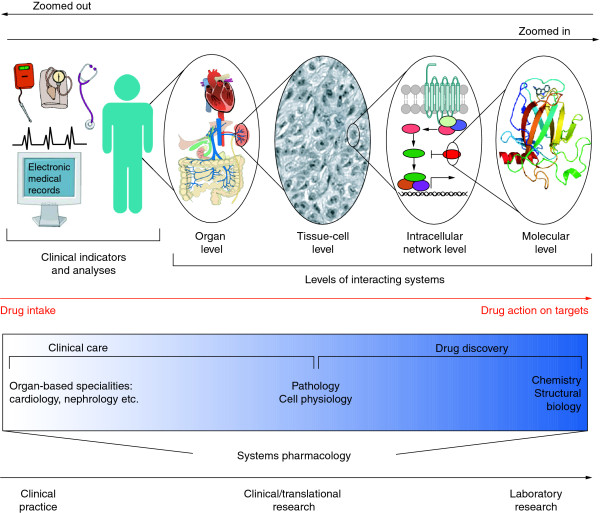
Genome medicine uses genomic information in the diagnosis of disease and in prescribing treatment. This transdisciplinary field brings together knowledge on the relationships between genetics, pathophysiology and pharmacology. Systems pharmacology aims to understand the actions and adverse effects of drugs by considering targets in the context of the biological networks in which they exist. Genome medicine forms the base on which systems pharmacology can develop. Experimental and computational approaches enable systems pharmacology to obtain holistic, mechanistic information on disease networks and drug responses, and to identify new drug targets and specific drug combinations. Network analyses of interactions involved in pathophysiology and drug response across various scales of organization, from molecular to organismal, will allow the integration of the systems-level understanding of drug action with genome medicine. The interface of the two fields will enable drug discovery for personalized medicine. Here we provide a perspective on the questions and approaches that drive the development of these new interrelated fields.
基因组医学利用基因组信息进行疾病诊断和治疗方案制定。这一跨学科领域汇集了遗传学、病理生理学和药理学之间关系的知识。系统药理学旨在通过考虑药物靶点在其存在的生物网络中的作用来理解药物的作用和不良反应。基因组医学是系统药理学发展的基础。实验和计算方法使系统药理学能够获得关于疾病网络和药物反应的整体、机制信息,并确定新的药物靶点和特定的药物组合。对涉及病理生理学和药物反应的相互作用进行网络分析,涵盖从分子到机体的各种组织层次,将使人们能够将对药物作用的系统水平理解与基因组医学相结合。这两个领域的接口将为个性化医疗的药物发现提供支持。在这里,我们提供了一个视角,探讨了推动这些新的相互关联领域发展的问题和方法。