Silverman Wendy K, Kurtines William M, Jaccard James, Pina Armando A
Department of Psychology, Child and Family Psychosocial Research Center, Florida International University, University Park, Miami, FL 33199, USA.
J Consult Clin Psychol. 2009 Jun;77(3):474-85. doi: 10.1037/a0015761.
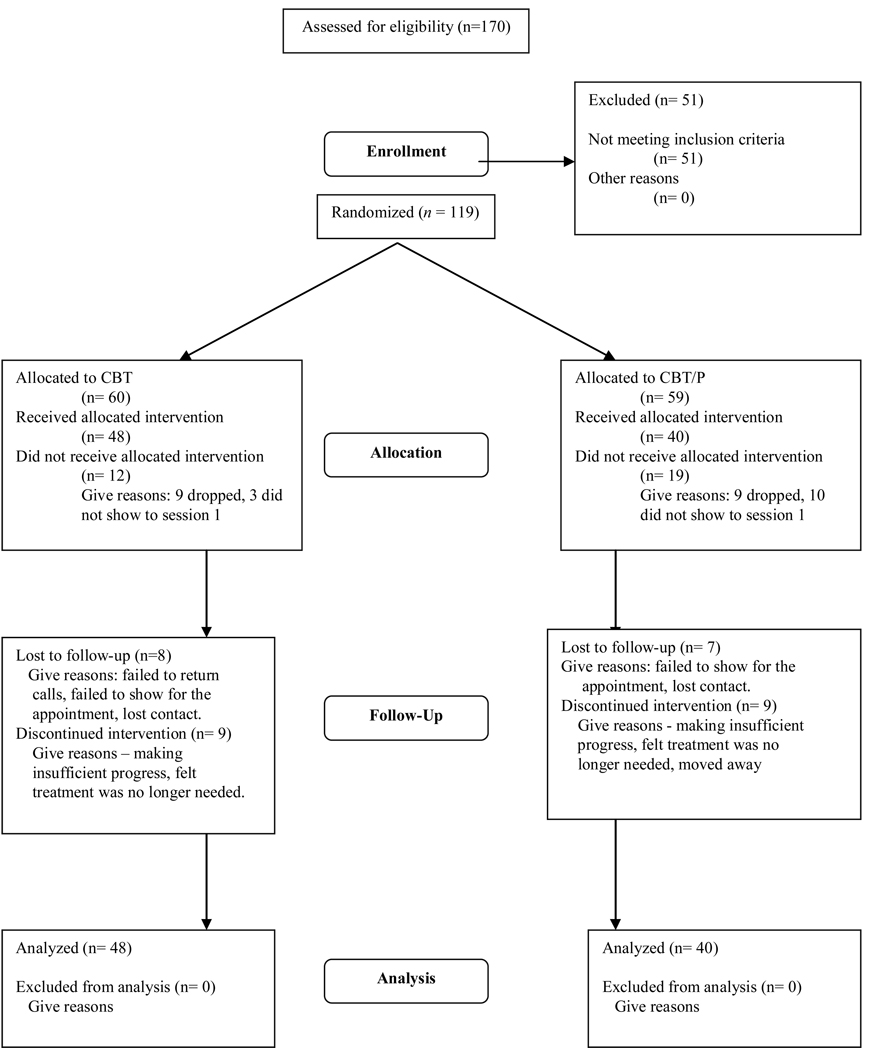
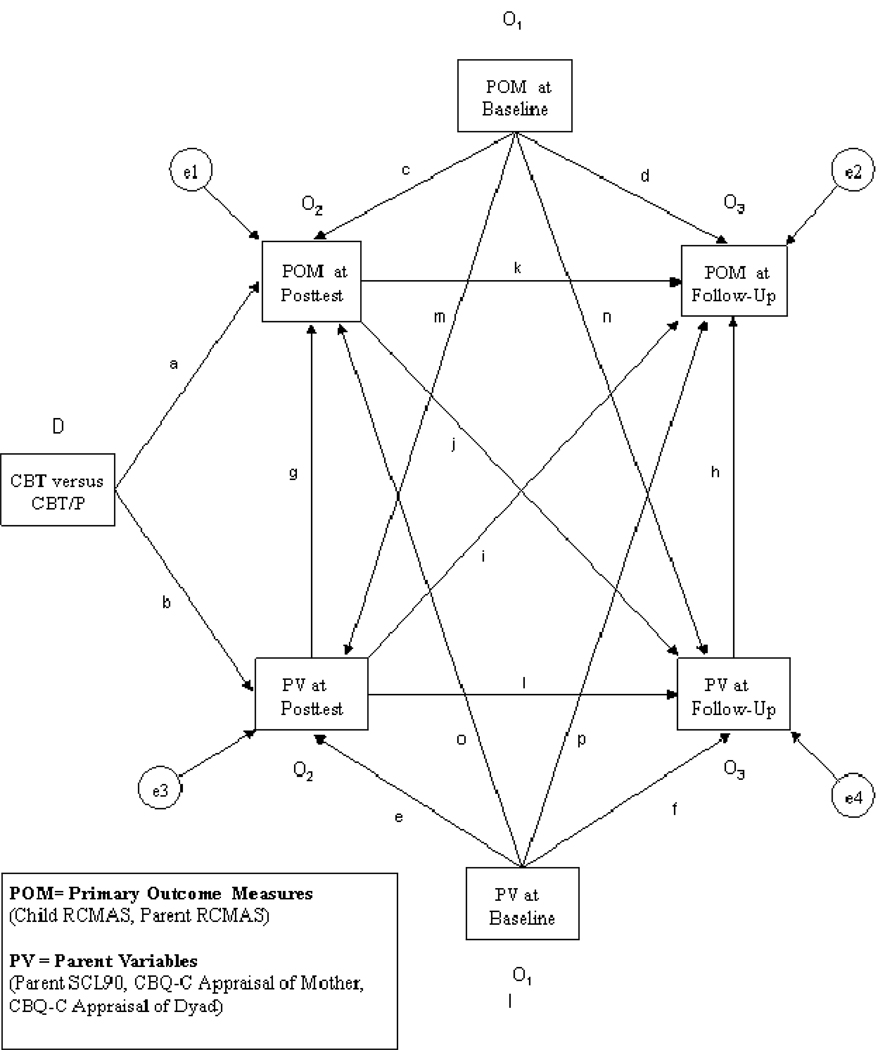
This randomized clinical trial compared cognitive behavioral therapy (CBT) with minimal parent involvement to CBT with active parent involvement in a sample of 119 youths (7-16 years old; 33.6% Caucasian, 61.3% Latino) with anxiety disorders. The dynamics of change between youth anxiety and parent variables (positive-negative behaviors toward the child, conflict in the parent-youth relationship, and parental anxiety) in both treatment conditions over pretreatment, posttreatment, and 12-month follow-up were also examined. Results indicated that youth anxiety was significantly reduced with both treatments and that the dynamics of change may not solely flow from parent to youth but also from youth to parent. Findings highlight the need for research on directionality and mechanisms of change to move from evidence-based treatments toward evidence-based explanations of treatment outcome.
这项随机临床试验在119名患有焦虑症的青少年(7至16岁;33.6%为白种人,61.3%为拉丁裔)样本中,比较了家长极少参与的认知行为疗法(CBT)和家长积极参与的认知行为疗法。同时还研究了在治疗前、治疗后以及12个月随访期间,两种治疗条件下青少年焦虑与家长变量(对孩子的正负行为、亲子关系冲突以及家长焦虑)之间的变化动态。结果表明,两种治疗方法均能显著降低青少年的焦虑,而且变化动态可能并非仅仅从家长流向青少年,也会从青少年流向家长。研究结果凸显了对变化的方向性和机制进行研究的必要性,以便从基于证据的治疗转向基于证据的治疗结果解释。