Antonova Yevgeniya, Alvarez Kanwal S, Kim Yu Jung, Kokoza Vladimir, Raikhel Alexander S
Graduate Program in Biochemistry and Molecular Biology, University of California, Riverside, CA 92521, USA.
Insect Biochem Mol Biol. 2009 Apr;39(4):303-14. doi: 10.1016/j.ibmb.2009.01.007. Epub 2009 Feb 7.
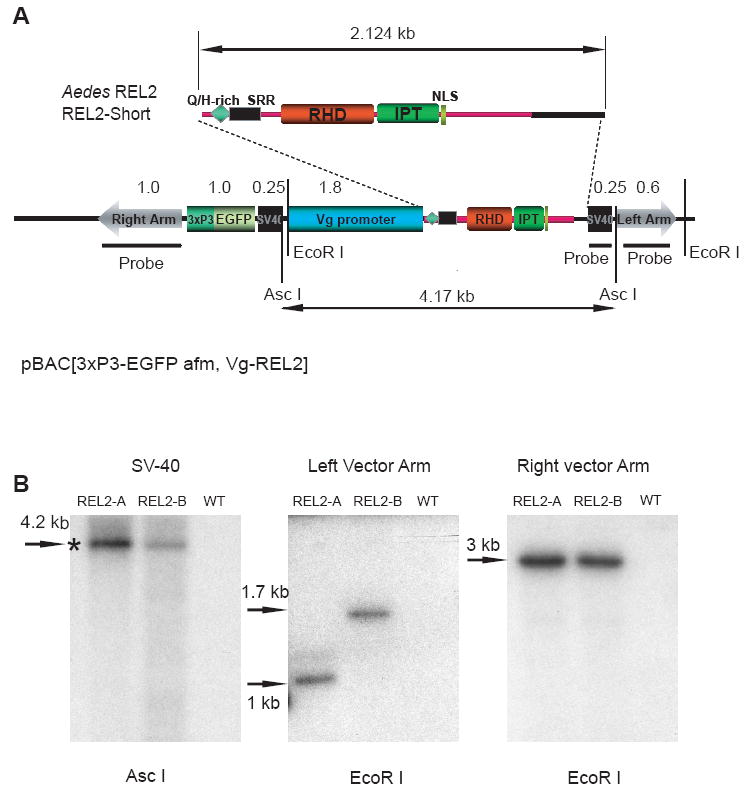
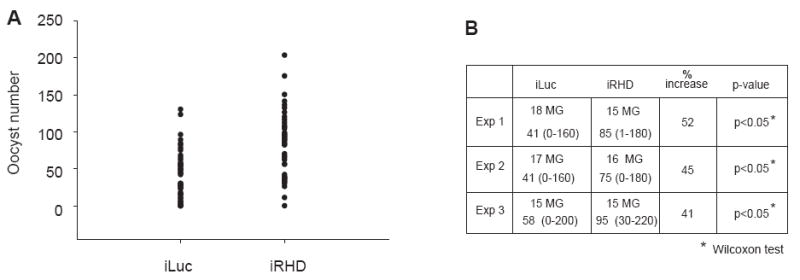
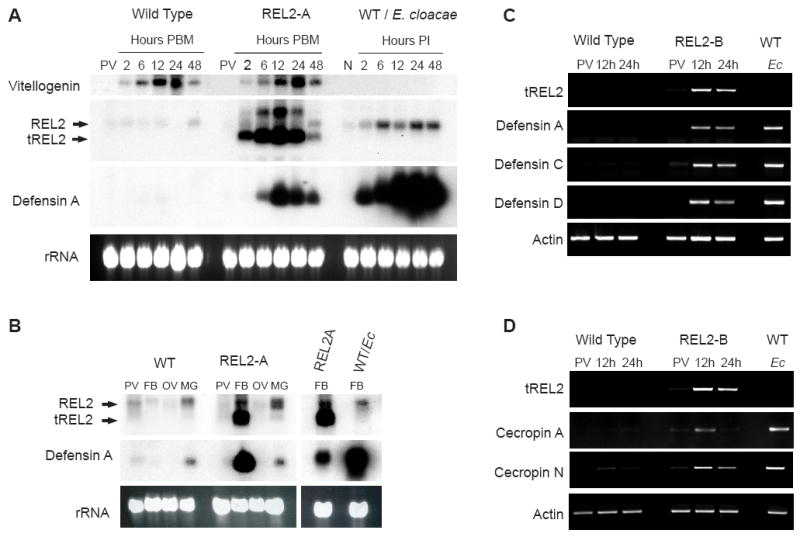
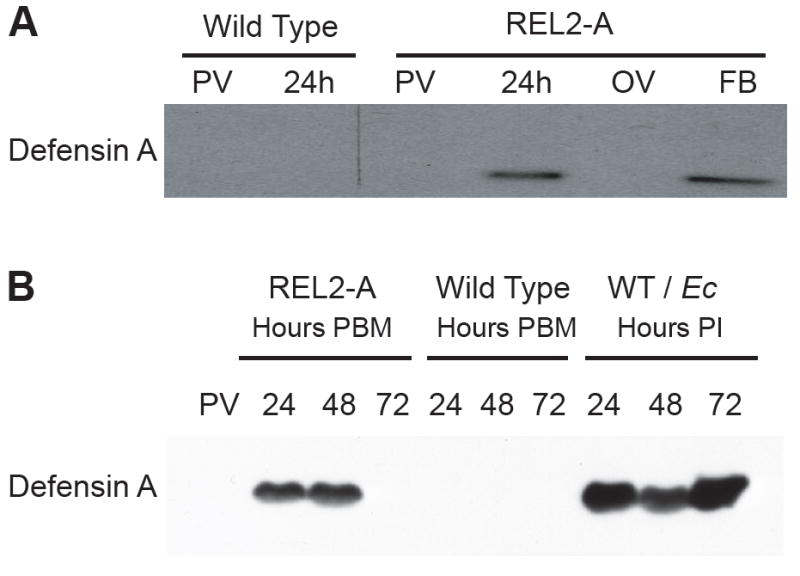
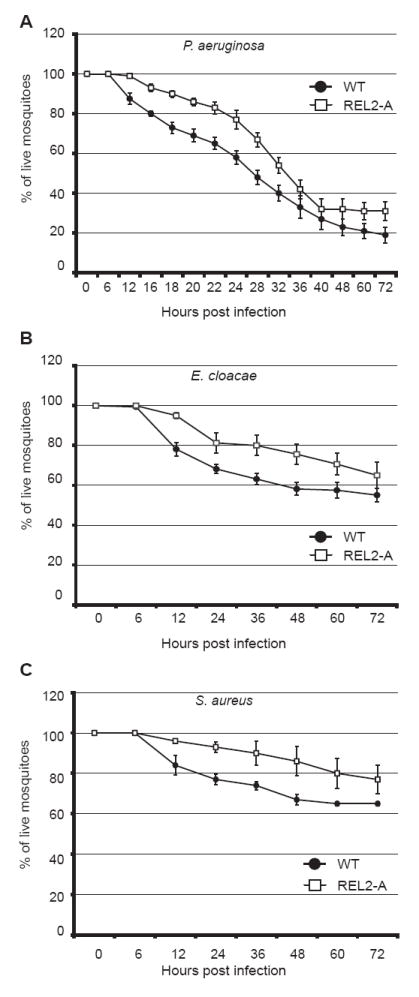
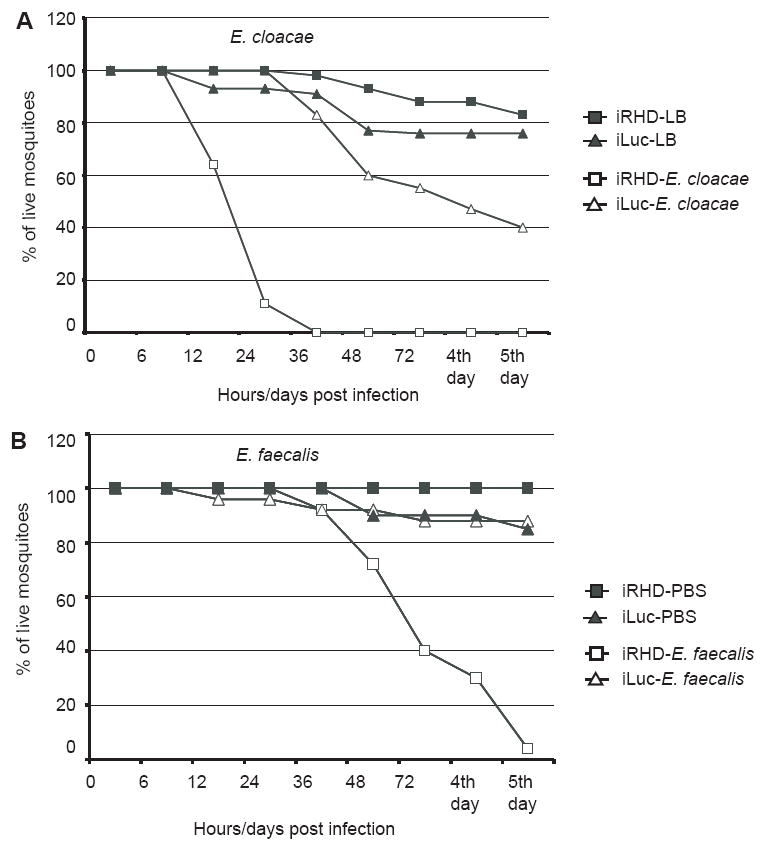
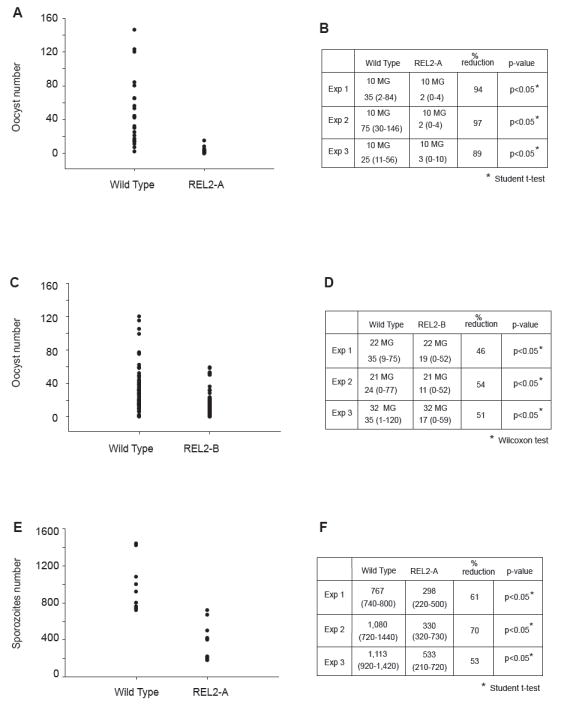
Mosquitoes transmit numerous diseases that continue to be an enormous burden on public health worldwide. Transgenic mosquitoes impervious to vector-borne pathogens, in concert with vector control and drug and vaccine development, comprise an arsenal of means anticipated to defeat mosquito-spread diseases in the future. Mosquito transgenesis allows tissue-specific manipulation of their major immune pathways and enhances the ability to study mosquito-pathogen interactions. Here, we report the generation of two independent transgenic strains of Aedes aegypti overexpressing the NF-?B transcriptional factor REL2, a homologue of Drosophila Relish, which is shown to be under the control of the vitellogenin promoter in the mosquito fat body after a blood meal. We show that this REL2 overexpression in the fat body results in transcriptional activation of Defensins A, C, and D, and Cecropins A and N, as well as translation and secretion of Defensin A protein into the hemolymph. We also demonstrate that induction of REL2 results in the increased resistance of the mosquito to tested Gram-negative and Gram-positive bacteria. Importantly, induction of transgenic REL2 leads to the significant decrease in susceptibility of A. aegypti to Plasmodium gallinaceum infection. Consistently, RNAi knockdown of REL2 in wild-type mosquitoes results in a delay in Defensin A and Cecropin A expression in response to infection and in increased susceptibility to both bacteria and P. gallinaceum. Moreover, our transgenic assays demonstrate that the N-terminus of the mosquito REL2, which includes the His/Gln-rich and serine-rich regions, plays a role in its transactivation properties.
蚊子传播多种疾病,这些疾病仍然是全球公共卫生的巨大负担。对媒介传播病原体具有抗性的转基因蚊子,与病媒控制以及药物和疫苗开发一起,构成了有望在未来战胜蚊子传播疾病的一系列手段。蚊子转基因技术能够对其主要免疫途径进行组织特异性操纵,并增强研究蚊子与病原体相互作用的能力。在此,我们报告了两种独立的埃及伊蚊转基因品系的产生,它们过表达NF-κB转录因子REL2,该因子是果蝇Relish的同源物,在吸血后显示受蚊子脂肪体中卵黄原蛋白启动子的控制。我们发现,脂肪体中这种REL2的过表达导致防御素A、C和D以及天蚕素A和N的转录激活,以及防御素A蛋白的翻译和分泌进入血淋巴。我们还证明,REL2的诱导导致蚊子对测试的革兰氏阴性和革兰氏阳性细菌的抗性增加。重要的是,转基因REL2的诱导导致埃及伊蚊对鸡疟原虫感染的易感性显著降低。同样,在野生型蚊子中对REL2进行RNA干扰敲低会导致感染后防御素A和天蚕素A表达延迟,并增加对细菌和鸡疟原虫的易感性。此外,我们的转基因实验表明,蚊子REL2的N末端,包括富含组氨酸/谷氨酰胺和富含丝氨酸的区域,在其反式激活特性中起作用。