Zhang Kun, Li Jin Billy, Gao Yuan, Egli Dieter, Xie Bin, Deng Jie, Li Zhe, Lee Je-Hyuk, Aach John, Leproust Emily M, Eggan Kevin, Church George M
Department of Bioengineering, University of California at San Diego, La Jolla, California, USA.
Nat Methods. 2009 Aug;6(8):613-8. doi: 10.1038/nmeth.1357. Epub 2009 Jul 20.
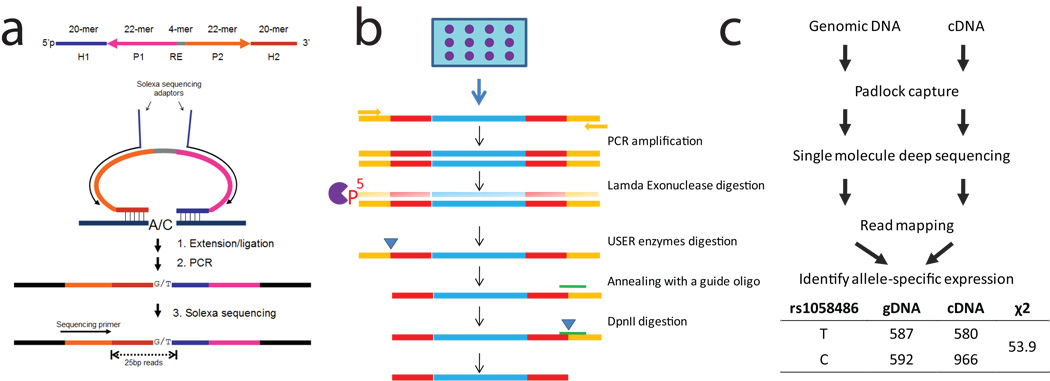
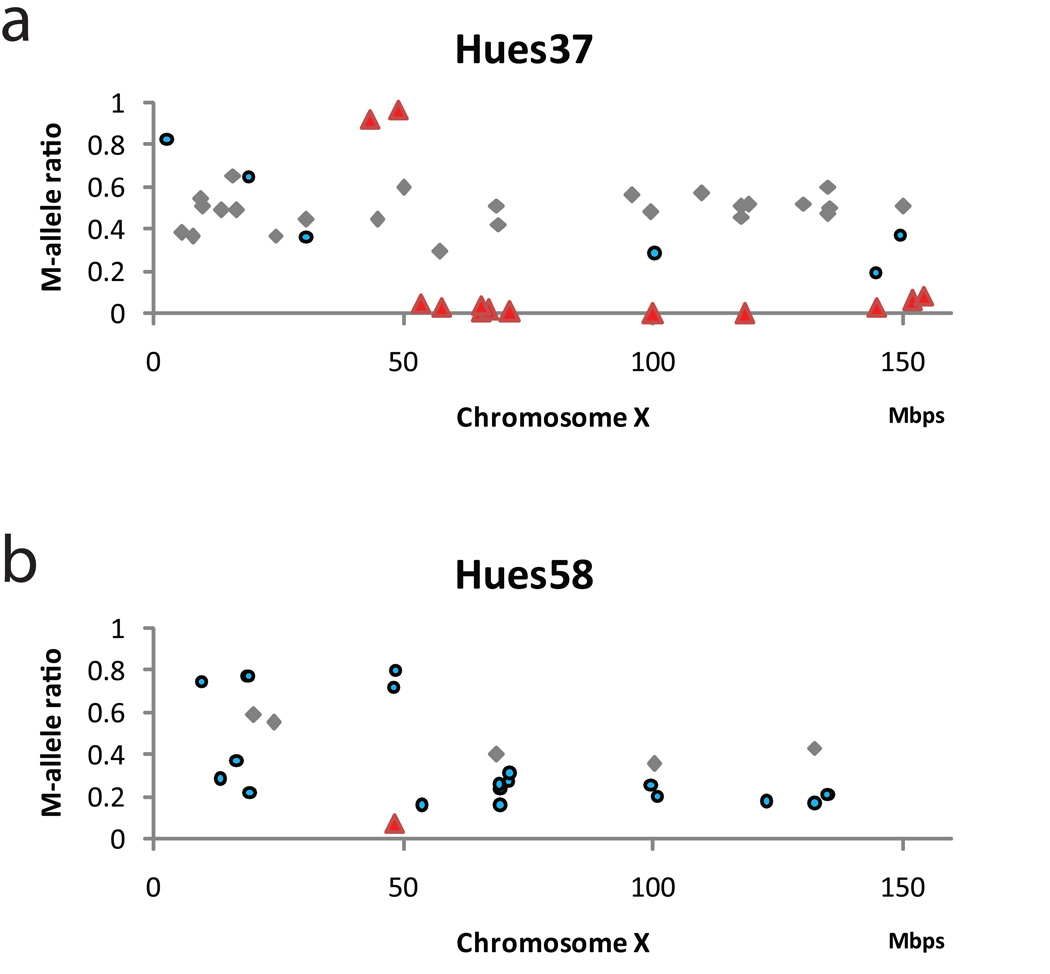
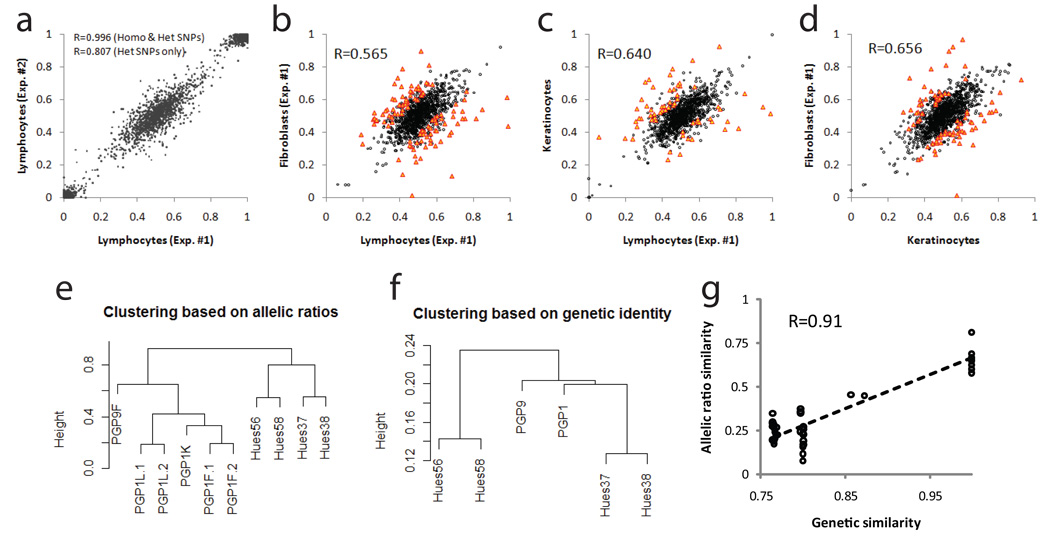
We developed a digital RNA allelotyping method for quantitatively interrogating allele-specific gene expression. This method involves ultra-deep sequencing of padlock-captured single-nucleotide polymorphisms (SNPs) from the transcriptome. We characterized four cell lines established from two human subjects in the Personal Genome Project. Approximately 11-22% of the heterozygous mRNA-associated SNPs showed allele-specific expression in each cell line and 4.3-8.5% were tissue-specific, suggesting the presence of tissue-specific cis regulation. When we applied allelotyping to two pairs of sibling human embryonic stem cell lines, the sibling lines were more similar in allele-specific expression than were the genetically unrelated lines. We found that the variation of allelic ratios in gene expression among different cell lines was primarily explained by genetic variations, much more so than by specific tissue types or growth conditions. Comparison of expressed SNPs on the sense and antisense transcripts suggested that allelic ratios are primarily determined by cis-regulatory mechanisms on the sense transcripts.
我们开发了一种数字RNA基因分型方法,用于定量研究等位基因特异性基因表达。该方法涉及对转录组中经锁式探针捕获的单核苷酸多态性(SNP)进行超深度测序。我们对个人基因组计划中两名人类受试者建立的四个细胞系进行了表征。在每个细胞系中,约11 - 22%的杂合mRNA相关SNP显示出等位基因特异性表达,4.3 - 8.5%为组织特异性,表明存在组织特异性顺式调控。当我们将基因分型应用于两对同胞人类胚胎干细胞系时,同胞系在等位基因特异性表达上比遗传无关的系更相似。我们发现,不同细胞系间基因表达中等位基因比例的差异主要由遗传变异解释,其程度远超过特定组织类型或生长条件的影响。对有义链和反义链转录本上表达的SNP进行比较表明,等位基因比例主要由有义链转录本上的顺式调控机制决定。