Huang Ting, Wang Wei, Bessaud Mael, Ren Peijun, Sheng Jun, Yan Huajie, Zhang Jing, Lin Xin, Wang Yongjin, Delpeyroux Francis, Deubel Vincent
Institut Pasteur of Shanghai, Chinese Academy of Sciences, Shanghai Institute of Biological Sciences, Unit of Emerging Viruses, Shanghai, PR China.
PLoS One. 2009 Jul 27;4(7):e6355. doi: 10.1371/journal.pone.0006355.
Human rhinoviruses (HRVs) are a highly prevalent cause of acute respiratory infection in children. They are classified into at least three species, HRV-A, HRV-B and HRV-C, which are characterized by sequencing the 5' untranslated region (UTR) or the VP4/VP2 region of the genome. Given the increased interest for novel HRV strain identification and their worldwide distribution, we have carried out clinical and molecular diagnosis of HRV strains in a 2-year study of children with acute respiratory infection visiting one district hospital in Shanghai.
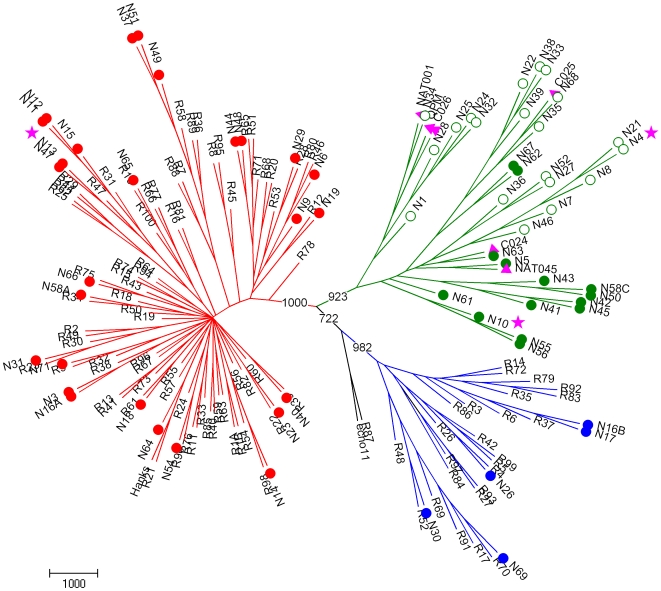
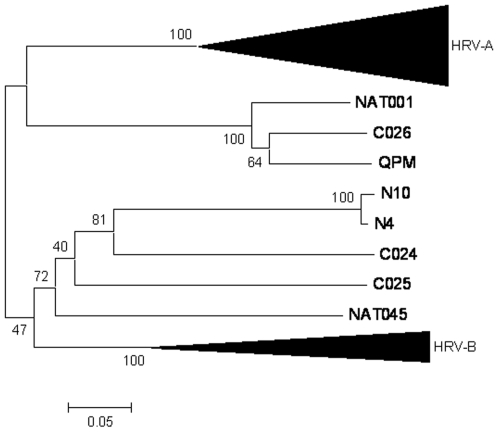
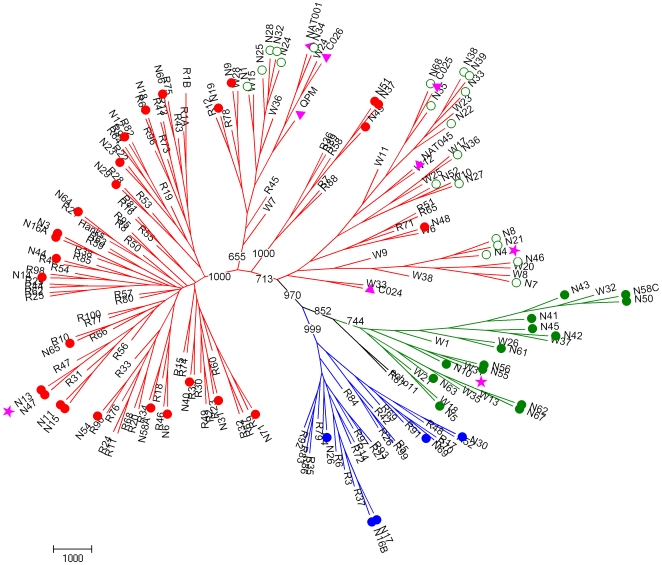
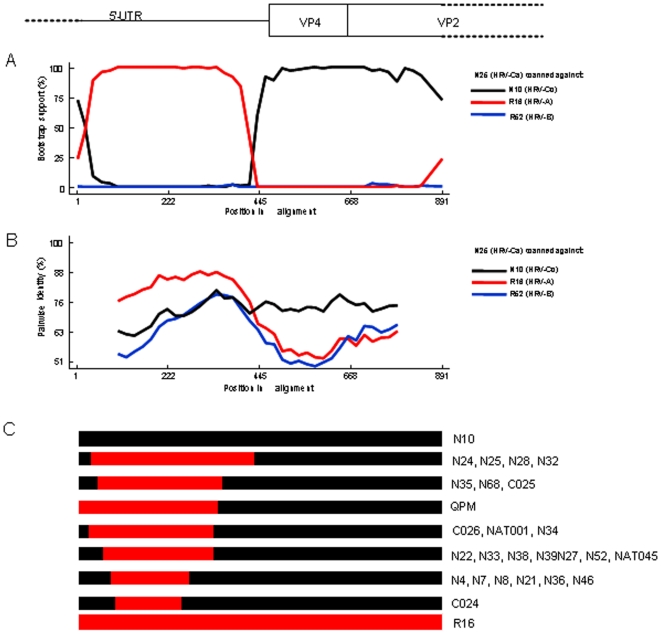
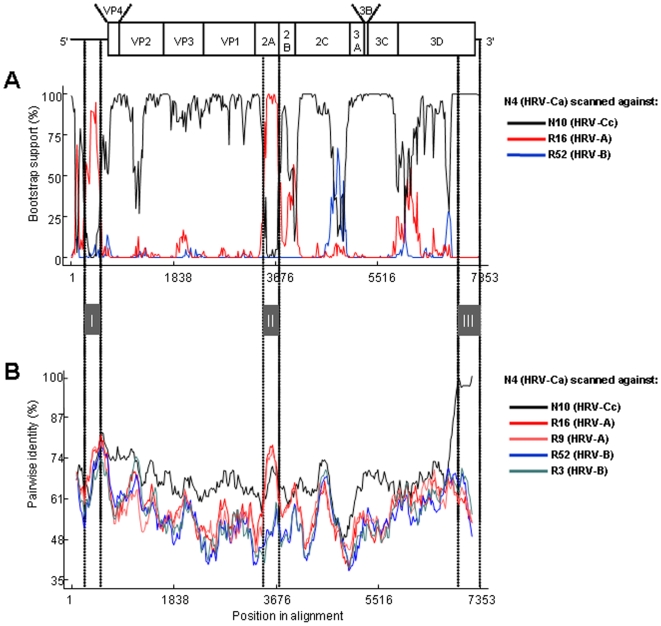
METHODOLOGY/FINDINGS: We cloned and sequenced a 924-nt fragment that covered part of the 5'UTR and the VP4/VP2 capsid genes. Sixty-four HRV-infected outpatients were diagnosed amongst 827 children with acute low respiratory tract infection. Two samples were co-infected with HRV-A and HRV-B or HRV-C. By comparative analysis of the VP4/VP2 sequences of the 66 HRVs, we showed a high diversity of strains in HRV-A and HRV-B species, and a prevalence of 51.5% of strains that belonged to the recently identified HRV-C species. When analyzing a fragment of the 5' UTR, we characterized at least two subspecies of HRV-C: HRV-Cc, which clustered differently from HRV-A and HRV-B, and HRV-Ca, which resulted from previous recombination in this region with sequences related to HRV-A. The full-length sequence of one strain of each HRV-Ca and HRV-Cc subspecies was obtained for comparative analysis. We confirmed the close relationship of their structural proteins but showed apparent additional recombination events in the 2A gene and 3'UTR of the HRV-Ca strain. Double or triple infections with HRV-C and respiratory syncytial virus and/or bocavirus were diagnosed in 33.3% of the HRV-infected patients, but no correlation with severity of clinical outcome was observed.
Our study showed a high diversity of HRV strains that cause bronchitis and pneumonia in children. A predominance of HRV-C over HRV-A and HRV-B was observed, and two subspecies of HRV-C were identified, the diversity of which seemed to be related to recombination with former HRV-A strains. None of the HRV-C strains appeared to have a higher clinical impact than HRV-A or HRV-B on respiratory compromise.
人鼻病毒(HRV)是儿童急性呼吸道感染的常见病因。它们至少分为三个种,即HRV-A、HRV-B和HRV-C,通过对基因组的5'非翻译区(UTR)或VP4/VP2区进行测序来区分。鉴于对新型HRV毒株鉴定及其全球分布的兴趣增加,我们在一项为期两年的研究中,对上海某区医院就诊的急性呼吸道感染儿童进行了HRV毒株的临床和分子诊断。
方法/结果:我们克隆并测序了一段924个核苷酸的片段,该片段覆盖了部分5'UTR和VP4/VP2衣壳基因。在827例急性下呼吸道感染儿童中,诊断出64例HRV感染的门诊患者。有两个样本同时感染了HRV-A和HRV-B或HRV-C。通过对66株HRV的VP4/VP2序列进行比较分析,我们发现HRV-A和HRV-B种内毒株具有高度多样性,且属于最近鉴定出的HRV-C种的毒株占比为51.5%。在分析5'UTR片段时,我们鉴定出HRV-C的至少两个亚种:HRV-Cc,其聚类方式与HRV-A和HRV-B不同;HRV-Ca,它是该区域先前与HRV-A相关序列重组的产物。获得了HRV-Ca和HRV-Cc每个亚种的一个毒株的全长序列用于比较分析。我们证实了它们结构蛋白的密切关系,但在HRV-Ca毒株的2A基因和3'UTR中发现了明显的额外重组事件。33.3%的HRV感染患者被诊断为HRV-C与呼吸道合胞病毒和/或博卡病毒的双重或三重感染,但未观察到与临床结局严重程度的相关性。
我们的研究表明,导致儿童支气管炎和肺炎的HRV毒株具有高度多样性。观察到HRV-C比HRV-A和HRV-B占优势,并且鉴定出HRV-C的两个亚种,其多样性似乎与先前的HRV-A毒株重组有关。没有证据表明HRV-C毒株对呼吸功能损害的临床影响比HRV-A或HRV-B更高。