Menzies Centre for Health Policy, Victor Coppleson Bldg (D02), University of Sydney, Sydney, NSW 2006, Australia.
Global Health. 2009 Jul 28;5:5. doi: 10.1186/1744-8603-5-5.
Central America has undergone extensive trade liberalization over the past two decades, and has recently signed a Free Trade Agreement with the United States. The region is also experiencing a dual burden of malnutrition with the growth of dietary patterns associated with the global 'nutrition transition'. This study describes the relationship between trade liberalization policies and food imports and availability, and draws implications for diet and health, using Central America as a case study region.
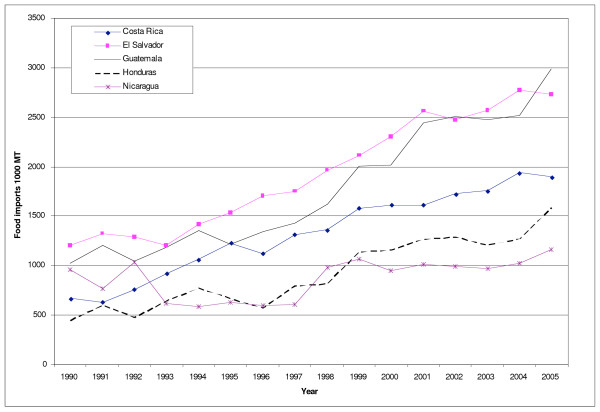
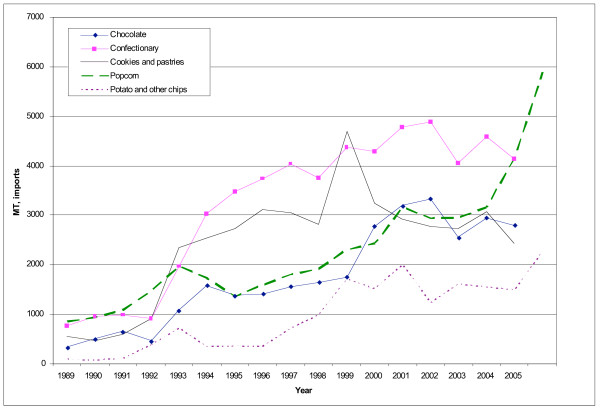
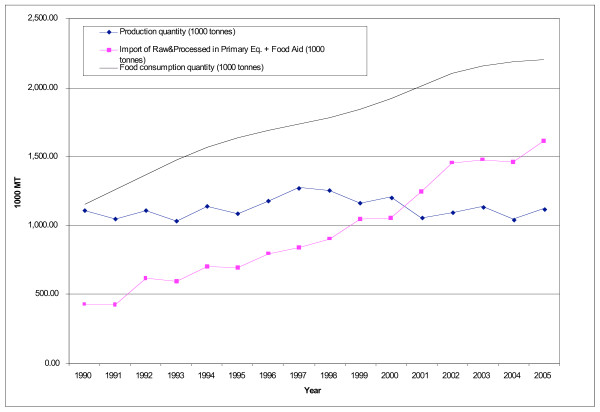
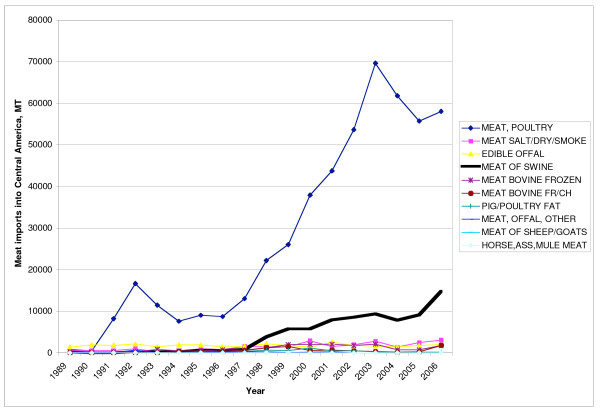
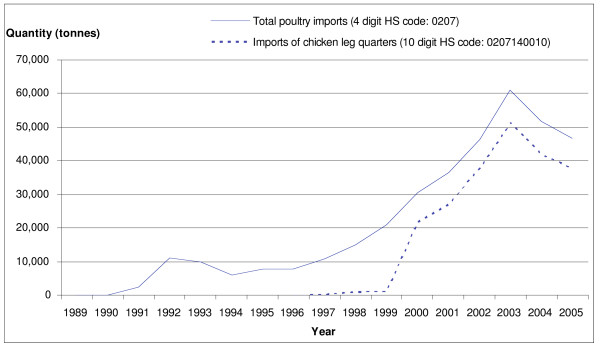
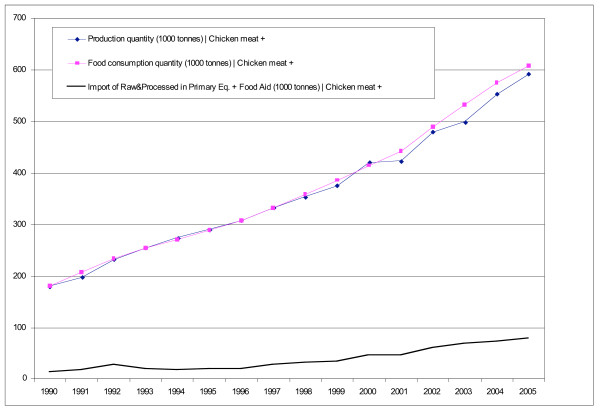
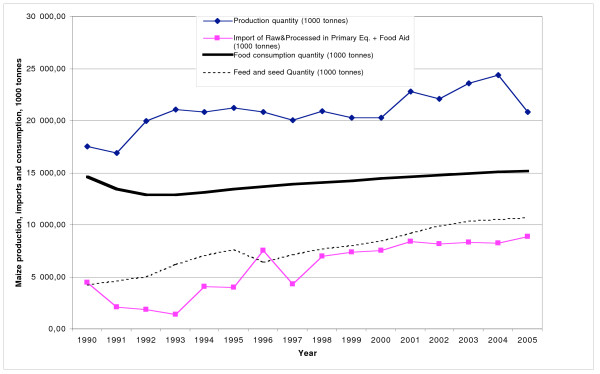
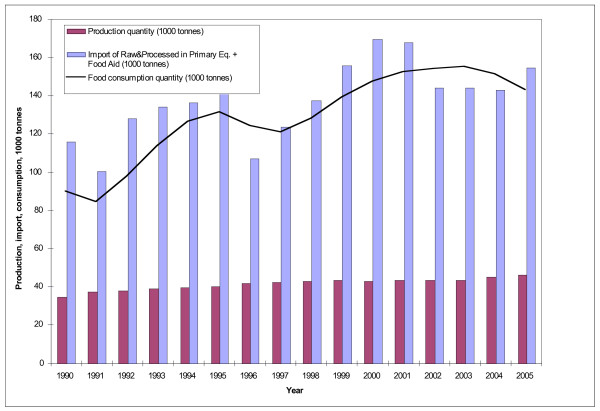
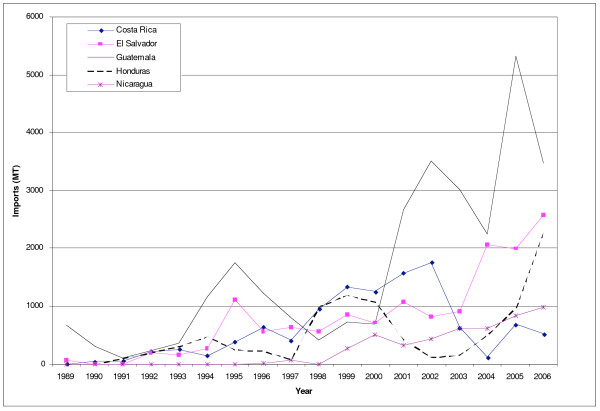
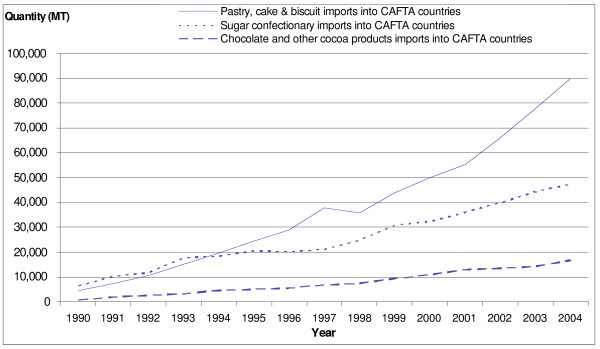
Changes in tariff and non-tariff barriers for each country were documented, and compared with time-series graphs of import, production and availability data to show the outcome of changes in trade policy in relation to food imports and food availability.
Changes in trade policy in Central America have directly affected food imports and availability via three avenues. First, the lowering of trade barriers has promoted availability by facilitating higher imports of a wide range of foods. Second, trade liberalization has affected food availability through promoting domestic meat production. Third, reductions in barriers to investment appear to be critical in expansion of processed food markets. This suggests that changes in trade policies have facilitated rising availability and consumption of meat, dairy products, processed foods and temperate (imported fruits) in Central America.
This study indicates that the policies of trade liberalization in Central American countries over the past two decades, particularly in relation to the United States, have implications for health in the region. Specifically, they have been a factor in facilitating the "nutrition transition", which is associated with rising rates of obesity and chronic diseases such as cardiovascular disease and cancer. Given the significant cost of chronic disease for the health care system, individuals and the wider community, it is critical that preventive health measures address such upstream determinants of poor nutrition.
在过去的二十年中,中美洲经历了广泛的贸易自由化,最近与美国签署了自由贸易协定。该地区还面临着营养不良的双重负担,与全球“营养转型”相关的饮食模式不断增长。本研究以中美洲为案例研究区域,描述了贸易自由化政策与食品进口和供应之间的关系,并对饮食和健康产生了影响。
记录了每个国家的关税和非关税壁垒的变化,并将其与进口、生产和供应数据的时间序列图进行比较,以显示贸易政策变化与食品进口和食品供应之间的关系。
中美洲贸易政策的变化通过以下三种途径直接影响食品进口和供应。首先,降低贸易壁垒通过促进各种食品的大量进口促进了供应。其次,贸易自由化通过促进国内肉类生产影响了食品供应。第三,投资壁垒的降低似乎对加工食品市场的扩张至关重要。这表明,贸易政策的变化促进了中美洲肉类、奶制品、加工食品和温带水果(进口水果)供应和消费的增加。
本研究表明,过去二十年来中美洲国家的贸易自由化政策,特别是与美国的贸易自由化政策,对该地区的健康产生了影响。具体来说,它们是促进“营养转型”的一个因素,而“营养转型”与肥胖和心血管疾病等慢性疾病的发病率上升有关。鉴于慢性病对医疗保健系统、个人和更广泛社区的巨大成本,预防保健措施必须解决营养不良的这些上游决定因素。