Division of Rheumatology & Clinical Immunology, & Laboratory Medicine, University of Florida, PO Box 100221, Gainesville, FL 32610-0221, United States.
Trends Immunol. 2009 Sep;30(9):455-64. doi: 10.1016/j.it.2009.06.003. Epub 2009 Aug 19.
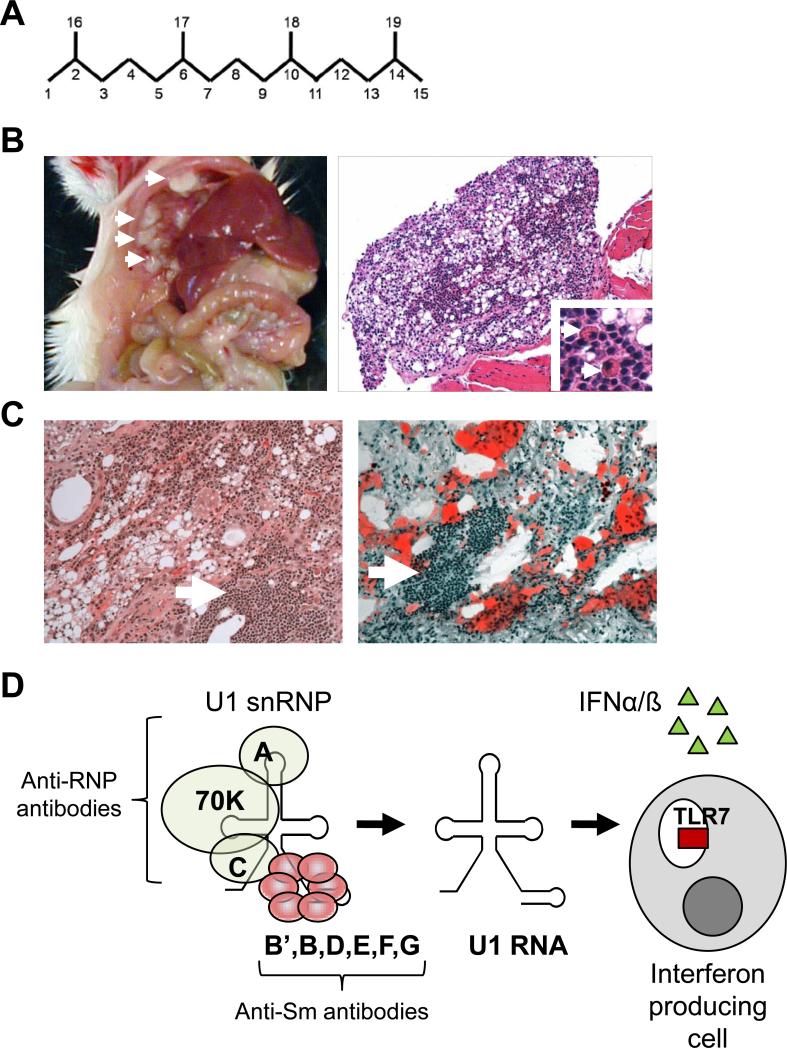
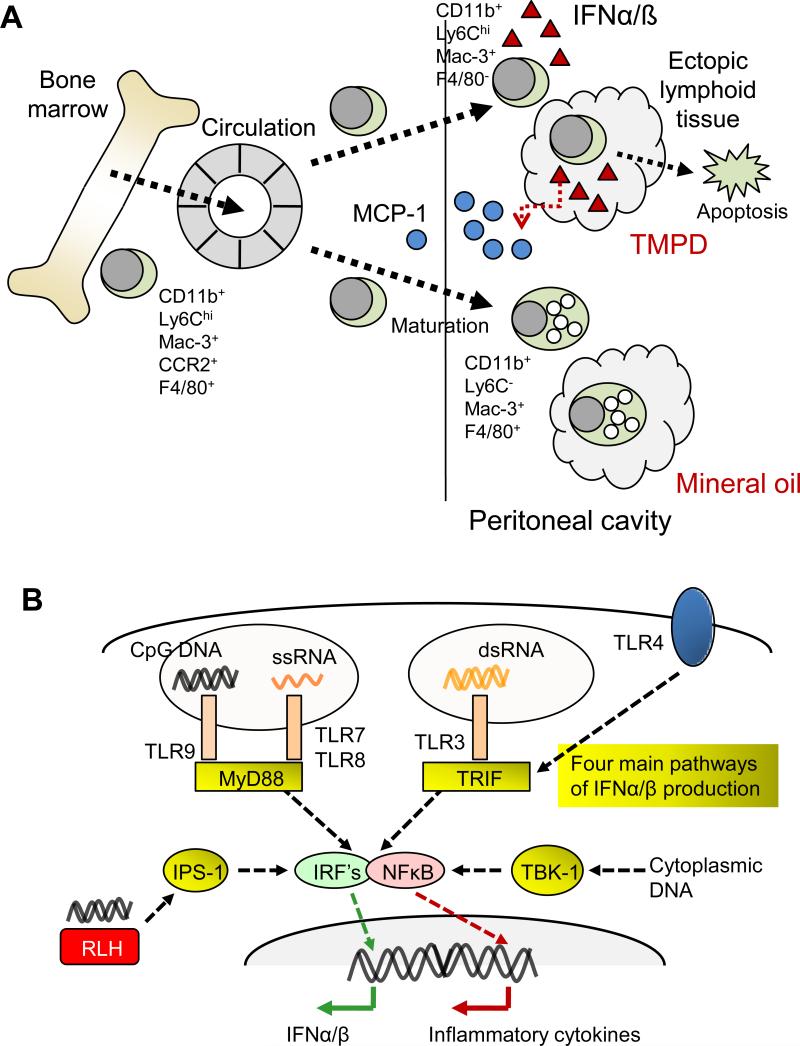
Tetramethylpentadecane (TMPD, or commonly known as pristane)-induced lupus is a murine model of systemic lupus erythematosus (SLE). Renal disease and autoantibody production strictly depend on signaling through the interferon (IFN)-I receptor. The major source of IFN-I is immature monocytes bearing high levels of the surface marker Ly6C. Interferon production is mediated exclusively by signaling through TLR7 and the adapter protein MyD88. It is likely that endogenous TLR7 ligands such as components of small nuclear ribonucleoprotein complexes are involved in triggering disease. Lupus autoantibodies are produced in ectopic lymphoid tissue developing in response to TMPD. This model is well suited for examining links between dysregulated IFN-I production and the pathogenesis of human SLE, which like TMPD-lupus, is associated with high levels of IFN-I.
特戊烷(TMPD,通常称为降植烷)诱导的狼疮是系统性红斑狼疮(SLE)的一种鼠类模型。肾脏疾病和自身抗体的产生严格依赖于干扰素(IFN)-I 受体的信号传导。IFN-I 的主要来源是表达高水平表面标志物 Ly6C 的未成熟单核细胞。干扰素的产生完全是通过 TLR7 和衔接蛋白 MyD88 的信号转导来介导的。内源性 TLR7 配体(如小核核糖核蛋白复合物的成分)可能参与触发疾病。狼疮自身抗体是在对 TMPD 反应形成的异位淋巴组织中产生的。该模型非常适合研究失调的 IFN-I 产生与人类 SLE 发病机制之间的联系,与 TMPD 狼疮一样,人类 SLE 也与高水平的 IFN-I 相关。