Rho Young Hee, Woo Jin-Hyun, Choi Seong Jae, Lee Young Ho, Ji Jong Dae, Song Gwan Gyu
Division of Rheumatology, Department of Internal Medicine, Korea University College of Medicine, and Korea University Guro Hospital, Seoul, Korea.
Korean J Intern Med. 2009 Sep;24(3):283-5. doi: 10.3904/kjim.2009.24.3.283. Epub 2009 Aug 26.
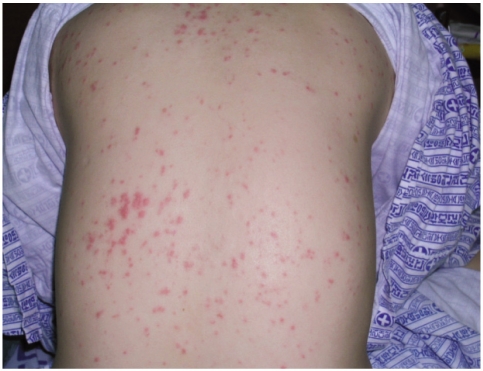
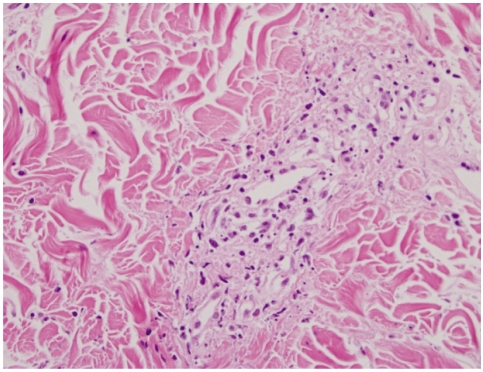
Lupus is a systemic autoimmune disease of an unknown origin, and systemic lupus erythematosus (SLE) can be triggered by numerous stimuli. Bee venom therapy is an alternative therapy that is believed to be effective for various kinds of arthritis. We present here a case of a 49-year-old female who experienced a new onset lupus after undergoing bee venom therapy, and this looked like a case of angioedema. The patient was successfully treated with high dose steroids and antimalarial drugs. We discuss the possibility of bee venom contributing to the development of SLE, and we suggest that such treatment should be avoided in patients with lupus.
狼疮是一种病因不明的全身性自身免疫性疾病,系统性红斑狼疮(SLE)可由多种刺激因素引发。蜂毒疗法是一种替代疗法,被认为对各种关节炎有效。我们在此报告一例49岁女性,在接受蜂毒疗法后出现新发狼疮,且表现类似血管性水肿。该患者通过大剂量类固醇和抗疟药物成功治愈。我们讨论了蜂毒导致SLE发生的可能性,并建议狼疮患者应避免接受此类治疗。