Infectious Diseases Group, The J Craig Venter Institute, Rockville, Maryland, United States of America.
PLoS One. 2009 Sep 29;4(9):e7264. doi: 10.1371/journal.pone.0007264.
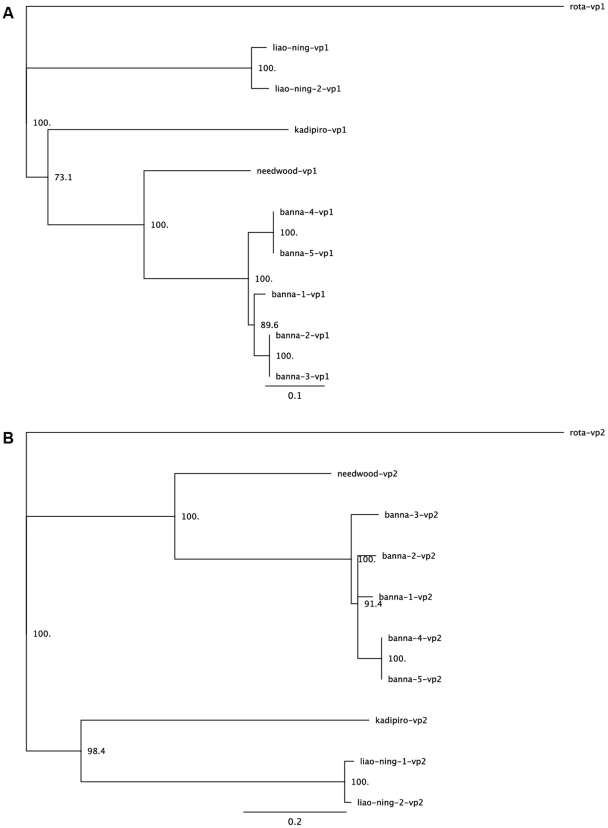
Freshwater lakes and ponds present an ecological interface between humans and a variety of host organisms. They are a habitat for the larval stage of many insects and may serve as a medium for intraspecies and interspecies transmission of viruses such as avian influenza A virus. Furthermore, freshwater bodies are already known repositories for disease-causing viruses such as Norwalk Virus, Coxsackievirus, Echovirus, and Adenovirus. While RNA virus populations have been studied in marine environments, to this date there has been very limited analysis of the viral community in freshwater. Here we present a survey of RNA viruses in Lake Needwood, a freshwater lake in Maryland, USA. Our results indicate that just as in studies of other aquatic environments, the majority of nucleic acid sequences recovered did not show any significant similarity to known sequences. The remaining sequences are mainly from viral types with significant similarity to approximately 30 viral families. We speculate that these novel viruses may infect a variety of hosts including plants, insects, fish, domestic animals and humans. Among these viruses we have discovered a previously unknown dsRNA virus closely related to Banna Virus which is responsible for a febrile illness and is endemic to Southeast Asia. Moreover we found multiple viral sequences distantly related to Israeli Acute Paralysis virus which has been implicated in honeybee colony collapse disorder. Our data suggests that due to their direct contact with humans, domestic and wild animals, freshwater ecosystems might serve as repositories of a wide range of viruses (both pathogenic and non-pathogenic) and possibly be involved in the spread of emerging and pandemic diseases.
淡水湖泊和池塘是人类与各种宿主生物之间的生态界面。它们是许多昆虫幼虫阶段的栖息地,并且可能是病毒(如禽流感病毒)在种内和种间传播的媒介。此外,淡水体已经是引起疾病的病毒的储存库,如诺如病毒、柯萨奇病毒、埃可病毒和腺病毒。虽然已经对海洋环境中的 RNA 病毒种群进行了研究,但迄今为止,对淡水病毒群落的分析非常有限。在这里,我们对美国马里兰州的淡水湖 Needwood 湖中的 RNA 病毒进行了调查。我们的结果表明,与其他水生环境的研究一样,大多数回收的核酸序列与已知序列没有任何显著相似性。其余序列主要来自与约 30 种病毒科具有显著相似性的病毒类型。我们推测这些新型病毒可能感染多种宿主,包括植物、昆虫、鱼类、家畜和人类。在这些病毒中,我们发现了一种以前未知的双链 RNA 病毒,它与 Banna 病毒密切相关,Banna 病毒是导致东南亚地区发热疾病的病原体。此外,我们还发现了与以色列急性麻痹病毒密切相关的多种病毒序列,该病毒与蜜蜂群体崩溃失调症有关。我们的数据表明,由于它们与人类、家养和野生动物的直接接触,淡水生态系统可能是各种病毒(包括致病性和非致病性病毒)的储存库,并可能参与新发和大流行性疾病的传播。