Department of Food and Nutrition, Sookmyung Women's University, Seoul 140-742, Republic of Korea.
J Clin Biochem Nutr. 2009 Nov;45(3):355-60. doi: 10.3164/jcbn.09-46. Epub 2009 Oct 28.
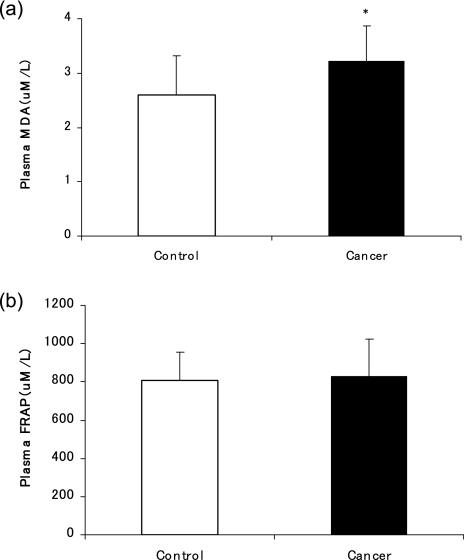
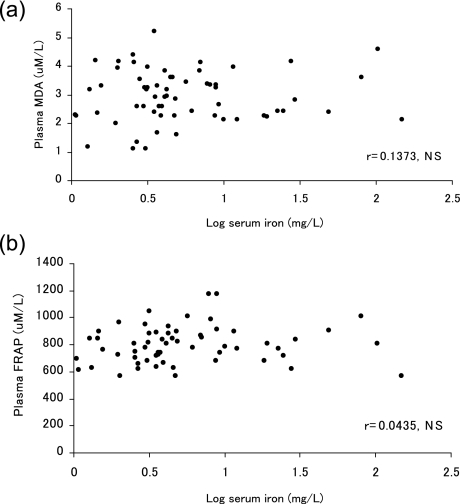
Iron may induce oxidative stress via production of reactive oxygen species, facilitating mammary carcinogenesis. This study investigated the role of iron in relation to oxidative stress as a potential risk factor in the development of breast cancer (BC). BC patients (n = 121) and healthy age-matched controls (n = 149) were entered into the study. Iron and antioxidant vitamins intakes were estimated using a quantitative food frequency questionnaire. Thirty one subjects from each group provided blood samples for measurement of serum iron, plasma malondialdehyde (MDA) and ferric reducing ability of plasma (FRAP). Total and non-heme iron intake of BC patients were lower than those of the controls. However, the serum iron level was significantly higher in BC patients. Plasma MDA levels were also significantly higher in BC patients whereas no significant difference in FRAP values were observed between the two groups. Log-transformed serum iron concentration showed no significant correlation with MDA or FRAP. These results suggest that serum iron overload may be a breast cancer risk factor possibly due to increased oxidative stress.
铁可能通过产生活性氧物质诱导氧化应激,促进乳腺癌的发生。本研究调查了铁在氧化应激中的作用,作为乳腺癌(BC)发展的一个潜在风险因素。将 121 例 BC 患者和 149 例年龄匹配的健康对照者纳入研究。采用定量食物频率问卷估计铁和抗氧化维生素的摄入量。每组有 31 名受试者提供血液样本,用于测量血清铁、血浆丙二醛(MDA)和血浆铁还原能力(FRAP)。BC 患者的总铁和非血红素铁摄入量低于对照组。然而,BC 患者的血清铁水平明显升高。BC 患者的血浆 MDA 水平也明显升高,而两组的 FRAP 值无显著差异。血清铁浓度的对数转换与 MDA 或 FRAP 无显著相关性。这些结果表明,血清铁过载可能是乳腺癌的一个危险因素,可能是由于氧化应激增加所致。