Nilsson Kent R, Duscha Brian D, Hranitzky Patrick M, Kraus William E
Department of Medicine, Division of Cardiovascular Medicine, Duke University Medical Center, Durham, North Carolina, USA.
Curr Cardiol Rev. 2008 May;4(2):92-100. doi: 10.2174/157340308784245757.
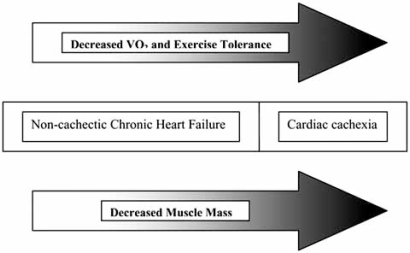
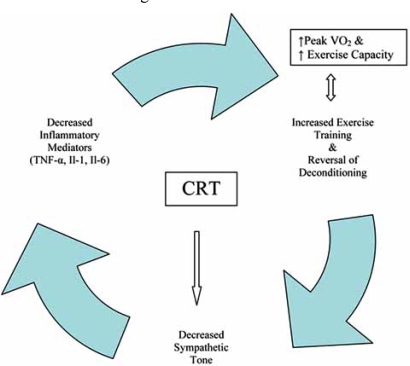
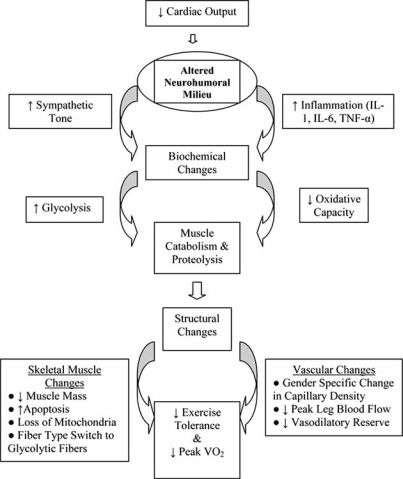
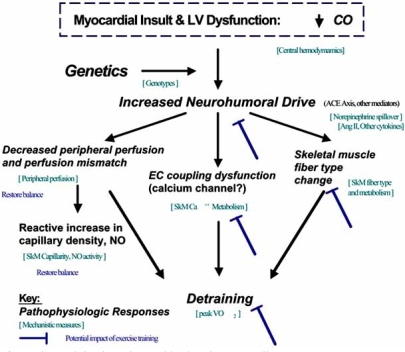
Heart failure represents a major source of morbidity and mortality in industrialized nations. As the leading hospital discharge diagnosis in the United States in patients over the age of 65, it is also associated with substantial economic costs. While the acute symptoms of volume overload frequently precipitate inpatient admission, it is the symptoms of chronic heart failure, including fatigue, exercise intolerance and exertional dyspnea, that impact quality of life. Over the last two decades, research into the enzymatic, histologic and neurohumoral alterations seen with heart failure have revealed that hemodynamic derangements do not necessarily correlate with symptoms. This "hemodynamic paradox" is explained by alterations in the skeletal musculature that occur in response to hemodynamic derangements. Importantly, gender specific effects appear to modify both disease pathophysiology and response to therapy. The following review will discuss our current understanding of the systemic effects of heart failure before examining how exercise training and cardiac resynchronization therapy may impact disease course.
心力衰竭是工业化国家发病和死亡的主要原因。作为美国65岁以上患者出院的首要诊断疾病,它还带来了巨大的经济成本。虽然容量超负荷的急性症状常常促使患者住院,但慢性心力衰竭的症状,包括疲劳、运动不耐受和劳力性呼吸困难,才会影响生活质量。在过去二十年里,对心力衰竭时出现的酶学、组织学和神经体液改变的研究表明,血流动力学紊乱不一定与症状相关。这种“血流动力学悖论”可以通过骨骼肌对血流动力学紊乱的反应改变来解释。重要的是,性别特异性效应似乎会改变疾病的病理生理学和对治疗的反应。以下综述将先讨论我们目前对心力衰竭全身影响的理解,再探讨运动训练和心脏再同步治疗如何影响疾病进程。