Max F. Perutz Laboratories, Center for Molecular Biology, University of Vienna, 1030 Vienna, Austria.
J Cell Biol. 2009 Nov 2;187(3):335-42. doi: 10.1083/jcb.200906178.
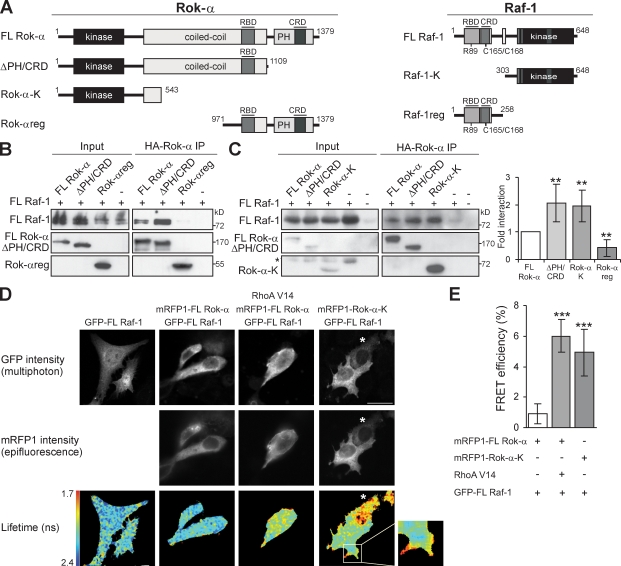
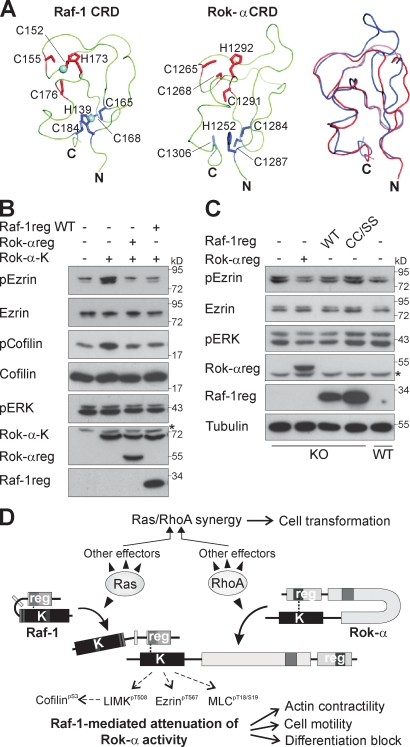
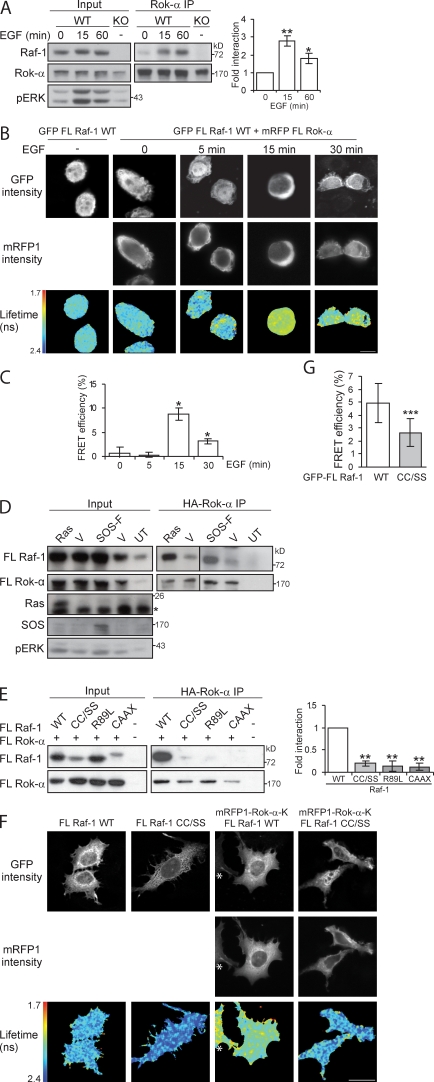
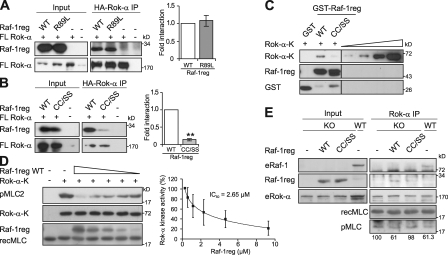
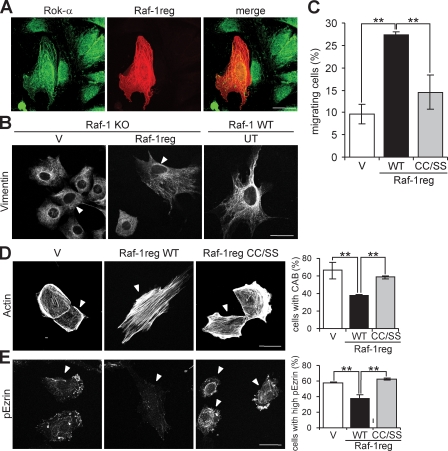
The activity of Raf-1 and Rok-alpha kinases is regulated by intramolecular binding of the regulatory region to the kinase domain. Autoinhibition is relieved upon binding to the small guanosine triphosphatases Ras and Rho. Downstream of Ras, Raf-1 promotes migration and tumorigenesis by antagonizing Rok-alpha, but the underlying mechanism is unknown. In this study, we show that Rok-alpha inhibition by Raf-1 relies on an intermolecular interaction between the Rok-alpha kinase domain and the cysteine-rich Raf-1 regulatory domain (Raf-1reg), which is similar to Rok-alpha's own autoinhibitory region. Thus, Raf-1 mediates Rok-alpha inhibition in trans, which is a new concept in kinase regulation. This mechanism is physiologically relevant because Raf-1reg is sufficient to rescue all Rok-alpha-dependent defects of Raf-1-deficient cells. Downstream of Ras and Rho, the Raf-1-Rok-alpha interaction represents a novel paradigm of pathway cross talk that contributes to tumorigenesis and cell motility.
Raf-1 和 Rok-alpha 激酶的活性受到调节区域与激酶结构域之间的分子内结合的调节。与小 GTP 酶 Ras 和 Rho 结合后,自动抑制作用得到缓解。在 Ras 的下游,Raf-1 通过拮抗 Rok-alpha 促进迁移和肿瘤发生,但潜在机制尚不清楚。在这项研究中,我们表明 Raf-1 对 Rok-alpha 的抑制作用依赖于 Rok-alpha 激酶结构域和富含半胱氨酸的 Raf-1 调节结构域(Raf-1reg)之间的分子间相互作用,类似于 Rok-alpha 自身的自动抑制区域。因此,Raf-1 以转位方式介导 Rok-alpha 的抑制,这是激酶调节的新概念。该机制在生理上是相关的,因为 Raf-1reg 足以挽救 Raf-1 缺陷细胞中所有依赖 Rok-alpha 的缺陷。在 Ras 和 Rho 的下游,Raf-1-Rok-alpha 相互作用代表了一种新的途径串扰范例,有助于肿瘤发生和细胞迁移。