Vario Health Institute, School of Exercise, Biomedical and Health Sciences, Edith Cowan University, Joondalup, WA, Australia.
BMC Cancer. 2009 Dec 2;9:419. doi: 10.1186/1471-2407-9-419.
Androgen deprivation therapy leads to a number of adverse effects including deterioration of the musculoskeletal system and increased risk factors for cardiovascular and metabolic complications. The purpose of this study is to determine the effects, efficacy, retention and compliance of a physical exercise intervention in a large established cohort of prostate cancer patients from the Randomised Androgen Deprivation and Radiotherapy (RADAR) study. Specifically, we aim to compare short- and long-term effects of a prostate cancer-specific supervised exercise program to a standard public health physical activity strategy utilizing printed resources on cardiovascular and metabolic risk factors. Our primary outcomes are cardiorespiratory capacity, abdominal obesity, and lipid and glycemic control, while secondary outcomes include self-reported physical activity, quality of life and psychological distress.
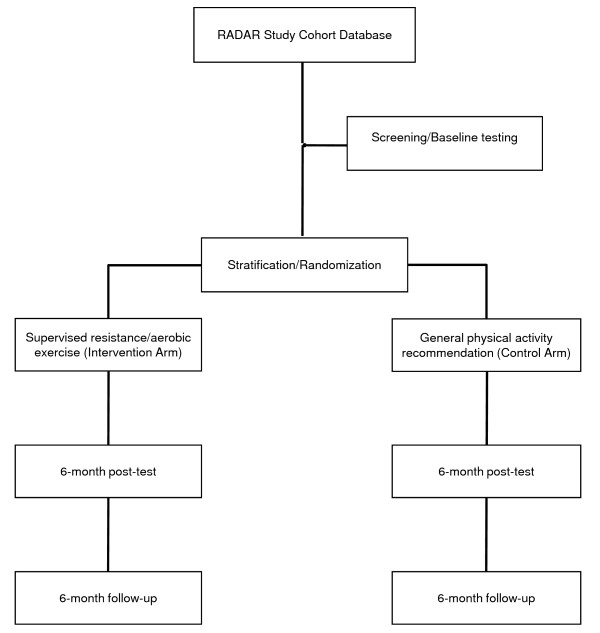
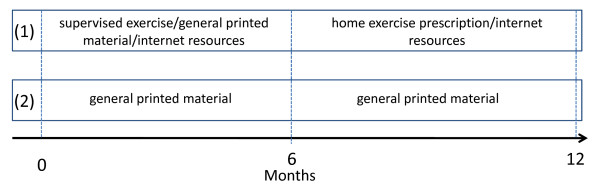
METHODS/DESIGN: Multi-site randomized controlled trial of 370 men from the RADAR study cohort undergoing treatment or previously treated for prostate cancer involving androgen deprivation therapy in the cities of Perth and Newcastle (Australia), and Wellington (New Zealand). Participants will be randomized to (1) supervised resistance/aerobic exercise or (2) printed material comprising general physical activity recommendations. Participants will then undergo progressive training for 6 months. Measurements for primary and secondary endpoints will take place at baseline, 6 months (end of intervention), and at 6 months follow-up.
This study uses a large existent cohort of patients and will generate valuable information as to the continuing effects of exercise specifically targeting cardiovascular function and disease risk, insulin metabolism, abdominal obesity, physical function, quality of life and psychological distress. We expect dissemination of the knowledge gained from this project to reduce risk factors for the development of co-morbid diseases commonly associated with androgen deprivation therapy such as cardiovascular disease, obesity, metabolic disease and diabetes, as well as improvements in physical and functional ability, and quality of life.
ACTRN12609000729224.
雄激素剥夺疗法会导致许多不良反应,包括肌肉骨骼系统恶化和心血管及代谢并发症风险因素增加。本研究的目的是确定在 RADAR 研究中,对来自大型既定前列腺癌患者队列的雄激素剥夺和放射治疗(RADAR)的患者进行身体运动干预的效果、疗效、保留率和依从性。具体而言,我们旨在比较前列腺癌特异性监督运动计划与利用印刷资源的标准公共卫生身体活动策略对心血管和代谢风险因素的短期和长期影响。我们的主要结果是心肺能力、腹部肥胖以及血脂和血糖控制,而次要结果包括自我报告的身体活动、生活质量和心理困扰。
方法/设计:来自 RADAR 研究队列的 370 名男性的多地点随机对照试验,这些男性正在接受治疗或以前接受过前列腺癌治疗,涉及珀斯和纽卡斯尔(澳大利亚)和惠灵顿(新西兰)的雄激素剥夺治疗。参与者将被随机分配到(1)监督的阻力/有氧运动或(2)包含一般身体活动建议的印刷材料。然后,参与者将进行为期 6 个月的渐进训练。主要和次要终点的测量将在基线、6 个月(干预结束时)和 6 个月随访时进行。
本研究使用了一个大型的现有患者队列,将生成有关专门针对心血管功能和疾病风险、胰岛素代谢、腹部肥胖、身体功能、生活质量和心理困扰的运动的持续效果的宝贵信息。我们预计,从该项目中获得的知识的传播将降低与雄激素剥夺治疗相关的常见合并疾病的风险因素,如心血管疾病、肥胖、代谢疾病和糖尿病,以及改善身体和功能能力以及生活质量。
ACTRN12609000729224。