Rush University Medical Center, Department of Preventive Medicine, Chicago, Illinois
Diabetes Educ. 2010 Jan-Feb;36(1):98-108. doi: 10.1177/0145721709352381. Epub 2009 Dec 11.
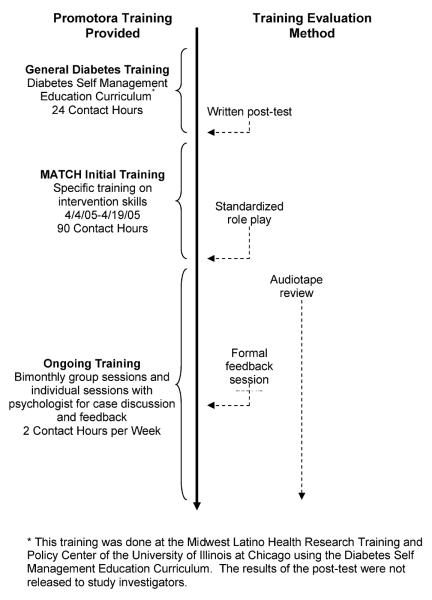
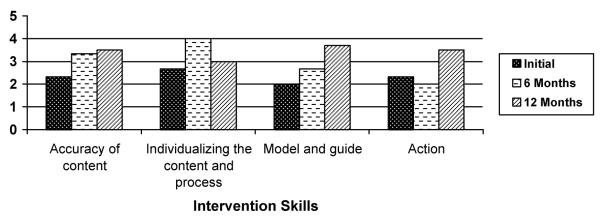
Adequate training and support are critical for community health workers (promotoras de salud in Spanish) to work effectively. Current literature on promotora training is limited by a focus on promotoras' knowledge and satisfaction immediately after training. The relevance of training to subsequent work performance and the need for ongoing training are rarely addressed. This article describes the training and evaluation components of a promotora intervention focused on diabetes self-management. Training Methods Project MATCH (the Mexican American Trial of Community Health Workers) is a clinical trial designed to test the effectiveness of an intensive, promotora-based intervention to improve disease self-management for Mexican Americans with diabetes. The MATCH investigators designed a multicomponent promotora training program that provided both initial and ongoing training. The investigators used multiple methods to determine promotoras' knowledge levels, initial competency in intervention delivery, and changes in this competency over time. Evaluation Methods and Results The evaluation results show that although the initial training provided a solid knowledge and skills base for the promotoras, the ongoing training was critical in helping them deal with both intervention-related and personal challenges.
The experiences of the MATCH study suggest that in addition to strong initial training, promotora interventions benefit from ongoing training and evaluation to ensure success.
为使社区卫生工作者(西班牙语中称为“promotoras de salud”)有效开展工作,充分的培训和支持至关重要。目前有关促进者培训的文献主要集中在培训后促进者的知识和满意度上,而很少关注培训对后续工作表现的相关性和持续培训的需求。本文介绍了一个专注于糖尿病自我管理的促进者干预项目的培训和评估内容。培训方法项目 MATCH(墨西哥裔美国人社区卫生工作者试验)是一项旨在检验强化、以促进者为基础的干预措施对改善墨西哥裔美国人糖尿病自我管理效果的临床试验。MATCH 研究人员设计了一个多成分的促进者培训计划,提供了初始培训和持续培训。研究人员使用多种方法来确定促进者的知识水平、干预实施的初始能力以及随着时间的推移这种能力的变化。评估方法和结果评估结果表明,尽管初始培训为促进者提供了坚实的知识和技能基础,但持续培训对于帮助他们应对干预相关和个人挑战至关重要。结论:MATCH 研究的经验表明,除了强有力的初始培训外,促进者干预还需要持续的培训和评估来确保成功。