African Population and Health Research Centre, Nairobi, Kenya.
Glob Health Action. 2009 Nov 11;2. doi: 10.3402/gha.v2i0.1923.
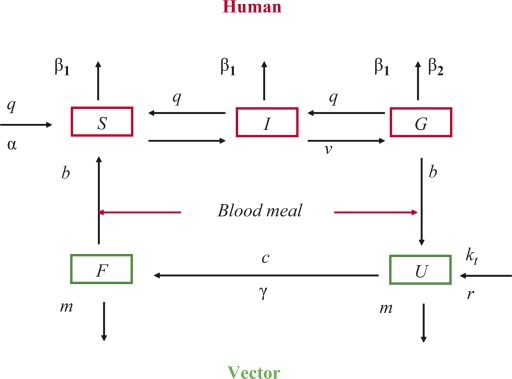
To support malaria control strategies, prior knowledge of disease risk is necessary. Developing a model to explain the transmission of malaria, in endemic and epidemic regions, is of high priority in developing health system interventions. We develop, fit and validate a non-spatial dynamic model driven by meteorological conditions that can capture seasonal malaria transmission dynamics at the village level in a malaria holoendemic area of north-western Burkina Faso.
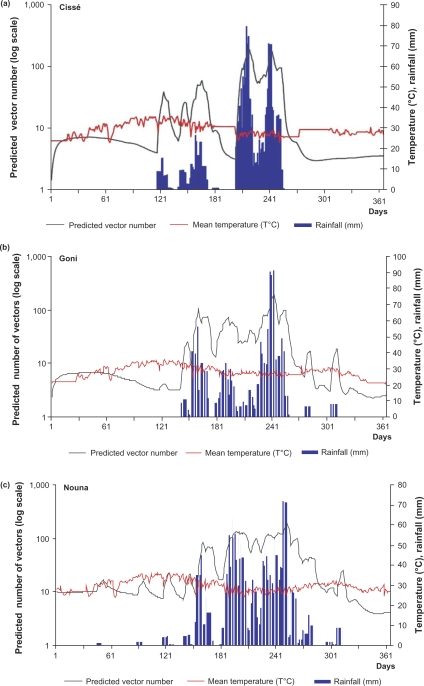
A total of 676 children aged 6-59 months took part in this study. Trained interviewers visited children at home weekly from December 2003 to November 2004 for Plasmodium falciparum malaria infection detection. Anopheles daily biting rate, mortality rate and growth rate were evaluated. Digital meteorological stations measured ambient temperature, humidity and rainfall in each site.
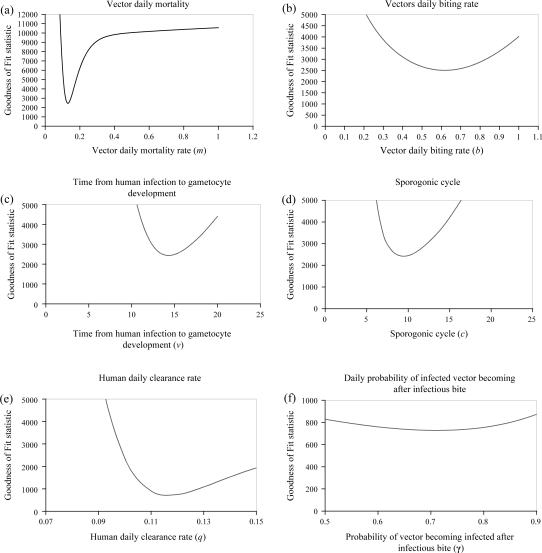
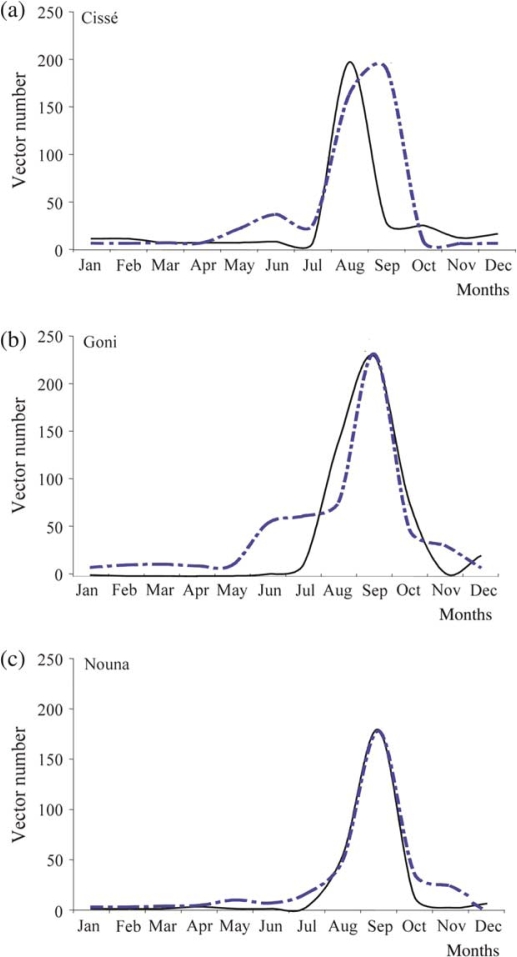
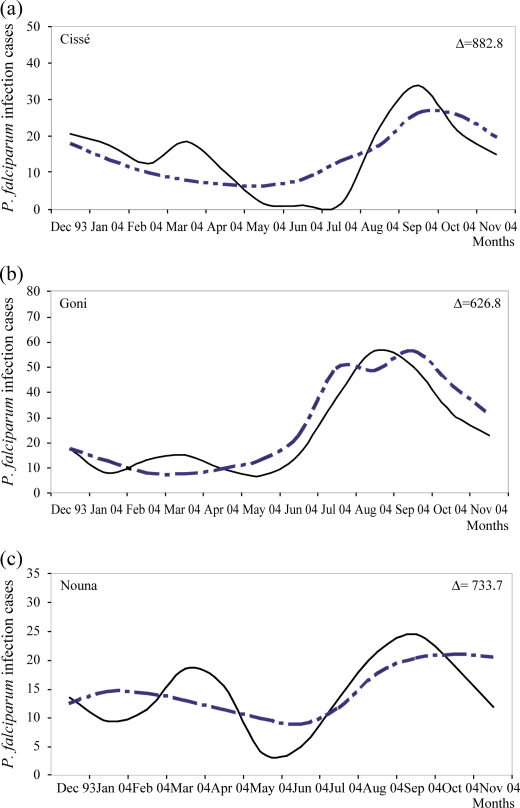
The overall P. falciparum malaria infection incidence was 1.1 episodes per person year. There was strong seasonal variation in P. falciparum malaria infection incidence with a peak observed in August and September, corresponding to the rainy season and a high number of mosquitoes. The model estimates of monthly mosquito abundance and the incidence of malaria infection correlated well with observed values. The fit was sensitive to daily mosquito survival and daily human parasite clearance.
The model has demonstrated potential for local scale seasonal prediction of P. falciparum malaria infection. It could therefore be used to understand malaria transmission dynamics using meteorological parameters as the driving force and to help district health managers in identifying high-risk periods for more focused interventions.
为了支持疟疾控制策略,需要事先了解疾病风险。在流行地区和疫区,开发一种能够解释疟疾传播的模型对于制定卫生系统干预措施至关重要。我们开发、拟合和验证了一个不受空间限制的动态模型,该模型由气象条件驱动,能够在布基纳法索西北部一个疟疾全流行地区的村庄层面上捕捉季节性疟疾传播动态。
共有 676 名 6-59 个月大的儿童参加了这项研究。经过培训的访谈员从 2003 年 12 月至 2004 年 11 月每周一次上门访问儿童,以检测疟原虫恶性疟原虫感染情况。评估了按蚊每日叮咬率、死亡率和增长率。数字气象站测量了每个地点的环境温度、湿度和降雨量。
总体上恶性疟原虫疟疾感染发生率为 1.1 人/年。恶性疟原虫疟疾感染发生率具有很强的季节性变化,在 8 月和 9 月达到高峰,与雨季和大量蚊子出现相对应。模型对每月蚊子数量和疟疾感染发生率的估计与观察值吻合较好。拟合结果对每日蚊子存活率和人体寄生虫每日清除率敏感。
该模型已显示出对恶性疟原虫疟疾感染进行局部季节性预测的潜力。因此,它可以用于利用气象参数作为驱动力来了解疟疾传播动态,并帮助地区卫生经理确定需要更集中干预的高风险时期。