Meteorological Institute, University of Freiburg, Freiburg, Germany.
Glob Health Action. 2009 Nov 11;2. doi: 10.3402/gha.v2i0.2005.
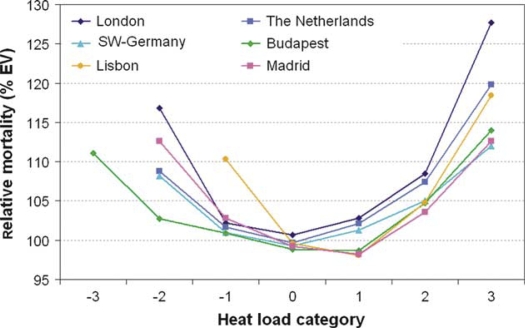
The close relationship between human health, performance, well-being and the thermal environment is obvious. Nevertheless, most studies of climate and climate change impacts show amazing shortcomings in the assessment of the environment. Populations living in different climates have different susceptibilities, due to socio-economic reasons, and different customary behavioural adaptations. The global distribution of risks of hazardous thermal exposure has not been analysed before.
To produce maps of the baseline and future bioclimate that allows a direct comparison of the differences in the vulnerability of populations to thermal stress across the world.
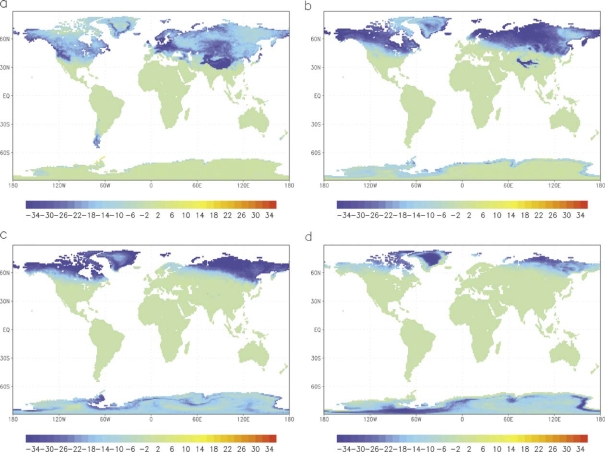
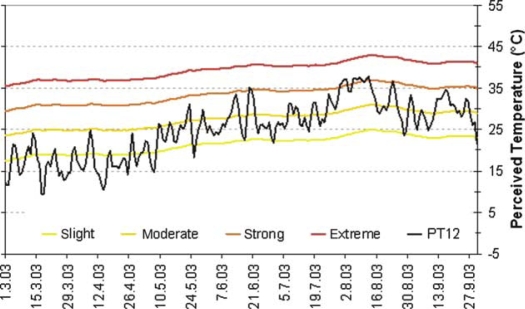
The required climatological data fields are obtained from climate simulations with the global General Circulation Model ECHAM4 in T106-resolution. For the thermo-physiologically relevant assessment of these climate data a complete heat budget model of the human being, the 'Perceived Temperature' procedure has been applied which already comprises adaptation by clothing to a certain degree. Short-term physiological acclimatisation is considered via Health Related Assessment of the Thermal Environment.
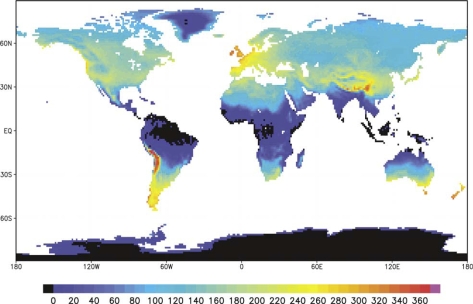
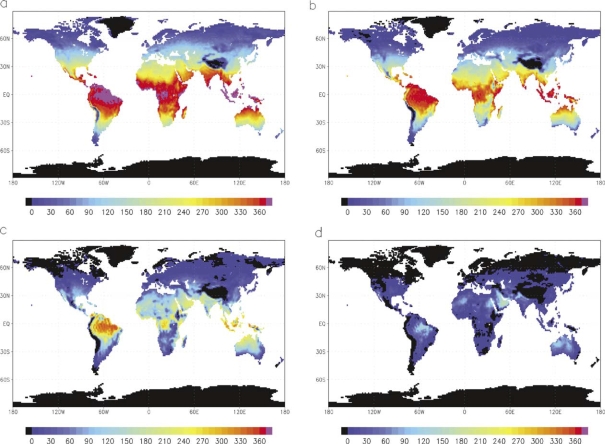
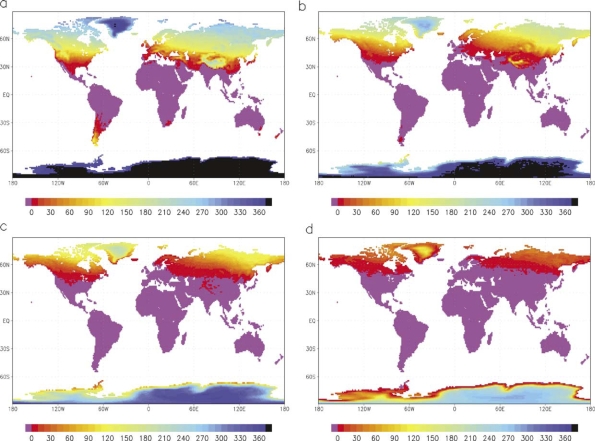
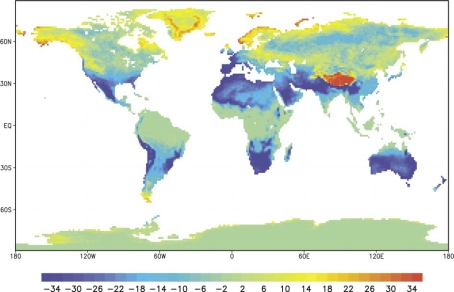
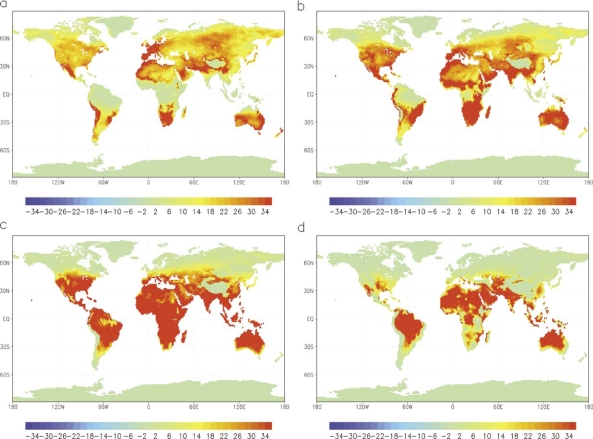
The global maps 1971-1980 (control run, assumed as baseline climate) show a pattern of thermal stress intensities as frequencies of heat. The heat load for people living in warm-humid climates is the highest. Climate change will lead to clear differences in health-related thermal stress between baseline climate and the future bioclimate 2041-2050 based on the 'business-as-usual' greenhouse gas scenario IS92a. The majority of the world's population will be faced with more frequent and more intense heat strain in spite of an assumed level of acclimatisation. Further adaptation measures are crucial in order to reduce the vulnerability of the populations.
This bioclimatology analysis provides a tool for various questions in climate and climate change impact research. Considerations of regional or local scale require climate simulations with higher resolution. As adaptation is the key term in understanding the role of climate/climate change for human health, performance and well-being, further research in this field is crucial.
人类健康、表现、福祉与热环境密切相关。然而,大多数关于气候和气候变化影响的研究在评估环境方面存在明显的不足。由于社会经济原因,生活在不同气候条件下的人群具有不同的敏感性,并且存在不同的习惯性行为适应。危险热暴露风险的全球分布尚未得到分析。
制作基础和未来生物气候图,以便直接比较全球人口对热应激脆弱性的差异。
所需的气候数据字段是从全球环流模型 ECHAM4 在 T106 分辨率下的气候模拟中获得的。为了对这些气候数据进行热生理相关评估,应用了完整的人体热预算模型“感知温度”程序,该程序已经包含了一定程度的服装适应。通过健康相关的热环境评估来考虑短期生理适应。
1971-1980 年的全球地图(控制运行,假设为基础气候)显示了热应激强度的模式,即热的频率。生活在温暖潮湿气候中的人的热负荷最高。基于温室气体情景 IS92a 的“照常营业”假设,与基础气候相比,未来生物气候 2041-2050 年的气候变化将导致与健康相关的热应激明显不同。尽管假设存在适应水平,但世界上大多数人口将面临更频繁和更强烈的热压力。进一步的适应措施对于降低人群的脆弱性至关重要。
这种生物气候学分析为气候和气候变化影响研究中的各种问题提供了工具。需要更高分辨率的气候模拟来考虑区域或局部尺度的考虑。由于适应是理解气候/气候变化对人类健康、表现和福祉的作用的关键术语,因此该领域的进一步研究至关重要。