Institut Pasteur de Nouvelle-Calédonie, Nouméa, New Caledonia.
PLoS Negl Trop Dis. 2010 Jan 12;4(1):e582. doi: 10.1371/journal.pntd.0000582.
Parameters predicting the evolution of leptospirosis would be useful for clinicians, as well as to better understand severe leptospirosis, but are scarce and rarely validated. Because severe leptospirosis includes septic shock, similarities with predictors evidenced for sepsis and septic shock were studied in a hamster model.
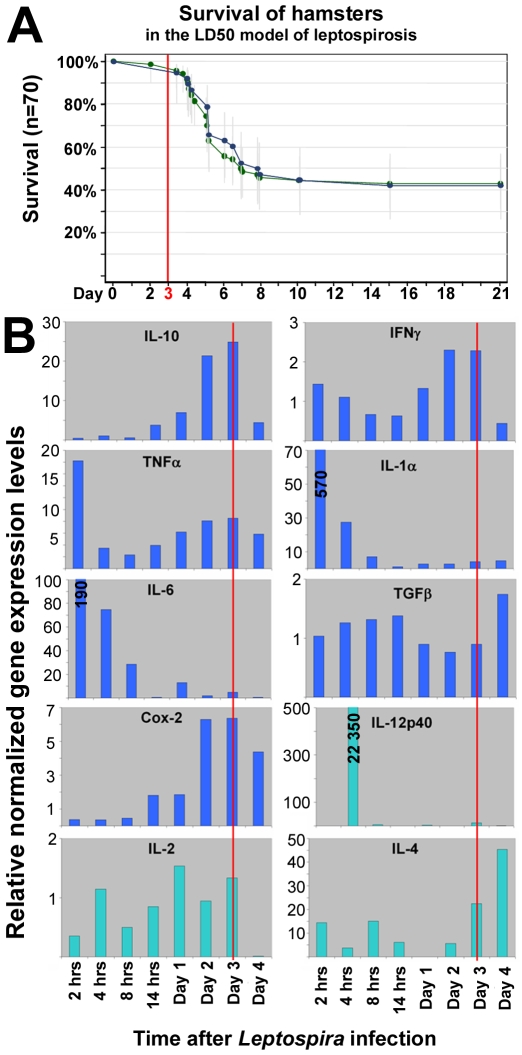
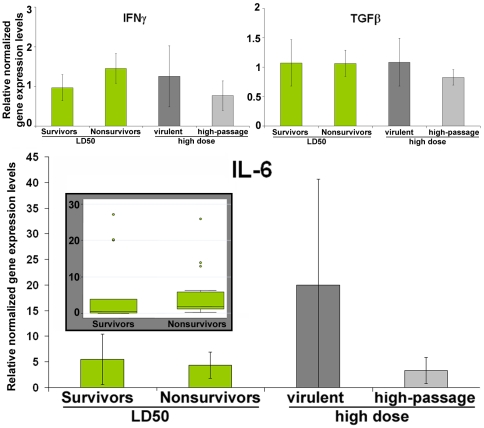
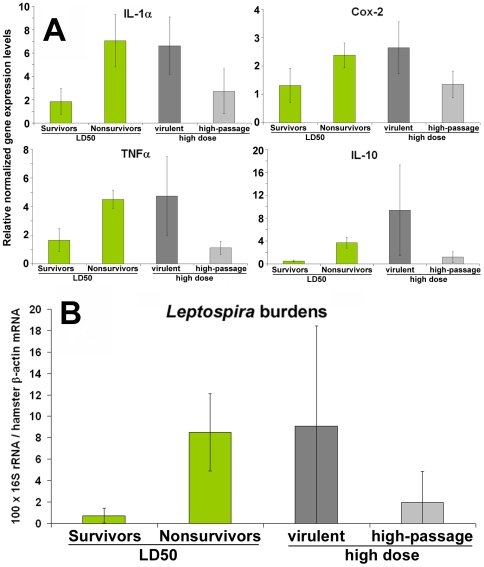
METHODOLOGY/PRINCIPAL FINDINGS: Using an LD50 model of leptospirosis in hamsters, we first determined that 3 days post-infection was a time-point that allowed studying the regulation of immune gene expression and represented the onset of the clinical signs of the disease. In the absence of tools to assess serum concentrations of immune effectors in hamsters, we determined mRNA levels of various immune genes, especially cytokines, together with leptospiraemia at this particular time-point. We found differential expression of both pro- and anti-inflammatory mediators, with significantly higher expression levels of tumor necrosis factor alpha, interleukin 1alpha, cyclo-oxygenase 2 and interleukin 10 genes in nonsurvivors compared to survivors. Higher leptospiraemia was also observed in nonsurvivors. Lastly, we demonstrated the relevance of these results by comparing their respective expression levels using a LD100 model or an isogenic high-passage nonvirulent variant.
CONCLUSIONS/SIGNIFICANCE: Up-regulated gene expression of both pro- and anti-inflammatory immune effectors in hamsters with fatal outcome in an LD50 model of leptospirosis, together with a higher Leptospira burden, suggest that these gene expression levels could be predictors of adverse outcome in leptospirosis.
预测钩端螺旋体病演变的参数对于临床医生以及更好地理解严重钩端螺旋体病非常有用,但这些参数很少且很少得到验证。由于严重钩端螺旋体病包括感染性休克,因此在仓鼠模型中研究了与感染性休克和感染性休克相关的预测因子的相似性。
方法/主要发现:我们首先使用仓鼠的 LD50 钩端螺旋体病模型确定,感染后 3 天是研究免疫基因表达调节并代表疾病临床症状开始的时间点。由于缺乏评估仓鼠血清中免疫效应物浓度的工具,我们在该特定时间点确定了各种免疫基因(尤其是细胞因子)的 mRNA 水平以及钩端螺旋体血症。我们发现促炎和抗炎介质的表达均存在差异,与幸存者相比,非幸存者的肿瘤坏死因子 alpha、白细胞介素 1alpha、环氧化酶 2 和白细胞介素 10 基因的表达水平明显更高。在非幸存者中也观察到更高的钩端螺旋体血症。最后,我们通过使用 LD100 模型或同源高传代非毒力变体比较各自的表达水平来证明这些结果的相关性。
结论/意义:在 LD50 钩端螺旋体病模型中,具有致死性结局的仓鼠中促炎和抗炎免疫效应物的上调基因表达,以及更高的钩端螺旋体负担,表明这些基因表达水平可能是钩端螺旋体病不良结局的预测因子。